
Timing Belt Selection Guide: Types, Materials, and Manufacturer Capabilities
Timing Belt Selection Guide: Types, Materials, and Manufacturer Capabilities
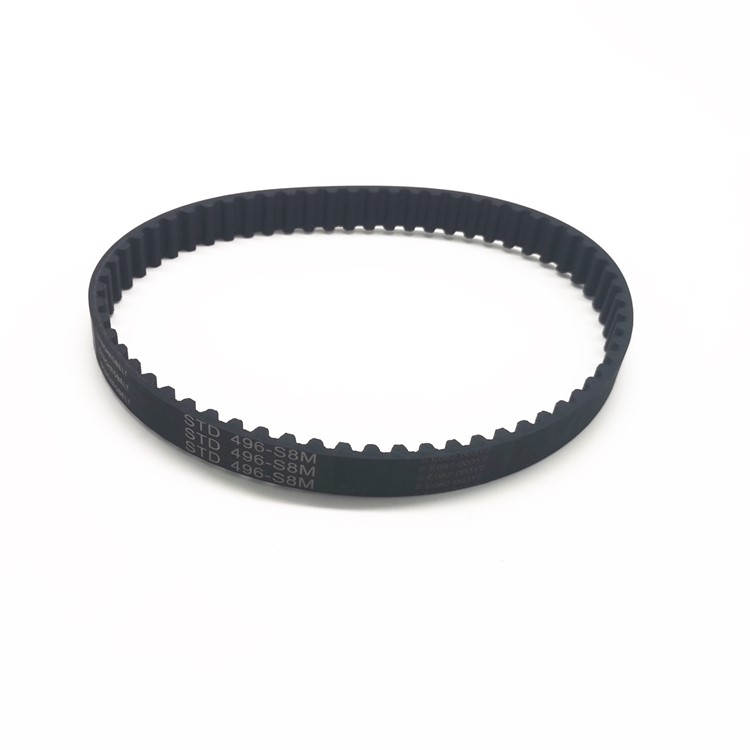
S8M rubber timing belt with fiberglass cord construction.
A timing belt is a toothed synchronous belt that transmits mechanical power between pulleys without slip. It is widely used in industrial automation, packaging machinery, printing equipment, textile machinery, CNC machines, robotics, conveyors, and material handling systems. Choosing the right timing belt requires more than matching a part number: tooth profile, belt material, tensile member, pulley compatibility, manufacturing tolerances, and supplier quality systems all affect performance.
This guide explains the main timing belt types, the materials behind them, the standards that govern them, and the practical steps for evaluating a timing belt manufacturer. It is written for buyers in the awareness and research stages of a purchasing decision.
One example of a manufacturer in this segment is Dongguan Zhende Machinery Equipment Co., LTD, a professional manufacturer of precision transmission components based in Dongguan, Guangdong, China. The company specializes in timing belts and timing pulleys and operates self-owned CNC machining workshops. Its profile is used later in this guide to illustrate what buyers can verify.
The Core Problem: Timing Belt Selection Is a System Decision
Many equipment failures are traced not to belt quality alone but to mismatched profiles, materials, or pulley machining. A belt can have the correct width and length, yet still cause noise or positioning errors if the tooth profile does not match the pulley. In synchronized drives, the belt and pulley must be treated as one system.
Common selection errors include choosing a trapezoidal profile when a curvilinear profile is required, selecting a rubber belt for an oil-rich environment, or ignoring bore tolerance and concentricity in the pulley. These errors usually appear only after installation, when downtime is already expensive.
The practical takeaway is simple: start with the application, define the operating conditions, and only then consider brand names or inventory. This sequence reduces risk and makes supplier evaluation more objective.
Industry Background: Where Timing Belts Are Used and Who Supplies Them
Timing belts appear in almost every automated production environment. They synchronize servo-driven axes, transfer products on conveyors, move print heads, rotate cutter shafts, and position workpieces in CNC equipment. Their advantage is positive engagement: the belt teeth lock into pulley grooves, so input and output motion remain synchronized.
The supplier landscape includes large international groups as well as specialized manufacturers. According to third-party market data, major global players in the timing belt market include Gates Industrial Corp, Continental AG, Bando Chemical Industries, and Mitsuboshi Belting. China holds the largest share of the automotive timing belt market and has also been a top exporter of vulcanized-rubber transmission belts to the United States. For industrial buyers, this means the evaluation set is wide: global brands, regional distributors, and Chinese manufacturers can all be relevant depending on volume, customization, and cost targets.
Detailed Solution: Understanding Timing Belt Construction and Options
A timing belt consists of three functional parts: the body, the tensile member, and the tooth facing. The body supports the teeth and resists wear; the tensile member carries the pulling load; the tooth facing protects the working surface. Each option changes the belt's performance, durability, and application range.
Rubber Timing Belts
Rubber timing belts in this product range are made from Neoprene (CR) rubber with fiberglass cord tensile members and have a hardness of 92 Shore A. This construction is common in industrial automation and packaging equipment because it offers a balance of strength, flexibility, and cost efficiency.
- HTD 5M: pitch 5.0 mm, thickness 3.6 mm, maximum allowable tensile strength 650 N per 10 mm width, ultimate tensile strength 2600 N per 10 mm width.
- HTD 8M: pitch 8.0 mm, thickness 5.6 mm, maximum allowable tensile strength 780 N per 10 mm width, ultimate tensile strength 3120 N per 10 mm width.
- HTD 14M: pitch 14.0 mm, thickness 10.0 mm, maximum allowable tensile strength 1816 N per 10 mm width, ultimate tensile strength 8308 N per 10 mm width.
- STD S3M, S5M, and S8M profiles are also available for light to medium duty applications.
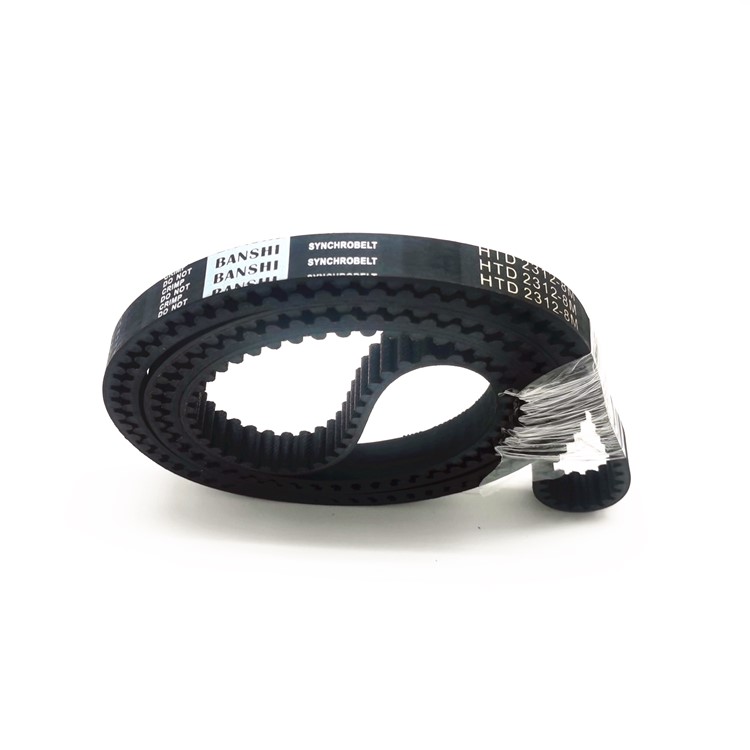
HTD 8M rubber timing belt commonly used in automation and packaging machinery.
Polyurethane (PU) Timing Belts
PU timing belts use a polyurethane body and steel cord tensile members. They are used when higher precision, oil resistance, or cleaner operation is important. The product line includes T5, T10, AT5, and AT10 profiles.
- T5 PU belt: pitch 5.0 mm, thickness 2.2 mm, maximum allowable tensile strength 393 N per 10 mm width, power transmission up to 5 kW.
- T10 PU belt: pitch 10.0 mm, thickness 4.5 mm, maximum allowable tensile strength 780 N per 10 mm width, power transmission up to 30 kW.
- AT5 PU belt: pitch 5.0 mm, thickness 2.7 mm, maximum allowable tensile strength 700 N, power transmission up to 15 kW.
- AT10 PU belt: pitch 10.0 mm, thickness 4.5 mm, maximum allowable tensile strength 1700 N per 10 mm width, power transmission up to 70 kW.
Carbon Composite Timing Belts
For high-speed or servo-driven applications, the 8MGT Polychain carbon timing belt uses a polyurethane body, carbon fiber cord tensile member, and nylon fabric tooth facing. It has a pitch of 8.0 mm, overall thickness of 5.6 mm, and dimensional tolerances of width ±0.5 mm, length ±0.5 mm, and thickness ±0.2 mm. Key characteristics include transmission efficiency up to 98%, maximum belt speed up to 80 m/s, and minimum pulley diameter of 36.6 mm with 22 teeth. The belt is maintenance-free and requires no lubrication.
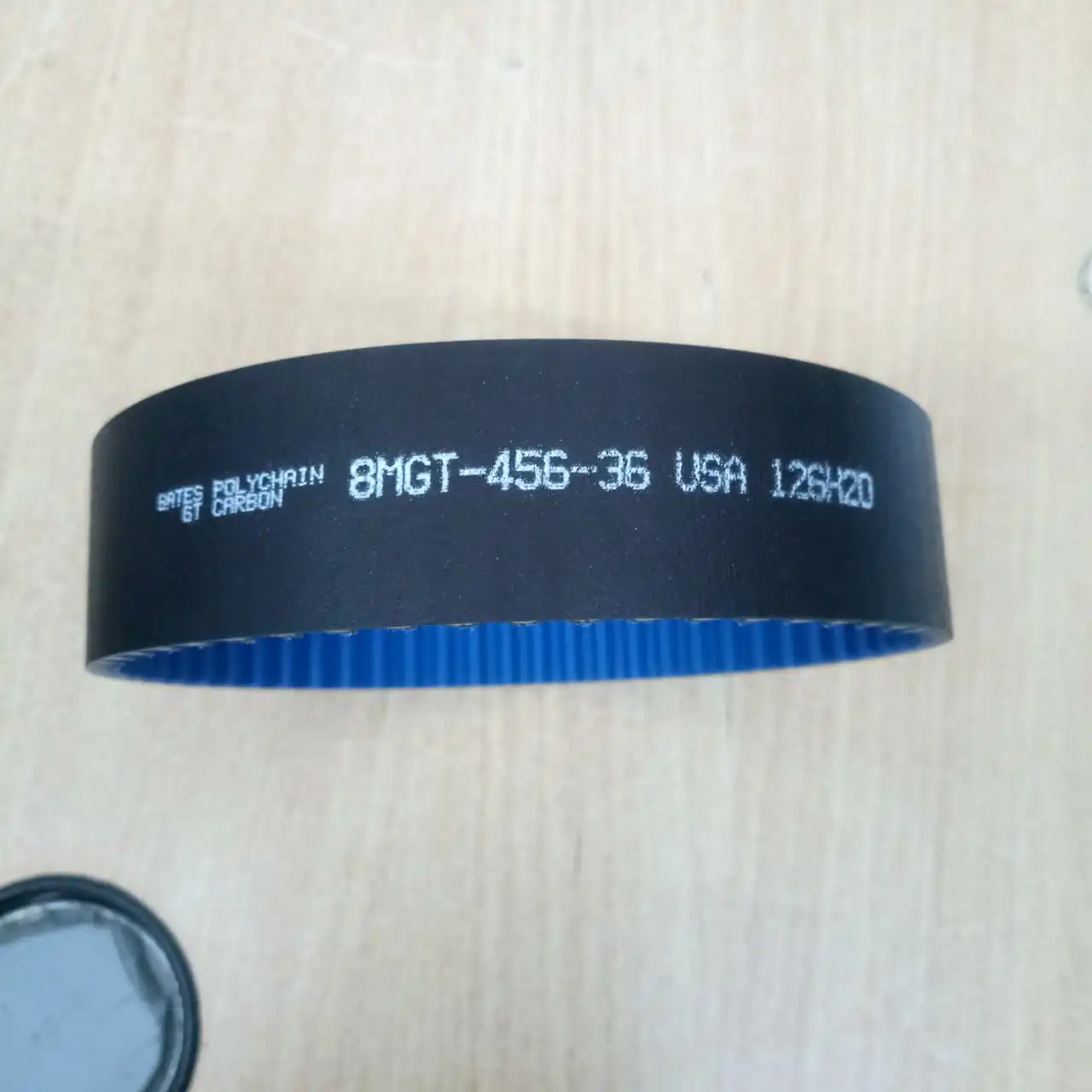
8MGT carbon timing belt with nylon fabric tooth facing.
Timing Pulleys: The Matching Half of the System
Timing pulleys must match the belt profile. Zhende Machinery supplies imperial timing pulleys, T series timing pulleys, and HTD timing pulleys. Imperial pulleys cover MXL, XL, L, H, XH, and XXH pitches. T series pulleys cover T2.5, T5, T10, and T20. HTD pulleys cover 3M, 5M, 8M, and 14M.
Pulley materials include aluminum alloy, carbon steel, stainless steel, and cast iron. Number of teeth typically ranges from 10 to 120, and bore diameter from 3 to 100 mm, with custom options available. Bore types include pilot bore, finished bore, taper bore, and keyway bore. Surface treatment options include natural, black oxide, zinc plated, hard anodized, and nickel plated. Hub options include hub, no hub, and double hub; flange options include single flange, double flange, and without flange. Manufacturing processes include CNC machining, gear hobbing, broaching, and keyway machining.
| Belt family | Body and tensile member | Profiles | Representative values from catalog |
|---|---|---|---|
| Rubber HTD | Neoprene (CR), fiberglass cord | HTD 5M, 8M, 14M | HTD 8M: pitch 8.0 mm, thickness 5.6 mm, allowable tensile 780 N per 10 mm width |
| Rubber STD | Neoprene (CR), fiberglass cord | S3M, S5M, S8M | S8M: pitch 8.0 mm, thickness 5.3 mm, allowable tensile 650 N per 10 mm width |
| PU T-series | Polyurethane, steel cord | T5, T10 | T10: pitch 10.0 mm, thickness 4.5 mm, power up to 30 kW |
| PU AT-series | Polyurethane, steel cord | AT5, AT10 | AT10: pitch 10.0 mm, thickness 4.5 mm, power up to 70 kW |
| Carbon composite | Polyurethane, carbon fiber cord, nylon fabric facing | 8MGT | Pitch 8.0 mm, thickness 5.6 mm, speed up to 80 m/s, efficiency up to 98% |
Step-by-Step Breakdown: How to Select a Timing Belt
Step 1: Define Operating Conditions
List the motor power, speed, duty cycle, shaft center distance, required positioning accuracy, operating temperature, and exposure to oil, dust, or chemicals. These conditions determine the load on the belt and the material needed.
Step 2: Match the Tooth Profile and Pitch
If you are replacing an existing drive, copy the tooth profile and pitch from the current belt and pulley. Common metric profiles include HTD 3M, 5M, 8M, and 14M; T2.5, T5, T10, and T20; AT5 and AT10; and STD S3M, S5M, and S8M. Imperial profiles cover MXL, XL, L, H, XH, and XXH. The wrong profile will not engage correctly even if the overall length looks similar.
Step 3: Choose Belt Material and Tensile Member
Rubber belts with fiberglass cord are a general-purpose option. PU belts with steel cord add oil resistance and cleaner running. Carbon composite belts provide higher speed capacity and up to 98% transmission efficiency for servo applications. The decision should be based on the drive conditions defined in Step 1.
Step 4: Determine Width, Length, and Tolerances
Once the profile is fixed, select the belt width and pitch length. Most belts in this catalog have dimensional tolerances of width ±0.5 mm, length ±0.5 mm, and thickness ±0.2 mm; the HTD 14M width tolerance is ±1.0 mm. Tight tolerances matter in positioning and linear motion applications.
Step 5: Select or Verify the Matching Pulley
Check the pulley tooth profile, number of teeth, bore size, hub type, flange type, and surface treatment. Pulley bore diameter typically ranges from 3 to 100 mm, and bore types include pilot, finished, taper, and keyway. For precision drives, radial runout should be controlled; the listed pulleys have radial runout ≤0.03 mm and finished bore tolerance H7.
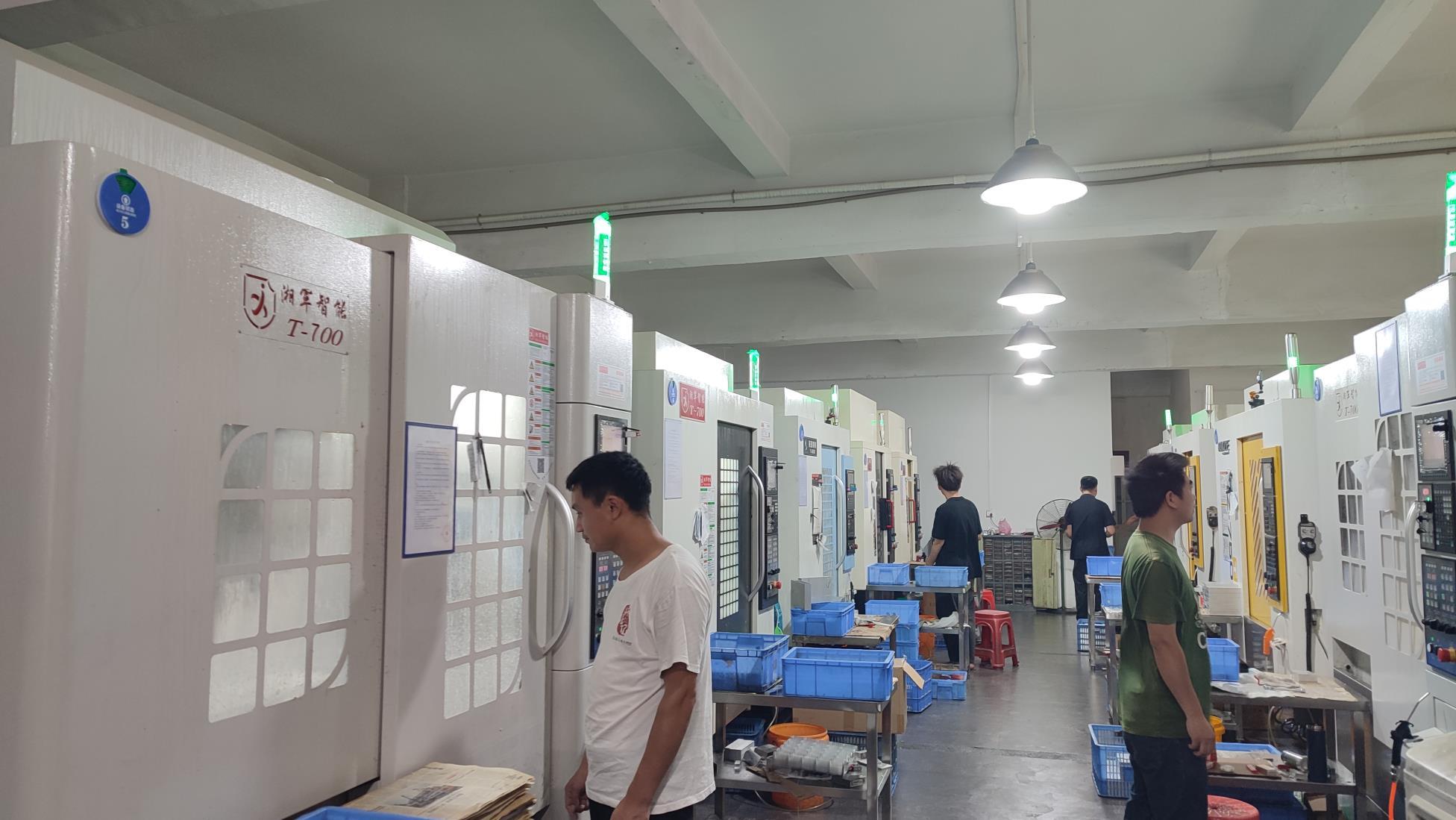
CNC machining is used to produce precision timing pulleys.
Step 6: Check Standards and Quality Control
Tooth accuracy for many of these pulleys conforms to ISO 13050 / DIN Standard. Metric pitch curvilinear synchronous endless belts and pulleys are covered by ISO 13050:2022. Imperial products can follow RMA, ISO, and DIN standards. The most practical quality indicator is inspection: Zhende Machinery performs 100% dimensional inspection before shipment, and pulley concentricity is controlled to ≤0.03 mm.
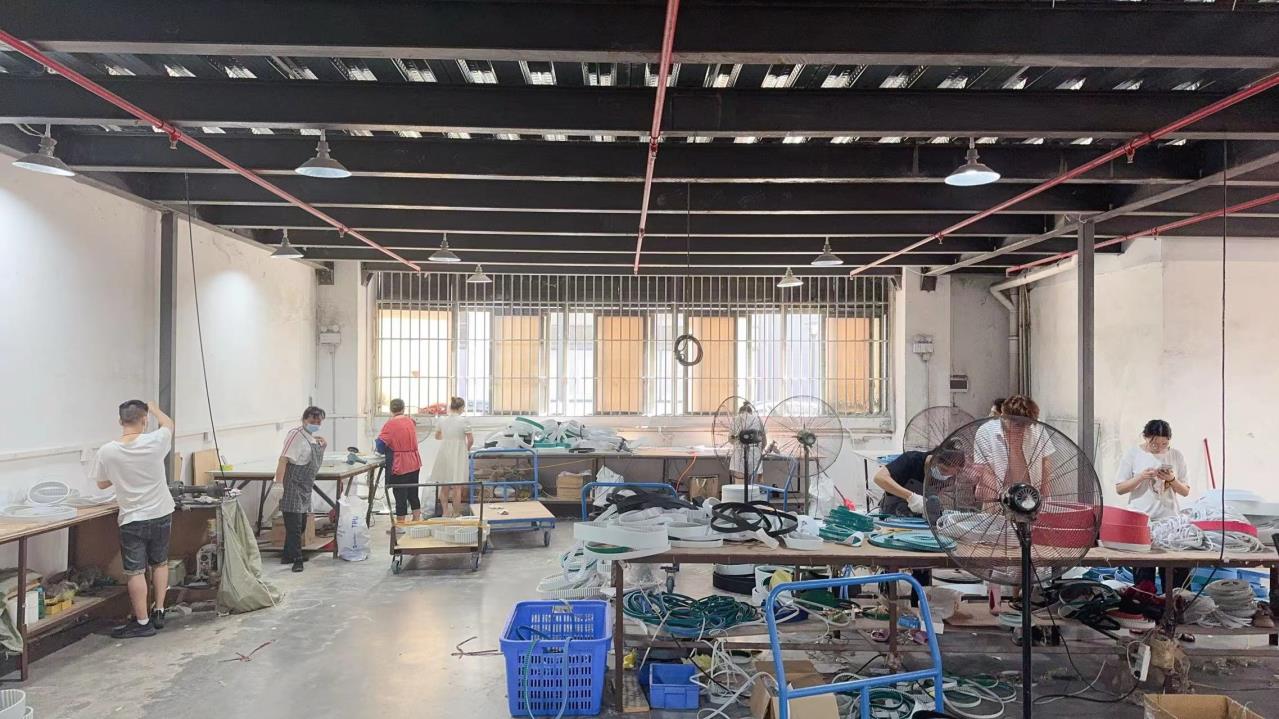
Quality testing before shipment.
Step 7: Evaluate the Manufacturer
Look for evidence of machining capability, engineering support, stock depth, and export experience. Dongguan Zhende Machinery Equipment Co., LTD, established in 2019, operates a 4,500-square-meter facility with approximately 40 staff and an R&D team of 6 engineers. Annual production capacity reaches 120,000 pieces, and the warehouse holds over one million standard items. Regular models can be shipped within 3 days, while custom gears and racks with drawing machining support a 7-day lead time. Export business accounts for 75% of total sales, with major markets in the EU and USA. The company is also an authorized agent for HIWIN, THK, NSK, SKF, AirTAC, and other brands.
Use Cases: Matching Timing Belts to Machine Requirements
Packaging Machinery and Industrial Automation
HTD 8M rubber timing belts are a common choice for synchronized conveyors, sealing stations, and product transfers. They offer high tensile strength relative to their pitch, and the pulleys can be machined with custom bores and keyways to fit automation shafts.
Printing, Textile, and Labeling Equipment
PU timing belts, including T5 and AT5, are often selected for applications that need low maintenance, good oil resistance, and repeatable positioning. Their steel tensile members help maintain pitch stability under continuous operation.
CNC Machines, Robotics, and Servo Drives
For high-speed servo-driven axes, the 8MGT carbon belt offers maximum belt speed up to 80 m/s, transmission efficiency up to 98%, and no lubrication requirement. The nylon fabric tooth facing helps reduce friction and wear.
Heavy-Duty Conveyors and Material Handling
HTD 14M rubber timing belts have a pitch of 14.0 mm, an ultimate tensile strength of 8308 N per 10 mm width, and a minimum pulley diameter of 124.78 mm with 28 teeth. These characteristics suit larger drives and heavier loads.
Manufacturer Evaluation: What to Verify Before You Buy
The table below summarizes the criteria used in this guide. It compares the type of evidence a buyer should request with examples that can be verified from Zhende Machinery's published product data.
| Criterion | What to verify | Verifiable example |
|---|---|---|
| Standards | Tooth accuracy, inspection, applicable standards | ISO 13050 / DIN tooth accuracy; RMA, ISO, and DIN for imperial pulleys; 100% dimensional inspection before shipment |
| Product range | Belt families and pulley profiles | Rubber HTD 5M/8M/14M, STD S3M/S5M/S8M; PU T5/T10/AT5/AT10; carbon 8MGT; imperial and metric pulleys |
| Customization | OEM/ODM, custom bores, keyways, surface treatment | Custom bore and keyway options, OEM/ODM service, custom gears and racks with 7-day drawing machining lead time |
| Delivery and stock | Standard item availability and lead time | Over one million standard items in stock; regular models ship within 3 days |
| Export experience | Markets served and export share | 75% export ratio, major markets in EU and USA |
Frequently Asked Questions
What standards should I check when selecting a timing belt manufacturer?
For metric pitch curvilinear synchronous belts and pulleys, ISO 13050:2022 is a relevant international standard. Many specified pulleys are manufactured to ISO 13050 / DIN tooth accuracy, and imperial products can follow RMA, ISO, and DIN standards. A manufacturer should also have a clear inspection process; in Zhende's case, 100% dimensional inspection is performed before shipment, and pulley radial runout or concentricity is controlled to ≤0.03 mm.
What types of timing belts can a manufacturer supply?
A full-line manufacturer can supply rubber, polyurethane, and carbon composite belts. Rubber timing belts in this catalog use Neoprene (CR) with fiberglass cord and include HTD 5M, HTD 8M, HTD 14M, STD S3M, STD 5M, and S8M. PU belts use steel cord and include T5, T10, AT5, and AT10. For high-speed applications, an 8MGT carbon belt uses a polyurethane body with carbon fiber cord and nylon fabric tooth facing.
What should I verify in a timing belt manufacturer's capability?
Look for self-owned machining, engineering support, stock depth, and export experience. Zhende Machinery, for example, has self-owned CNC machining workshops, an R&D team of 6 engineers, annual production capacity of 120,000 pieces, over one million standard items in stock, and exports 75% of output mainly to the EU and USA. It is also an authorized agent for brands such as HIWIN, THK, NSK, SKF, and AirTAC, which can simplify one-stop sourcing.
What lead time should I expect for standard and custom parts?
Regular models from standard inventory can be shipped within 3 days if the item is in stock. Custom gears and racks with drawing machining have a 7-day lead time. For custom timing belt or pulley projects, lead time should be confirmed with the supplier after drawings, material, quantity, and delivery terms are defined.
How can I request samples or a quote from a timing belt manufacturer?
The usual next step is to send a drawing, part number, or sample photo plus estimated quantity. Zhende Machinery can be reached by email at liang@zd-stool.com or by phone/WhatsApp at +86 180 0284 9592. A brochure with the product scope is available for download at the end of this article.
Conclusion: Start with the Application, Then Verify the Manufacturer
Timing belt selection is a system decision. Define the drive conditions, identify the correct profile, choose a material that fits the environment, and verify that the pulley is machined to a matching tolerance. Only then compare suppliers by standards, capability, lead time, and communication.
For buyers who want to reduce risk, a manufacturer with a broad product range and one-stop sourcing can simplify the process. Dongguan Zhende Machinery Equipment Co., LTD is an example of such a supplier: it manufactures timing belts and timing pulleys, holds over one million standard items in stock, supports custom machining, and serves export markets with a 75% export ratio.
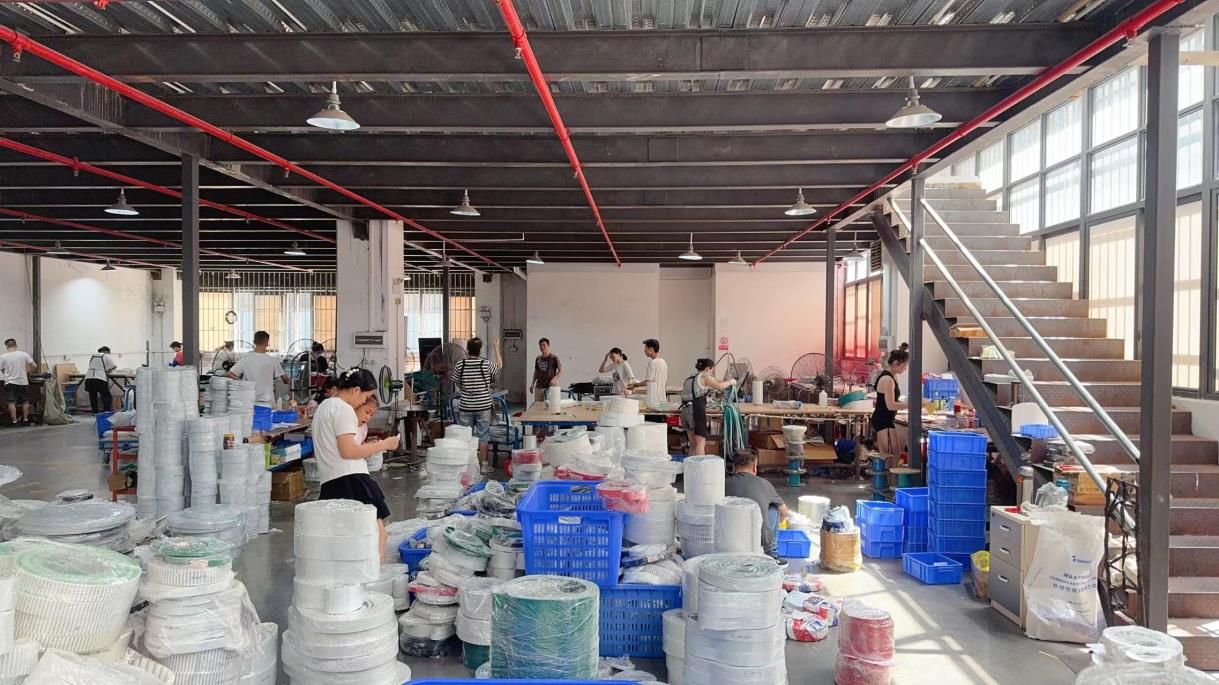
Finished timing belt products packaged for shipment.
Next Step: Request a Quote or Sample
If you are researching timing belts for a new machine or a replacement drive, contact Zhende Machinery to discuss the profile, dimensions, material, and quantity.
Email: liang@zd-stool.com | Phone/WhatsApp: +86 180 0284 9592
Have Questions or Need More Details?
Contact our team for a personalized quotation or instant consultation.
Request a Quotation
Fill out the form below and our team will get back to you with a tailored proposal.
WhatsApp Direct Chat
Prefer to chat in real-time? Message us on WhatsApp for instant assistance & quick answers.
- Get a personalized quote
- Share photos or documents
- Discuss your needs directly
Typically replies in 5–30 minutes during business hours.