
Solving High-Speed Drive Challenges: Implementing Polyurethane and Carbon Fiber Belts
High-speed drive problems are rarely solved by changing one belt specification in isolation. They are solved by matching the belt body, tensile member, tooth profile, pulley geometry, and inspection plan to the actual limiting condition: belt stretch, tooth engagement, heat, vibration, or pulley speed. Polyurethane (PU) timing belts with steel or carbon fiber tensile members give engineers a practical way to address those limits when a standard rubber timing belt is no longer enough.
Problem Definition: Where High-Speed Drives Lose Performance
A high-speed or high-power timing belt drive is limited by four practical constraints. First, the tensile member must carry load without excessive elongation. Second, the tooth profile must maintain stable engagement as speed rises. Third, the pulley must be balanced and concentric enough to avoid vibration. Fourth, heat and environmental exposure must not degrade the belt body or cord.
In real projects, these constraints appear as familiar symptoms: belt elongation after short running periods, tooth jump under acceleration, noise at higher rpm, pulley wear, belt edge fraying, or positioning error in CNC and robotics axes. A belt that performs well in a low-speed conveyor may fail when the same drive is pushed to higher speed or higher power. The fix is not always a larger belt. Often it is a different material and cord system, combined with a pulley speed check.
This is why a PU timing belt with a steel cord and a PU timing belt with a carbon fiber cord serve different engineering purposes. Steel cord PU belts are used in the T5, T10, AT5, and AT10 families listed in the source data. Carbon fiber cord PU belts, such as the 8MGT POLYCHIAN timing belt, are used where low elongation, high rigidity, and high belt speed are priorities. The rest of this article shows how to choose between them without over-specifying or under-specifying the drive.
Industry Background: Why PU and Carbon Fiber Belts Are Specified
Synchronous belts are used across industrial automation, packaging machinery, printing machinery, textile machinery, CNC machines, robotics, conveyor systems, food processing equipment, woodworking machinery, and material handling. In these applications, the belt is part of a transmission belt system that must position, index, or convey with repeatable timing. A standard rubber timing belt remains a sensible default for many general-purpose drives. Commercial research cited in the verified data package estimated the global timing belt market at USD 9.10 billion in 2025, and rubber-based belts remain the volume-leading material segment because of their durability and cost balance.
The material picture changes when the drive is pushed. Polyurethane belts are specified where the application needs a combination of wear resistance, clean running, and stable tooth engagement. The PU body is paired with a tensile member: steel cord for the T-series and AT-series high-speed belts in the source data, or carbon fiber cord for the 8MGT POLYCHIAN belt. The 8MGT construction also uses a nylon fabric tooth facing and lists excellent oil, chemical, and ozone resistance, with maintenance-free operation and no lubrication required.
Standards matter because high-speed drives are often specified on drawings that reference a profile family rather than a single supplier. ISO 5296 covers synchronous belts with inch pitch codes such as MXL, XXL, XL, L, H, XH, and XXH. DIN 7721 is the German standard series for endless synchronous belts in the T-profile range. ISO 5294 covers synchronous belt drive pulleys. ISO 13050 is an international standard for metric-pitch curvilinear synchronous belt drives. These standards do not make two belts interchangeable by themselves. They define the dimensional language that buyers and suppliers should use when reviewing a drawing.
Drawing note: OEM drawings sometimes name a GATES timing belt, BANDO timing belt, CONTINENTAL timing belt, or optibelt V BELT as a reference. Treat a brand name on a drawing as a starting point, not as proof that a substitute is equivalent. Equivalence must be checked by profile, pitch, width, length, tensile member, pulley match, and the governing standard family. V-belt pulleys and V-belts, including cast iron V pulley and optibelt V BELT references, are a separate drive family from synchronous timing drives and should not be compared by pitch dimensions.
Detailed Solution: Match the Belt Construction to the Failure Mode
The practical solution is to identify the dominant limit before changing the belt. If the problem is power capacity at high speed, start with the T10 or AT10 PU timing belt. If the problem is elongation or positioning rigidity, start with the 8MGT POLYCHIAN carbon fiber belt. If the problem is a compact medium-duty axis, start with the T5 or AT5 PU belt. If the problem is pulley vibration, inspect the pulley material, concentricity, and speed rating before changing the belt.
1. T10 PU timing belt for up to 30 kW at high speed
The T10 PU timing belt is a trapezoidal-profile belt with a 10.0 mm pitch, 4.5 mm overall thickness, polyurethane body, steel cord, and 92 Shore A hardness. The source data lists a minimum pulley diameter of 60.0 mm, maximum allowable tensile strength of 780 N per 10 mm belt width, power transmission capacity up to 30 kW, and maximum rotational speed of approximately 10,000 rpm. This is a strong candidate for packaging, printing, woodworking, textile, conveyor, CNC, robotics, material handling, food processing, agricultural, and machine tool drives that need more headroom than a T5 belt can provide.
2. AT10 PU timing belt for up to 70 kW heavy-load drives
The AT10 PU timing belt uses the same 10.0 mm pitch and 4.5 mm thickness but is listed with a minimum pulley diameter of 50.0 mm, maximum allowable tensile strength of 1,700 N per 10 mm belt width, and power transmission capacity up to 70 kW at approximately 10,000 rpm. It is the higher-load option in the source data for CNC machinery, robotics, packaging, woodworking, material handling, printing, textile, food processing, heavy-duty machine tools, and agricultural machinery.
3. T5 and AT5 PU timing belts for compact medium-duty axes
The T5 PU timing belt has a 5.0 mm pitch, 2.2 mm thickness, 30.0 mm minimum pulley diameter, 393 N per 10 mm maximum allowable tensile strength, and up to 5 kW power transmission at approximately 10,000 rpm. The AT5 PU timing belt has a 5.0 mm pitch, 2.7 mm thickness, 25.0 mm minimum pulley diameter, 700 N maximum allowable tensile strength, and up to 15 kW power transmission at approximately 10,000 rpm. These are useful where space is tight and the drive does not need the torque capacity of a T10 or AT10 belt.
4. 8MGT POLYCHIAN carbon fiber belt for low elongation and high rigidity
The 8MGT POLYCHIAN timing belt is a PU belt with a carbon fiber cord, nylon fabric tooth facing, 8.0 mm pitch, 5.6 mm overall thickness, 92 Shore A hardness, and a minimum pulley diameter of 36.6 mm with 22 teeth. The source data lists a maximum belt speed of up to 80 m/s, operating temperature from -54°C to +85°C, transmission efficiency up to 98%, excellent oil, chemical, and ozone resistance, and maintenance-free operation without lubrication. Carbon fiber cord is selected in drive design when low stretch and high longitudinal stiffness are priorities, which is why this construction is relevant to servo-driven positioning axes, CNC machines, robotics, and high-speed packaging or material handling systems.
Recommended shortlist by drive problem
- For high speed with up to 30 kW: T10 PU timing belt with steel cord. It is the most direct match in the source data for a 10.0 mm pitch PU belt at approximately 10,000 rpm and up to 30 kW.
- For low elongation and high rigidity: 8MGT POLYCHIAN PU timing belt with carbon fiber cord. The carbon fiber tensile member and nylon tooth facing are intended for high-speed, high-rigidity positioning duties.
- For heavy load up to 70 kW: AT10 PU timing belt with steel cord. It offers the highest listed power capacity among the PU belts in the source data.
- For compact medium-duty axes: T5 or AT5 PU timing belt. Use AT5 when the drive needs more tensile strength than T5 within a small pulley envelope.
Do not ignore the pulley speed limit
A belt rating does not qualify the whole drive. Zhende's T-series timing pulleys, HTD timing pulleys, and imperial timing pulleys are listed with a maximum operating speed of up to 8,000 rpm. The T10 and AT10 belts are listed at approximately 10,000 rpm. That difference matters: a 10,000 rpm belt rating does not mean the pulley, bearing, shaft, or balancing class can support 10,000 rpm in the actual machine. Check the pulley speed rating, bore tolerance, radial runout, and balance before releasing a high-speed design. The pulley data lists radial runout of 0.03 mm or less and 100% dimensional inspection before shipment, which is a useful baseline for high-speed work but not a substitute for a system-level check.
Step-by-Step Breakdown: Implementing the Right Belt
- Define the drive envelope. Record power, torque, maximum rpm, pulley diameters, center distance, belt width, ambient temperature, contamination, and duty cycle. Do not start with a belt model; start with the operating point.
- Choose the profile family. Decide whether the drawing calls for a T-series trapezoidal profile, an HTD curvilinear profile, an STD profile, or an 8MGT profile. A T10 timing pulley does not accept an HTD timing belt, and an HTD timing pulley does not accept a T-series belt. Keep the belt and pulley families matched.
- Select the tensile member. Use steel cord PU belts for the T5, T10, AT5, and AT10 high-speed options in the source data. Use carbon fiber cord PU for the 8MGT POLYCHIAN belt when low elongation and high rigidity are the dominant requirements.
- Check pulley compatibility and speed. Confirm the pulley tooth profile, number of teeth, pitch, bore, keyway, flange, and material. Check the pulley maximum operating speed against the drive rpm. Aluminum timing pulley, carbon steel, stainless steel, and cast iron pulleys are listed, with natural, black oxide, zinc plated, anodized, and nickel plated finishes.
- Check the environment. The 8MGT POLYCHIAN belt lists an operating temperature range of -54°C to +85°C and excellent oil, chemical, and ozone resistance. For food processing, do not assume food-contact approval from a general PU belt. 21 CFR 177.2600 is the US FDA regulation for rubber articles intended for repeated use; it does not automatically apply to polyurethane belts.
- Validate with a sample or small batch. Check fit, tooth engagement, alignment, noise, running temperature, and tension after run-in. The manufacturer lists a 4 pcs MOQ for belts, which supports a small validation batch. For custom size timing belt projects, confirm length, width, tooth profile, pitch, material, tensile cord, coating, color, perforation, and logo printing before production.
- Confirm inspection and compliance documents. The belt quality control scope includes 100% dimensional inspection, tensile strength test, tooth profile inspection, pre-shipment quality inspection, and third-party inspection such as SGS. The pulley scope includes 100% dimensional inspection, bore and tooth profile inspection, concentricity test, pre-shipment quality inspection, and third-party inspection such as SGS.
- Plan the commercial release. The listed lead time is 7–20 days. The company profile also states that regular models can ship within 3 days, so confirm by model and quantity. The listed MOQ is 4 pcs for belts, 10 pcs for standard pulleys, and 50 pcs for customized pulleys.
Use Cases: Where Each Construction Fits
High-speed packaging machinery
Packaging lines often combine high cycle rates with repeated starts and stops. A T10 PU timing belt with steel cord is a practical starting point for drives up to 30 kW at approximately 10,000 rpm. Where the axis also needs low elongation and high rigidity, the 8MGT POLYCHIAN carbon fiber belt is the more targeted choice. Check the pulley speed rating before assuming the belt rating is usable.
CNC and robotics positioning axes
Positioning accuracy depends on the entire transmission chain. The 8MGT POLYCHIAN belt lists transmission efficiency up to 98%, a carbon fiber cord, and a nylon tooth facing. Those features are relevant to servo-driven axes that need stable timing and minimal stretch. The pulley side must still be checked for concentricity, radial runout, and balance.
Printing and textile machinery
Printing and textile drives often run continuously and are sensitive to vibration and belt elongation. A PU timing belt with steel cord can provide a stable alternative to a general rubber timing belt. For high-speed spindles or traversing axes, the 8MGT carbon fiber construction may be a better fit if the pulley and bearing system can support the speed.
Heavy-load machine tools
The AT10 PU timing belt is listed for up to 70 kW and approximately 10,000 rpm, making it the highest-power PU option in the source data. It is relevant to heavy-duty machine tools, CNC machinery, and agricultural machinery where the drive needs more tensile capacity than a T10 belt.
Food processing and washdown areas
The 8MGT POLYCHIAN belt lists excellent oil, chemical, and ozone resistance and maintenance-free operation. Those properties are useful in food processing environments, but they are not the same as food-contact approval. Confirm the applicable regulatory route for the exact belt compound and end product. For rubber articles, 21 CFR 177.2600 is the relevant US food-contact regulation; for PU, the compliance path must be confirmed separately.
Conveyors and material handling
Conveyor and material handling drives often use HTD timing belts, STD timing belts, or T-series belts depending on the pulley system. A custom size timing belt can be specified by length, width, profile, pitch, and tensile cord. The same rule applies: match the belt family to the pulley family and verify the pulley speed rating.
Comparison Table: PU and Carbon Fiber Belt Options
The table below uses only the specifications listed in the source data. It is a selection aid, not a universal ranking. The right choice depends on the drive envelope, pulley match, and validation results.
| Configuration | Profile and pitch | Body and tensile member | Listed power or speed data | Best-fit problem | Key check |
|---|---|---|---|---|---|
| T5 PU timing belt | T5 trapezoidal, 5.0 mm pitch | PU body, steel cord, 92 Shore A | Up to 5 kW; approx. 10,000 rpm; 393 N per 10 mm max allowable tensile | Compact medium-duty axes | Minimum pulley diameter 30.0 mm |
| T10 PU timing belt | T10 trapezoidal, 10.0 mm pitch | PU body, steel cord, 92 Shore A | Up to 30 kW; approx. 10,000 rpm; 780 N per 10 mm max allowable tensile | High-speed drives up to 30 kW | Minimum pulley diameter 60.0 mm; check pulley rpm rating |
| AT5 PU timing belt | AT5 trapezoidal, 5.0 mm pitch | PU body, steel cord, 92 Shore A | Up to 15 kW; approx. 10,000 rpm; 700 N max allowable tensile | Compact drives needing more tensile strength than T5 | Minimum pulley diameter 25.0 mm |
| AT10 PU timing belt | AT10 trapezoidal, 10.0 mm pitch | PU body, steel cord, 92 Shore A | Up to 70 kW; approx. 10,000 rpm; 1,700 N per 10 mm max allowable tensile | Heavy-load high-power drives | Minimum pulley diameter 50.0 mm; confirm pulley and bearing limits |
| 8MGT POLYCHIAN timing belt | 8MGT, 8.0 mm pitch | PU body, carbon fiber cord, nylon fabric tooth facing, 92 Shore A | Max belt speed up to 80 m/s; efficiency up to 98%; -54°C to +85°C | Low elongation, high rigidity, high-speed positioning | Minimum pulley diameter 36.6 mm with 22 teeth |
Notes: The 8MGT row does not list a kW rating in the source data, so no kW value is assigned here. The T5, T10, AT5, and AT10 rows use the listed power and speed values. Pulley speed ratings must be checked separately; Zhende's T-series and HTD timing pulleys list a maximum operating speed of up to 8,000 rpm.
FAQ
What compliance documents should I request for a PU timing belt?
Ask for the current factory audit, supplier assessment, and product test report that apply to the exact belt model and market. In the source data, the TÜV Rheinland factory audit report 493993448_P+T and the Alibaba.com verified Supplier production/trading assessment are listed with validity to 2027-07-09. A RoHS test report with certificate number CANEC24017410403 is associated with the T5 PU timing belt, but the copy in the source set lists an expiry date of 2026-08-14, so buyers should request the current renewal before relying on it. For food-contact applications, note that 21 CFR 177.2600 applies to rubber articles, not polyurethane belts.
Can PU timing belts handle high-speed and high-power drives?
Yes, within the limits of the selected profile and tensile member. The T10 PU timing belt is listed for up to 30 kW and approximately 10,000 rpm; the AT10 PU belt is listed for up to 70 kW and approximately 10,000 rpm. The 8MGT POLYCHIAN belt with carbon fiber cord is listed for belt speeds up to 80 m/s. The pulley rating must be checked separately: Zhende's T-series and HTD timing pulleys list a maximum operating speed of up to 8,000 rpm, so the pulley can limit the system.
How should I budget for a high-speed PU or carbon fiber belt?
Build the budget from a specification-level RFQ, not from a catalog headline. The source data does not provide a verified price benchmark. Price should be quoted by profile, pitch, width, length, tensile cord, quantity, and Incoterm. The manufacturer lists MOQ at 4 pcs for belts, 10 pcs for standard pulleys, and 50 pcs for customized pulleys, with lead time of 7–20 days.
Can I validate a belt with a sample before production?
Use a sample or small batch to check fit, tooth engagement, alignment, noise, and running temperature before releasing a production order. The manufacturer lists a 4 pcs MOQ for belts, which supports a small validation batch. Quality control includes 100% dimensional inspection, tensile strength test, tooth profile inspection, pre-shipment quality inspection, and third-party inspection such as SGS.
Which timing belt manufacturers should I shortlist, and what lead time should I plan?
Shortlist suppliers that can document the exact profile, tensile member, pulley match, inspection records, and current compliance documents. Dongguan Zhende Machinery Equipment Co., LTD is one manufacturer in the source data that lists T-series PU, HTD, STD, and 8MGT POLYCHIAN carbon belts, OEM/ODM capability, 100% dimensional inspection, and SGS/TÜV assessment. This article does not rank brands without verified company-level data. The listed lead time is 7–20 days; the company profile also states that regular models can ship within 3 days, so confirm by model and quantity. For a sample or quotation, contact the supplier with your drawing and operating point.
Conclusion
High-speed drive problems are solved by matching the belt to the limiting condition, not by choosing the most expensive construction. The T10 PU timing belt is a practical starting point for up to 30 kW at approximately 10,000 rpm. The AT10 PU belt extends the PU range to 70 kW. The 8MGT POLYCHIAN belt with carbon fiber cord addresses low elongation and high rigidity where the pulley and bearing system can support the speed. The T5 and AT5 PU belts cover compact medium-duty axes.
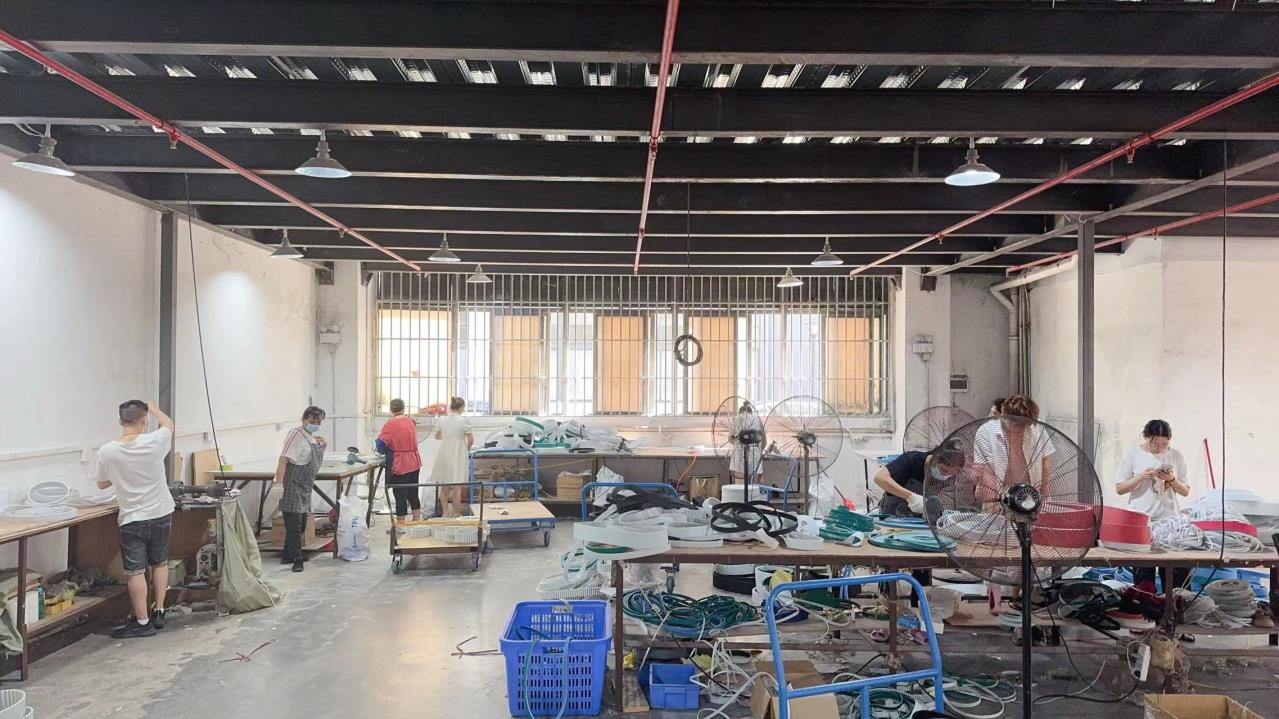
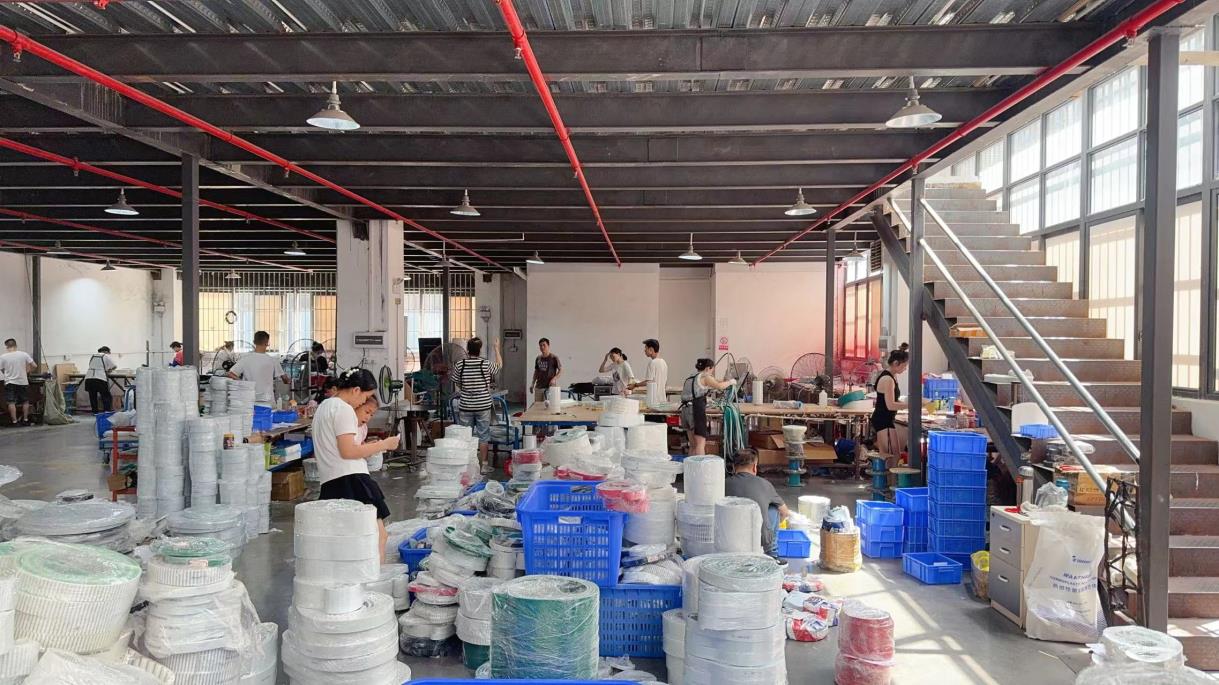
The implementation rule is simple: confirm the profile family, select the tensile member, check the pulley speed rating, validate with a sample, and verify current compliance documents. Dongguan Zhende Machinery Equipment Co., LTD lists OEM/ODM capability, a 4,500 m² factory, 40 employees, 6 engineers, annual output of 120,000 pieces, and exports to Europe and North America. The manufacturer also lists 100% dimensional inspection, tensile strength testing, tooth profile inspection, pre-shipment inspection, and third-party inspection such as SGS. For projects that need a custom size timing belt, a T5 timing pulley, a T10 timing pulley, an HTD timing pulley, an aluminum timing pulley, or a carbon fiber timing belt, start with a drawing review and a sample validation plan.
Next step: Request a sample or quotation for your high-speed drive. Send the profile, pitch, width, length, tensile member, pulley drawing, quantity, and operating speed. For a broader product overview, download the Zhende product brochure. You can also visit Dongguan Zhende Machinery Equipment Co., LTD or contact the sales team at liang@zd-stool.com.
Have Questions or Need More Details?
Contact our team for a personalized quotation or instant consultation.
Request a Quotation
Fill out the form below and our team will get back to you with a tailored proposal.
WhatsApp Direct Chat
Prefer to chat in real-time? Message us on WhatsApp for instant assistance & quick answers.
- Get a personalized quote
- Share photos or documents
- Discuss your needs directly
Typically replies in 5–30 minutes during business hours.