
Pairing Timing Belts and Pulleys to Machine Scenarios
The short answer: choose the belt from the load, speed and environment, then choose the pulley from the belt and from the inertia budget - and never specify one without the other. A carton indexer running at moderate speed and a laser head positioning at high speed can use the same profile family and still need different materials on both sides of the mesh.
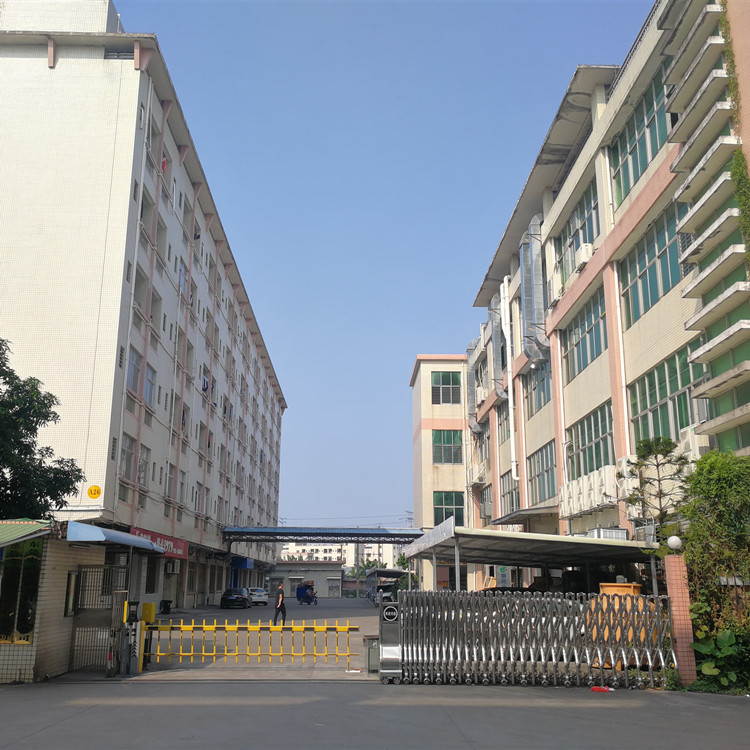
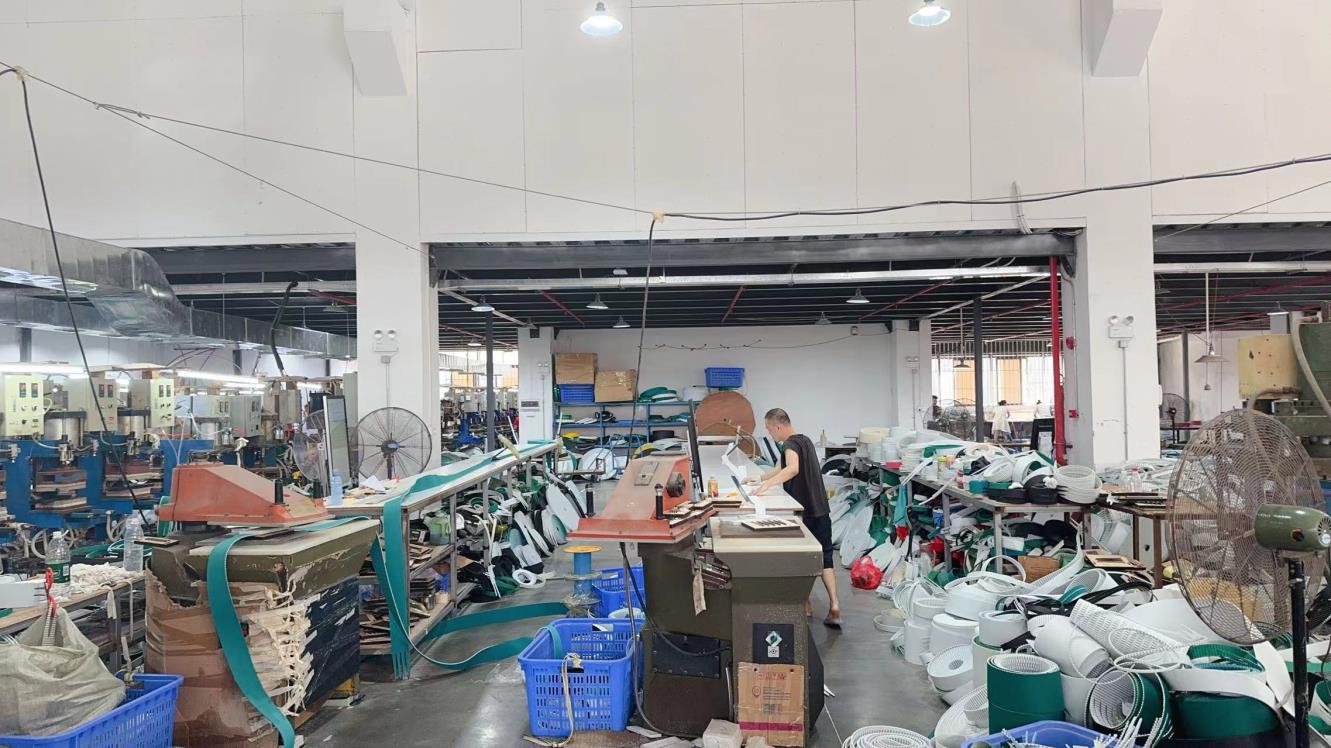
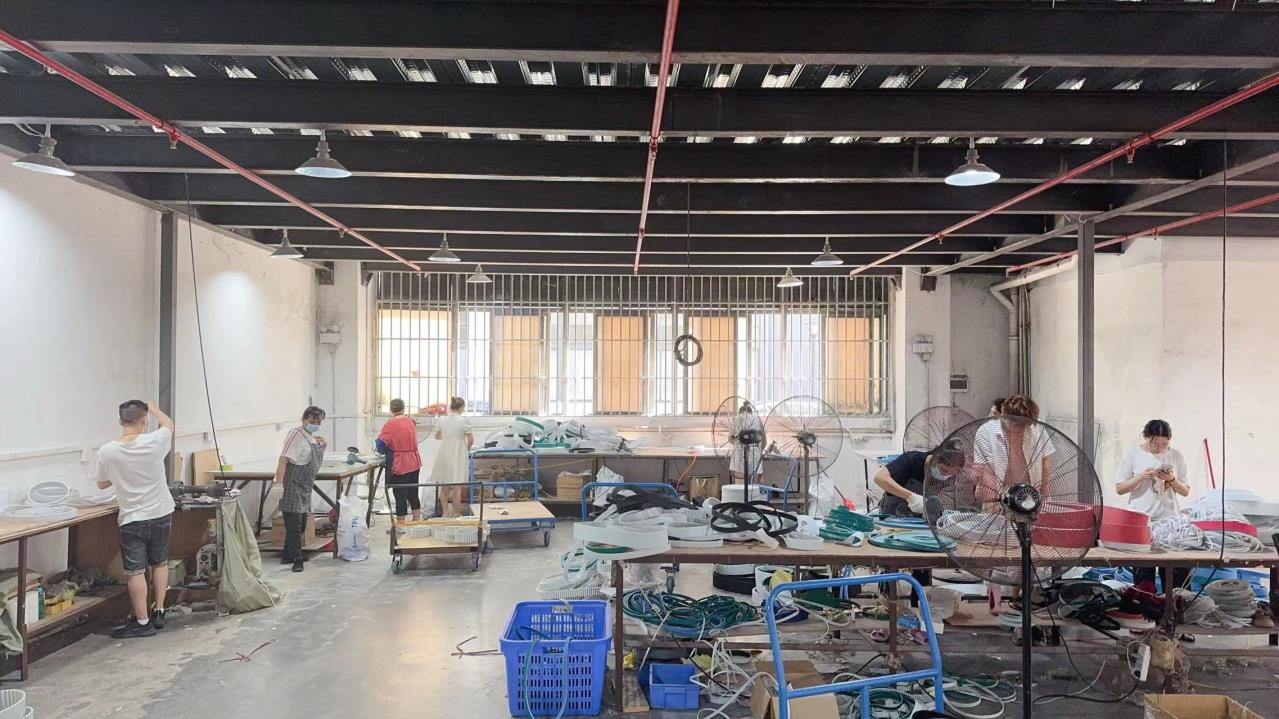
This guide is written for the point where the machine layout is fixed and the buyer has to convert it into a purchase order. It maps eight common scenarios to catalogue entries from Dongguan Zhende Machinery Equipment Co., LTD, a Dongguan-based manufacturer and one-stop supplier of FA automation transmission parts founded in 2019, and then sets out the cost-performance reasoning, the certification coverage, and the acceptance criteria that decide whether the delivered parts actually fit the machine.
Why the belt and the pulley have to be chosen as one set
A drive that fails early is more often mismatched than defective. The failure modes that matter in synchronous drives are belt wear, tooth jumping, belt elongation, incorrect tension, oil and dust contamination, and pulley misalignment; on the pulley side they are tooth wear, bore misalignment, pulley runout and corrosion. Every one of those sits at the interface between the two parts, not inside either part alone.
That has a practical consequence for procurement: a specification that names only a belt leaves the pulley to whoever assembles the machine, and a specification that names only a pulley leaves the belt to a catalogue lookup. Either approach can produce a drive where the tooth form matches but the centre distance, the pulley runout or the inertia does not.
- Tooth jumping usually points to under-tensioning, too few teeth in mesh, or a pulley whose tooth form is from a different profile family.
- Belt elongation points to a tensile member that is under-specified for the load, or to a PU belt being asked to do a job where its lower stretch was never verified against the duty cycle.
- Pulley runout and bore misalignment point to machining and inspection, which is why concentricity, runout and dynamic balance checks belong in the purchase order rather than in a post-installation complaint.
What the published standards settle, and what they leave to the drawing
Standards fix dimensioning conventions; they do not choose a belt for a scenario. The published scopes that a buyer can reasonably cite in a specification are the following.
- ISO 13050 covers metric-pitch curvilinear-profile synchronous belts and pulleys, and the 2022 edition specifies characteristics for profiles G, H, R and S.
- ISO 5296 covers synchronous belts with the inch-pitch codes MXL, XXL, XL, L, H, XH and XXH, in metric and inch dimensions.
- DIN 7721 is the German standard series for dimensions of endless synchronous belts in the T-profile range, associated with T2,5, T5, T10 and T20 profiles.
- ISO 5294 is the complementary standard for synchronous belt drive pulleys.
- ISO 1813 specifies electrical conductivity requirements and a test method for antistatic synchronous belts, which matters where the drive runs in a flammable or static-sensitive atmosphere.
Two gaps are worth knowing before a specification is issued. First, whether every HTD or GT designation used commercially is defined in a published standard is not settled by the sources above, so interchangeability should be confirmed against the supplier drawing rather than assumed from the pitch. Second, V-belt drives are a separate product family: ISO 4183 governs classical and narrow V-grooved pulley groove profiles and ISO 4184 governs V-belt length designation in the datum system. A V-belt pulley and a timing pulley should never be treated as one line item in a combined 'industrial belts' order, because their designation systems are not interchangeable.
For customs purposes the same logic applies: endless synchronous belts of vulcanised rubber are classified in HS heading 40.10 by outside circumference band, with 4010.35 covering belts above 60 cm and up to 150 cm, and 4010.39 as the residual subheading. Classification therefore follows circumference, not tooth profile, which is why published trade statistics cannot be used to benchmark HTD or T-profile demand.
A five-step matching method for decision-stage buyers
Run these steps in order. Skipping step one is the most common reason a technically correct belt arrives and does not fit.
- Fix the drive geometry. Record pulley tooth counts, ratio, centre distance, belt width and the required pitch length. These numbers decide which catalogue pitch lengths are even eligible.
- Choose the profile family. Curvilinear profiles (HTD 5M, 8M, 14M and S8M) carry higher torque per width in most industrial layouts; trapezoidal T and AT profiles (T5, AT5, AT10) suit compact, precise or retrofit drives; inch-pitch Imperial profiles (MXL, XL, L, H) are the correct answer when the machine was designed around them.
- Choose the belt material from the environment and duty. Rubber where shock absorption and unit cost dominate; PU where dimensional stability, wear resistance and resistance to oil and chemicals dominate.
- Choose the pulley material from inertia versus load. Aluminium where acceleration and motor load matter; steel where load capacity and service life under heavy duty matter.
- Fix the evidence package before the PO. Drawing, material statement, inspection report, and the certification documents with their validity dates attached to the order.
Scenario map: belt and pulley pairings by application
The table below converts the method into starting combinations. Each row assumes the drive geometry has already been fixed in step one; the pairing then follows from duty, environment and inertia.
| Scenario | Belt option | Pulley option | Why this pairing | Cost-performance note |
|---|---|---|---|---|
| Packaging and cartoning | HTD 8M rubber | HTD 8M, steel for load, aluminium for speed | Intermittent indexing needs shock absorption; 8M carries the torque at moderate speed | Lowest first cost; steel pulley reduces replacement frequency |
| High-speed pick-and-place and sorters | 8MGT POLYCHIAN GT | GT-profile pulley, aluminium | Speed and repeatability dominate; lighter pulley lowers system inertia | Highest belt cost; justified only at high cycle counts |
| CNC, laser cutting, dispensing | AT10 PU, AT5 PU in tight envelopes | AT10 or AT5 pulley, aluminium | Low elongation and dimensional stability under repeated positioning | Higher unit price; lower re-tensioning and replacement frequency |
| Light compact drives: electronics, laboratory, small conveyors | HTD 5M rubber or T5 PU | HTD 5M or T5 timing pulley, aluminium | Small pitch allows small pulley diameters in a short centre distance | Rubber for cost; T5 PU where cleanliness or chemical exposure matters |
| Textile, printing and general machinery | S8M rubber, HTD 8M rubber | S8M or HTD 8M pulley, steel or aluminium | Continuous running under moderate load with dust present | Rubber balances cost; tighten pulley runout limits where registration matters |
| Mining, bulk conveying, long centre distances | HTD 14M rubber | HTD 14M steel pulley | High torque over long spans with heavy starting loads | Steel pulley load capacity offsets its weight penalty |
| Imported or legacy equipment | Imperial profiles: MXL, XL, L, H | Imperial pulley, matching inch-pitch | Replacement must reproduce the original geometry, not improve it | Avoids re-engineering the drive; cite ISO 5296 in the drawing |
| Multi-part retrofit across several machines | Mixed profiles | T-series, Imperial and HTD pulleys | Matching risk rises with the number of part numbers in one project | Consolidating belt and pulley supply removes split responsibility for fit |
Packaging machinery: HTD 8M rubber with an HTD 8M pulley
Cartoners and case packers index a known mass a short distance, many times per shift. The shock of each start is better absorbed by a rubber belt than by a stiffer PU construction, and the 8M pitch carries the torque without widening the belt beyond what the pulley face allows. The decision that actually changes cost here is the pulley material: an aluminium HTD 8M pulley lowers rotating mass and lets the servo accelerate the load with less current, while a steel pulley is the better answer where the load is heavy or the machine runs three shifts and pulley replacement is the expensive event.
High-speed automation: 8MGT POLYCHIAN GT with a GT-profile pulley
On pick-and-place heads, sorters and high-cycle transfer units, the limiting factor is usually not torque but speed and repeatability. The 8MGT POLYCHIAN GT carbon timing belt is the catalogue entry for this context, and it should be paired with a GT-profile pulley machined to the same tooth form - not with a pulley chosen only because the pitch matches. Two questions close this decision: what cyclic speed and acceleration the drive will actually see, and what pulley inertia the motor can accept. Ask for those two numbers in writing, because the belt premium is only recovered when the cycle count is high enough that belt life, not belt price, sets the annual cost.
Precision positioning: AT10 PU, with AT5 PU for tight envelopes
CNC axes, laser cutting heads and dispensing stations repeat the same move thousands of times and punish stretch. PU timing belts offer higher wear resistance, lower elongation and better dimensional stability than rubber, and the AT profile is the compact trapezoidal option that fits inside machine frames where an 8M pulley would be too large. Where the available centre distance is very short, AT5 PU with a matching AT5 pulley keeps the tooth count in mesh high enough to avoid jumping. Specify the pulley as aluminium here: the lower inertia improves dynamic response and reduces motor load, which is the whole point of the PU upgrade.
Light compact drives, textiles and printing: HTD 5M, S8M and T5
Small conveyors, electronics handling fixtures and laboratory equipment usually need a small pulley diameter and a short centre distance, which is the natural territory of HTD 5M rubber with an HTD 5M pulley, or T5 PU with a T5 timing pulley where oil, dust or washdown makes rubber the weaker choice. On textile and printing lines, S8M rubber with an S8M pulley is the cost-balanced option for continuous running; the specification item that decides print quality is not the belt at all but pulley runout and concentricity, so those belong in the inspection report.
Heavy duty and legacy equipment: HTD 14M, Imperial, and the V-belt boundary
Mining and bulk conveying combine high torque, long spans and heavy starting loads; HTD 14M rubber with a steel HTD 14M pulley is the pairing that puts load capacity where it is needed. When the machine was imported, the correct move is to reproduce the original inch-pitch geometry with an Imperial belt and pulley rather than redesign the drive around a metric profile - and to write the standard reference on the drawing. Where the same order also contains V-belt pulleys, keep them on a separate line: V-belt drives are dimensioned under a different standards family and their lengths are not interchangeable with synchronous pitch lengths.
Cost-performance: where the higher-priced option pays back
For a decision-stage buyer the useful question is not which material is better in general, but which premium is recovered inside one replacement cycle. The comparison ranges below are the ones Dongguan Zhende publishes for its own product range; they are directional planning figures, not test results for a specific drive, so they should be confirmed against your duty cycle.
| Decision point | Rubber timing belt | PU timing belt |
|---|---|---|
| Typical fit | Automotive equipment, general industrial machinery, agricultural machinery, medium-load drives | Packaging machines, automation, food processing, CNC, precision motion systems |
| Stated performance difference | Neoprene or rubber body with fibreglass or aramid cord; good flexibility and shock absorption; medium oil and chemical resistance | Polyurethane body with steel, Kevlar or steel cord options; reported 2 to 3 times higher wear resistance and lower elongation |
| Cost position | 20 to 40 percent lower initial cost | Higher unit price, lower total cost of ownership where replacement frequency is high |
| Decision rule | Use where the drive is accessible, replacement labour is cheap, and the environment is free of oils and aggressive chemicals | Use where downtime cost exceeds the belt premium, or where oil, chemical and cleanliness conditions shorten rubber life |
| Decision point | Aluminium timing pulley | Steel timing pulley |
|---|---|---|
| Typical fit | Robotics, automation equipment, packaging machinery, CNC machines, high-speed drives | Mining equipment, conveyors, heavy machinery, industrial power transmission |
| Stated difference | Reported 50 to 70 percent lighter than steel; improves dynamic response and reduces motor load | Reported 30 to 50 percent higher load capacity and longer service life under heavy loads; better wear resistance and dimensional stability |
| Cost position | Generally 10 to 20 percent lower machining and transport cost | Higher unit cost, lower total replacement cost in heavy duty through longer life |
| Decision rule | Choose when acceleration, cycle rate or motor sizing is the constraint | Choose when the pulley itself is the wear part and stopping the machine is the expensive event |
One combination is worth flagging because it is frequently mis-bought: a PU belt on an aluminium pulley is the right answer for a fast, precise axis, but it is a poor answer for a dusty, high-load conveyor where nothing is gained from the weight saving and the aluminium pulley face becomes the wear limit first. Match the premium to the constraint that actually governs the machine.
Certification coverage: what it verifies for a scenario decision
The supplier evidence covers the supplier and its production arrangements; it does not replace the item-level documents in the purchase order. Dongguan Zhende holds Alibaba.com Verified Supplier status, is covered by the Production Trading Assessment reports 493993448_P+T and 494177048_P, and has SGS/TUV assessment documentation. These documents carry a validity period of 2026-07-10 to 2027-07-09, which is current at the time of writing and should be checked against the date of any order placed later.
- What it supports: supplier identity and platform verification, an assessed production and trading arrangement, and third-party inspection or audit evidence from SGS and TUV for the stated period.
- What it does not establish: a torque rating for a specific belt, a dimensional result for a specific pulley, batch traceability, or product-level material compliance. Those remain item-level questions.
Scenario fit adds a second layer. For shipments into the EU, Regulation (EC) No 1907/2006 (REACH) governs the chemical compliance of rubber and polyurethane compounds placed on the market, so a current substance statement belongs in the file. Directive 2011/65/EU (RoHS) applies only where the belt or pulley forms part of, or is supplied with, electrical or electronic equipment - it should not be requested as a blanket certificate. For US food-contact applications, 21 CFR 177.2600 covers rubber articles intended for repeated use; PU food-contact compliance follows a different route and must be documented separately by the supplier rather than assumed from the belt being PU.
Purchasing terms and acceptance criteria to agree before ordering
Fix these points in the quotation, not in the complaint. Each one maps to a failure mode that is otherwise discovered at commissioning.
- Drawing and standard reference. Belt pitch and profile, pitch length, width, tooth count; pulley outside diameter, flange, bore, keyway and tooth count; the governing standard family named on the drawing.
- Geometric acceptance limits. Concentricity, bore accuracy and pulley runout tolerance, plus dynamic balance where the pulley runs at speed - the checks the supplier applies are precision CNC machining, high concentricity control, dynamic balance inspection and strict dimensional tolerance control.
- Material and construction statement. Rubber or PU body, cord type, and for pulleys the alloy or steel grade, together with any anti-corrosion surface treatment.
- Inspection evidence. 100 percent dimensional and appearance inspection, tensile strength testing, tooth profile verification, incoming material control and pre-shipment performance testing; ask for the report with the shipment, not after installation.
- Installation guidance. Correct belt tensioning and accurate pulley alignment guidance, since both are listed causes of tooth jumping and belt wear and neither is a manufacturing defect.
- Commercial terms. MOQ, tooling or drawing-programme cost, price validity, Incoterm, packaging, and the HS classification of the belt itself (HS 4010.35 or 4010.39 depending on outside circumference) confirmed with the freight forwarder.
- Lead time and repeatability. Regular models are stated to ship within 3 days, with a stated 7-day lead time for drawing-based custom gears and racks; confirm the figure per item for custom belts and pulleys rather than applying it across the order.
Frequently asked questions
Do the SGS/TUV and Alibaba.com Verified Supplier documents cover every belt and pulley shipped?
No. The Alibaba.com Verified Supplier status, the Production Trading Assessment reports 493993448_P+T and 494177048_P, and the SGS/TUV documentation evidence the supplier and its production and trading arrangements for the validity period 2026-07-10 to 2027-07-09. They are not a per-item certificate. A scenario decision still needs item-level evidence - dimensional report, tooth profile verification, tensile test data and a material statement for the exact belt and pulley on the purchase order. Use the assessment documents for screening and the item-level documents for acceptance.
Can a pulley be machined to match a belt that is already running on the machine?
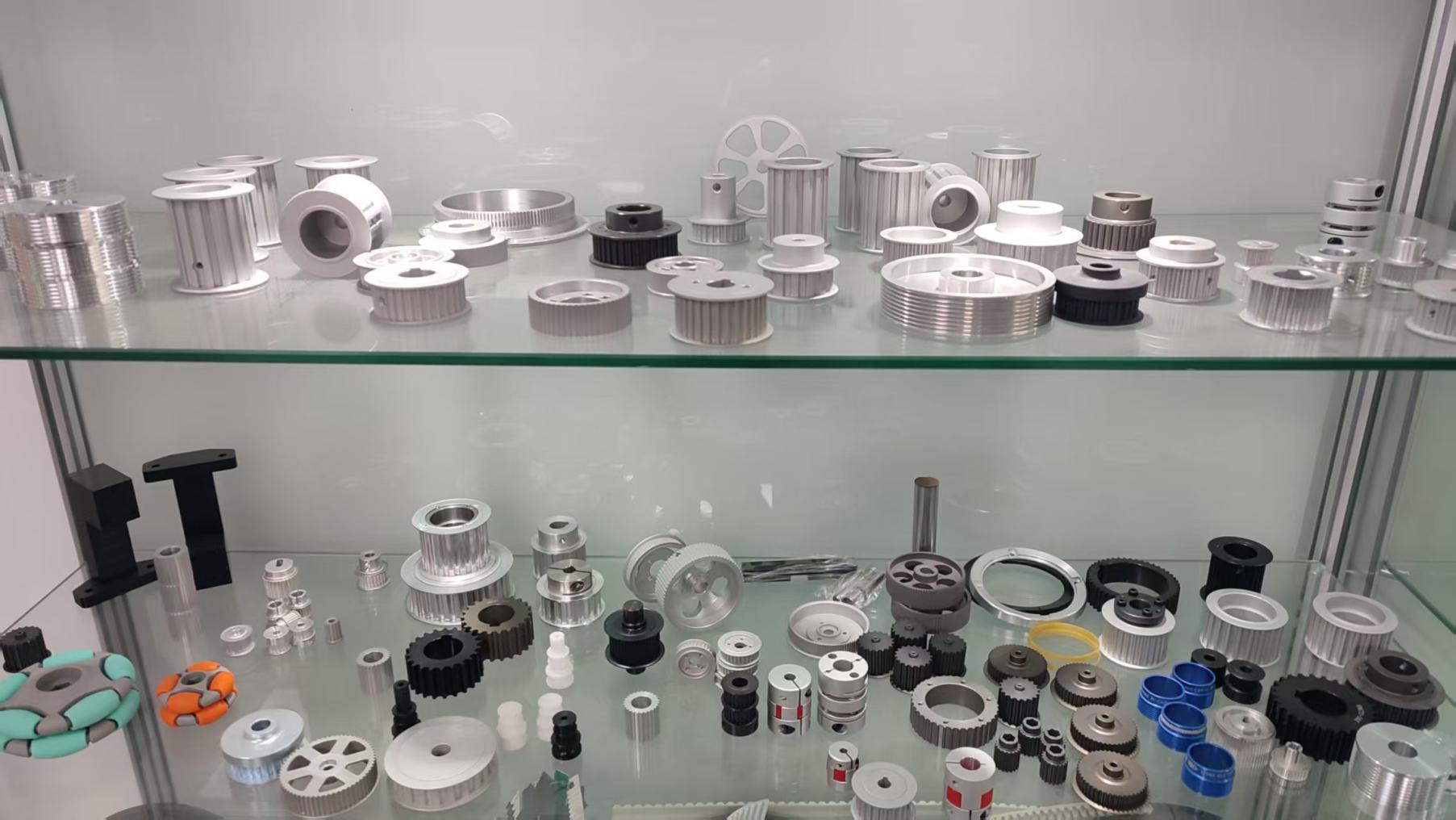
Yes, within the limits of the belt data you can supply. Dongguan Zhende states that it machines timing pulleys to customer drawings, and its listed stock covers MXL, XL, L, H, 3M, 5M, 8M, S3M, S5M, S8M, T5 and T10 profiles. The belt side is fixed: identify the pitch, profile and tooth count from the marking or by measurement, and cut the pulley in the same standard family - ISO 13050 for the metric curvilinear profiles within its scope, ISO 5296 for inch-pitch MXL to XXH, DIN 7721 for T-profile. If the marking is worn off, send the belt for identification rather than specifying from a photograph.
Which timing belt manufacturer is better for custom size and low MOQ?
Judge suppliers on four documented points rather than on a general reputation claim. First, standard-stock depth, because a low-MOQ custom order is usually built around a standard item plus one machined part - the supplier's listed stock is more than 6,000 timing pulleys across the profiles above, alongside a wider catalogue of over one million standard transmission items. Second, drawing-based customization accepted in writing. Third, MOQ and lead time stated per item in the quotation rather than as a policy statement. Fourth, independent assessment evidence inside its validity window. The practical test is whether the supplier will quote a trial quantity against your drawing with an inspection report attached.
Is PU always the more expensive choice over the life of the drive?
Not automatically. Rubber timing belts carry a 20 to 40 percent lower initial cost, while PU is reported at 2 to 3 times the wear resistance with lower elongation and better dimensional stability. The deciding figure is the replacement interval under your duty cycle: if the PU premium is recovered within one replacement cycle - counting the belt, the labour and the downtime - PU is the lower-cost option; if the drive is accessible and runs light duty, rubber wins on cost. Ask for an expected replacement interval for both materials before choosing.
What should a sample order include before a batch purchase order?
A sample should be the exact belt and pulley pair, not a representative item from the same family. Ask for the dimensional and appearance inspection record, the material and cord statement, the pulley runout figure, and written tension and alignment guidance for installation. Run the sample under the real duty cycle - the actual speed, load and contamination conditions - before releasing the batch quantity. For a specific matching question, the Zhende team can be reached through the contact details below.
Conclusion
Scenario matching is a short chain of decisions, and it only works when the chain is completed in order: geometry, profile family, belt material, pulley material, evidence package. HTD 8M rubber with a steel or aluminium HTD 8M pulley covers most packaging work; 8MGT POLYCHIAN GT with a GT-profile pulley covers high-cycle automation; AT10 and AT5 PU with aluminium pulleys cover precision positioning; HTD 5M, T5 and S8M cover compact and continuous-running machinery; HTD 14M with a steel pulley covers heavy duty; and Imperial profiles keep imported equipment on its original geometry. The certification file - Alibaba.com Verified Supplier, the Production Trading Assessment reports 493993448_P+T and 494177048_P, and SGS/TUV documentation valid to 2027-07-09 - tells you the supplier has been assessed; the drawing, inspection report and sample run tell you the parts fit.
For the full product range, download the Zhende product brochure (PDF). To check a pairing against a specific machine, send the belt marking or the pulley drawing to Ms. Liang at liang@zd-stool.com or +86 180 0284 9592 (WhatsApp available on the same number); the company is based at Building 1, No. 332 Fumin Middle Road, Dalang Town, Dongguan City, Guangdong Province, China.
Have Questions or Need More Details?
Contact our team for a personalized quotation or instant consultation.
Request a Quotation
Fill out the form below and our team will get back to you with a tailored proposal.
WhatsApp Direct Chat
Prefer to chat in real-time? Message us on WhatsApp for instant assistance & quick answers.
- Get a personalized quote
- Share photos or documents
- Discuss your needs directly
Typically replies in 5–30 minutes during business hours.