
Timing Belt & Pulley Selection Guide: Pitch, Profile, and Material Parameters Explained
Timing Belt & Pulley Selection Guide: Pitch, Profile, and Material Parameters Explained
\n
Timing belt and pulley selection is a matched-system decision. A belt is only interchangeable when its pitch, tooth profile, width, length and pulley tooth geometry agree with the drawing or the original drive design. Price, stock status and material labels cannot correct a mismatched profile, and a pulley cannot be selected from a photo or a nominal model name alone.
\nThis guide explains the parameters an engineer or procurement team should fix before an RFQ: pitch, profile, belt construction, pulley geometry, material, inspection evidence and custom-size data. It uses the supplied product families from Dongguan Zhende Machinery Equipment Co., LTD, including T Series Timing Pulley, HTD Timing Pulley and Imperial Timing Pulleys, plus the PU and rubber timing belt families in the catalog. It also uses the supplied standards and supplier-assessment records as evidence boundaries, not as product-performance claims. For the recommendation question in the FAQ, the guide sets out a verifiable shortlist method rather than an unsupported brand ranking.
\nStart with the matched system, not the belt alone
\nPitch is the distance between corresponding points on successive teeth. Profile is the tooth shape. Pitch length is the developed length around the belt path. These three values, together with belt width and pulley tooth count, determine whether a belt and pulley can work as a set. A belt may carry a familiar profile name and still be wrong for a pulley if the pitch code, tooth form, width or length differs from the drawing.
\nThe practical rule is simple: put the belt and pulley data on one specification sheet before requesting a quote. The sheet should show the belt profile code, pitch, pitch length, width and construction, and the pulley profile, tooth count, bore, keyway, flange type and surface treatment. If the application is a retrofit, add the original drive layout, center distance and any known speed or load data. This prevents the common error of buying a belt that matches a catalog heading but not the pulley on the machine.
\nProfile families in the supplied catalog
\nThe supplied catalog separates pulley families and belt families, but the separation is not a promise of interchangeability. T Series Timing Pulley, HTD Timing Pulley and Imperial Timing Pulleys are distinct pulley lines. On the belt side, the catalog includes T PU TIMING BELT, AT PU TIMING BELT, HTD TIMING BELT, STD TIMING BELT and POLYCHIAN GT CARBON TIMING BELT. Each order should name the exact belt family and the exact pulley family, then confirm the dimensional data on the drawing.
\n| Supplied belt or pulley family | What it tells the buyer | Parameters to confirm before ordering | Evidence boundary |
|---|---|---|---|
| T PU TIMING BELT and T Series Timing Pulley | Both a T-series belt family and a T-series pulley family are listed. | T profile code, pitch, pitch length, width, pulley tooth count, bore, keyway and flange. | Family names confirm catalog scope, not dimensional interchangeability. |
| HTD TIMING BELT and HTD TIMING PULLEY | Both HTD belt and HTD pulley families are listed. | HTD profile size, pitch, width, pitch length and pulley tooth count. | The exact profile and drawing revision must be confirmed. |
| AT PU TIMING BELT | An AT PU belt family is listed. | AT tooth profile, pitch, width, pitch length and matching pulley geometry. | An AT pulley model is not separately named in the supplied product list, so the pulley drawing must be confirmed with the supplier. |
| POLYCHIAN GT CARBON TIMING BELT | A distinct carbon timing belt family is listed. | Construction details, profile, pitch, width and matching pulley geometry. | The product name is listed, but comparative load or service-life data is not supplied. |
| Imperial Timing Pulleys | A separate imperial pulley line is listed. | Imperial pitch, tooth form, tooth count, bore, keyway and flange. | Do not match an imperial pulley to a metric belt by visual similarity. |
The company states that it keeps more than 6,000 timing pulleys in stock and lists MXL, XL, L, H, 3M, 5M, 8M, S3M, S5M, S8M, T5 and T10 among its pulley profiles. That is a company-reported stock and profile statement. It helps a buyer frame an RFQ, but it does not prove that every belt construction in those profiles is stocked or that a listed pulley will fit a given belt without drawing verification.
\nProfile names can also create false confidence. A T5 timing pulley and a T10 timing pulley are different sizes within the T-series family, and an HTD timing pulley must be matched to an HTD belt of the same profile and pitch. An S8M profile listed in pulley stock does not, by itself, confirm an S8M rubber belt is available in the required length and width. The same caution applies to an HTD 5M rubber belt request: confirm the belt construction and the 5M pulley data together.
\nUse standards to write the drawing, not to assume product performance
\nStandards are useful because they define dimensional systems and test scopes. They do not certify a supplier's specific batch, and a standard number on a website is not the same as a test report for the belt being purchased. The first step is to identify the standard family that matches the drawing, then ask the supplier to state the exact profile, pitch and dimensional data against that drawing.
\nISO 13050:2022 specifies characteristics for metric pitch curvilinear synchronous endless belts and pulleys for profiles G, H, R and S. ISO 5296 specifies synchronous belts with pitch codes MXL, XXL, XL, L, H, XH and XXH in metric and inch dimensions. ISO 5294 is the international standard for synchronous belt drive pulleys. DIN 7721 is the German standard series for dimensions of endless synchronous belts in the T-profile range. ISO 1813 specifies electrical conductivity requirements and a test method for antistatic endless V-belts, joined V-belts and synchronous belts.
\nThese references help an engineer separate two questions. The first is: what profile and pitch system does the drawing use? The second is: can this supplier deliver the belt and pulley to that drawing with the required material, width, length and inspection? The standards answer the first question only in part. The supplier's drawing, material datasheet, dimensional inspection and sample approval answer the second.
\nPU versus rubber: use application data, not a generic ranking
\nThe supplied catalog includes PU timing belts in the AT PU and T PU families and rubber timing belts in the HTD and STD families, plus the POLYCHIAN GT CARBON TIMING BELT. A commercial market report cited in the verified data package states that the rubber-based belt segment dominates the global market because of proven durability and cost balance. That is a market-level statement. It is not proof that a rubber belt is the better choice for a specific drive, and it is not proof that a PU belt is better for another drive.
\n| Supplied material or product example | What the supplied data confirms | What must be verified before order |
|---|---|---|
| AT PU TIMING BELT | A PU belt family is listed. Customization includes material, tooth profile, pitch, belt length and width, tensile cord, coating, color, perforation and logo printing. | Compound data, hardness, operating temperature, chemical exposure, load, speed, pulley match and test method. |
| T PU TIMING BELT | A PU belt family is listed and can be quoted with T-series pulley data. | The same product-level data plus the exact T profile and pulley geometry. |
| HTD TIMING BELT in rubber | A rubber HTD belt family is listed, and an HTD pulley family is also listed. | Compound, cord, temperature range, load data, width, pitch length and pulley tooth count. |
| STD TIMING BELT in rubber | A rubber STD belt family is listed. | The profile definition, pulley match and product test data for the application. |
| POLYCHIAN GT CARBON TIMING BELT | A distinct carbon belt product family is listed. | Construction details, load data, pulley geometry and application approval. |
| Coated timing belt | Coating is listed as a customization option for belts. | Coating material, thickness, adhesion, friction requirement and effect on pulley contact. |
| Double-sided timing belt | Double-sided construction is not listed in the supplied belt customization data. | Confirm availability and data before assuming it can be supplied. |
The verified data package does not contain comparative PU-versus-rubber tensile, temperature or service-life test results. That absence matters. A buyer should not turn a material name into a performance promise. Request the product datasheet, the relevant test report and a sample for the actual profile, width and construction. If the application involves food contact, chemical exposure or a hazardous area, define the compliance route before the material is fixed; the belt alone may not determine the applicable rule.
\nPulley side: material, bore, keyway, flange and inspection
\nA pulley is not defined by material alone. The profile, pitch, tooth count, bore, keyway, flange type and surface treatment all affect fit. The company describes its pulley customization scope as material, tooth profile, pitch, number of teeth, bore diameter, keyway, flange type, surface treatment and logo engraving. It also describes its raw-material scope as high-strength aviation aluminum, stainless steel and alloy steel. Those facts support the material discussion, but they do not replace a drawing that states the required dimensions and tolerances.
\nAluminum timing pulleys can be appropriate where the design calls for an aluminum pulley, but the buyer still needs the alloy, bore, keyway, tooth profile and inspection requirements on the order. The same logic applies to a T5 timing pulley, T10 timing pulley or HTD timing pulley: the model family is only the starting point. A pulley that is dimensionally correct at the tooth profile but wrong at the bore or keyway will not install correctly. A pulley that is correct at the bore but has the wrong flange type may not guide the belt as the machine design intended.
\nV-belt pulleys are a separate drive family. ISO 4183 covers groove profiles for classical and narrow V-grooved pulleys, and ISO 4184 defines V-belt lengths in the datum system. A V-belt pulley should not be mixed into a timing belt order as if the two families were interchangeable. The same separation applies when an inquiry mentions V BELT PULLEY, optibelt V BELT or Cast Iron V Pulley alongside timing belt and timing pulley items. The drive family must be stated before the quotation is structured.
\nStep-by-step selection workflow
\n- \n
- Define the drive and the machine interface. Record the application, the original belt and pulley data if available, the shaft sizes, the center distance and the available space. If the machine is a retrofit, photograph the pulley teeth and measure the belt width rather than relying on a worn belt label. \n
- Choose the profile family before the brand. Decide whether the drawing calls for a T-series pulley, an HTD pulley, an imperial pulley or another defined profile. Do not select a supplier first and let the supplier's stock profile decide the machine design. \n
- Fix the pitch, pitch length and width. State the belt pitch, pitch length and width together. For a custom size timing belt, include the required length and width, tooth profile, pitch, tensile cord, coating, color, perforation and logo requirements where applicable. \n
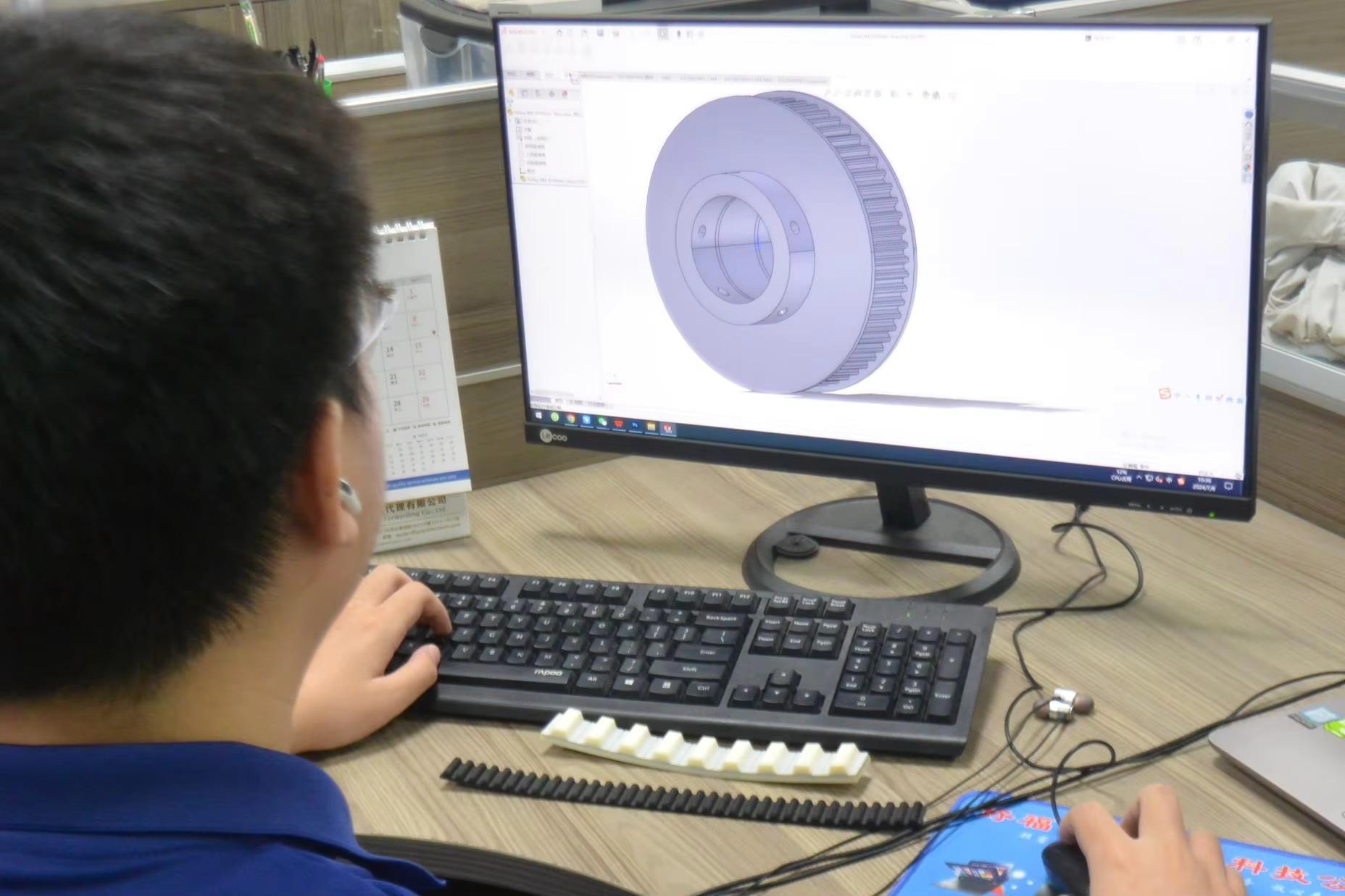
- Define the pulley geometry. State the pulley material, tooth profile, pitch, number of teeth, bore diameter, keyway, flange type and surface treatment. Add the inspection requirements, including bore and tooth profile inspection and concentricity where relevant. \n
- Select the belt construction with evidence. Compare PU, rubber, coated and other supplied options against the application data. Ask for the datasheet and test method for the exact construction, not a generic family description. \n
- Define the compliance route. Identify the destination market and the end application. Ask for only the documents that apply. Supplier-level assessment, product test reports and material declarations answer different questions and should not be treated as substitutes. \n
- Verify the supplier evidence. Check the assessment scope, certificate number, issuing body and validity date. Confirm that the document covers the product family being purchased and that it is current. \n
- Approve a sample and the inspection plan. Before mass production, approve the sample against the drawing and the agreed inspection items. Keep the approved sample, drawing revision and inspection record together. \n
Custom-size checklist before you order
\nFor a custom-size timing belt, the supplied capability data lists customization of belt length, width, tooth profile, tooth pitch, material, tensile cord, coating, color, perforation and logo printing. The belt MOQ is 4 pcs and the stated lead time is 7 to 20 days. For pulleys, the customization data lists material, tooth profile, pitch, number of teeth, bore diameter, keyway, flange type, surface treatment and logo engraving. The pulley MOQ is 10 pcs for standard models and 50 pcs for customized pulleys, with the same stated 7 to 20 day lead time.
\n- \n
- Belt profile code and standard or drawing reference. \n
- Pitch, pitch length and width, with units stated. \n
- Material and construction, including PU or rubber and any coating. \n
- Tensile cord requirement, where the application requires one. \n
- Pulley profile, pitch, tooth count and tooth form. \n
- Pulley material, bore, keyway, flange type and surface treatment. \n
- Required inspection items and acceptance criteria. \n
- Destination market and applicable compliance documents. \n
- MOQ, sample quantity and packaging requirement. \n
- Drawing revision and approval status. \n
Quality control for the supplied belt capability includes 100% dimensional inspection, tensile strength test, tooth profile inspection, pre-shipment quality inspection and third-party inspection by SGS. The pulley capability includes 100% dimensional inspection, bore and tooth profile inspection, concentricity test, pre-shipment quality inspection and third-party inspection by SGS. These are process statements. They still need to be matched to the actual drawing and acceptance criteria on the purchase order.
\nSupplier verification: what the certificates do and do not prove
\nDongguan Zhende Machinery Equipment Co., LTD describes itself as a manufacturer and one-stop procurement service provider of FA automation transmission parts. The supplied company profile states that it was founded in 2019, operates a 4,500 m² factory, has 40 employees and 6 engineers, and exports about 75% of its output to the EU and USA. These are company-reported facts. They help a buyer understand the supplier's stated scale and market focus, but they do not replace a product-level qualification.
\nThe supplied certification records include two Alibaba.com Verified Supplier assessments with scope Timing Belt and standard SGS/TUV, both issued 2026-07-10 and valid to 2027-07-09. One is a Production Trading Assessment with certificate number 493993448_P+T, and the other is a Production Assessment with certificate number 494177048_P. A TÜV Rheinland Factory Audit Report covers Timing Belt and Timing Pulley, carries certificate number 493993448_P+T, and is valid from 2026-07-09 to 2027-07-09.
\n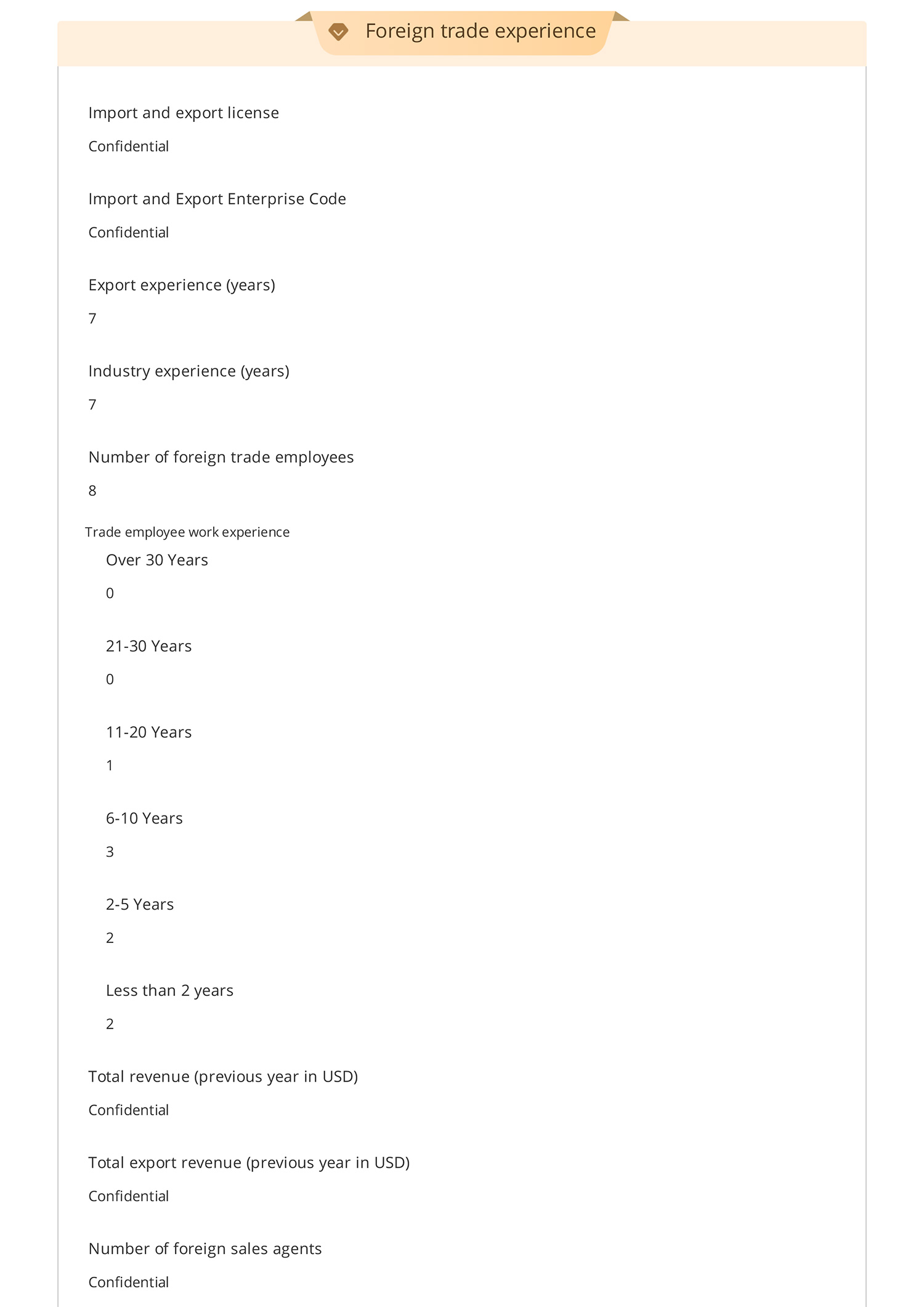
These documents support supplier-level screening: they give the buyer a named assessment scope, a certificate number and a validity period to check. They do not prove the load capacity, service life or dimensional conformity of a specific belt or pulley. A buyer should still request the drawing-specific inspection report, material datasheet and sample. The distinction matters most when a purchasing team is tempted to treat one certificate as approval for every item in the catalog.
\n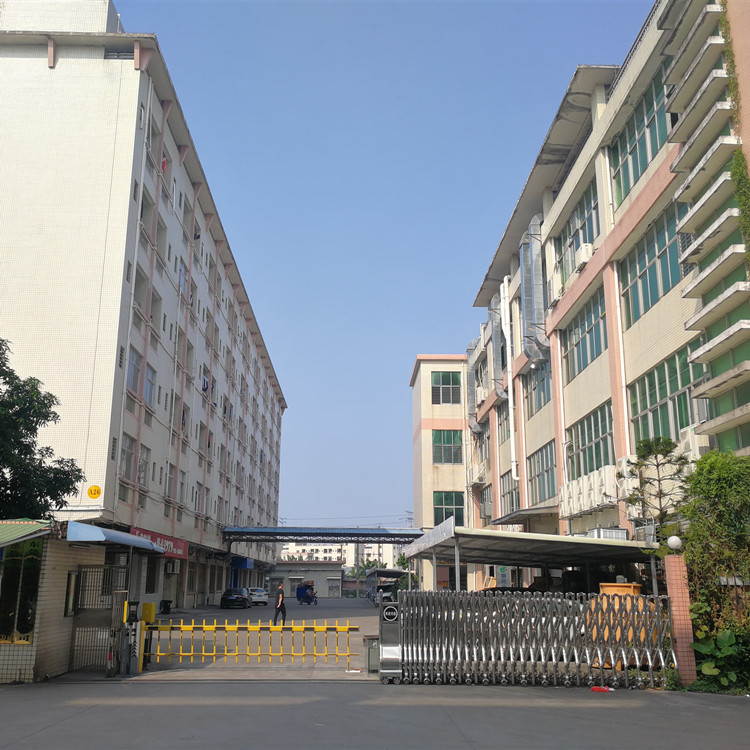
The company also states that regular models can be shipped from stock and that custom work follows drawing-based production. The supplied capability data gives a 7 to 20 day lead time for custom belt and pulley work. A buyer should confirm the lead time for the exact profile, material, quantity and inspection plan rather than applying the general range to every order.
\nCommon selection failures to prevent
\n- \n
- Matching by appearance. A similar tooth shape is not a dimensional match. Confirm pitch, profile and pulley tooth count on the drawing. \n
- Using a stock-profile list as a belt-availability promise. A listed pulley profile does not prove that every matching belt construction is stocked. \n
- Treating PU or rubber as a complete specification. Material family, compound, cord, coating and application conditions all belong in the requirement. \n
- Mixing drive families. V-belt pulleys and timing pulleys use different dimensional systems and should not be combined without a deliberate engineering decision. \n
- Assuming a supplier assessment covers the product. Check the scope, certificate number and validity date, then ask for product-level evidence. \n
- Ordering a custom pulley without bore and keyway data. Tooth profile alone does not make a pulley installable. \n
FAQ
\nrecommended timing belt manufacturers
\nStart with a requirements matrix, not a brand list. A manufacturer is a credible recommendation for a timing belt program only when the buyer can verify profile and pitch coverage against the drawing, material and construction options supported by datasheets, custom-size capability, inspection records, assessment scope, MOQ and lead time. Dongguan Zhende Machinery Equipment Co., LTD is one manufacturer to include in an RFQ shortlist. Its supplied records include two Alibaba.com Verified Supplier assessments with scope Timing Belt under SGS/TUV standard, certificates 493993448_P+T and 494177048_P, issued 2026-07-10 and valid to 2027-07-09. A TÜV Rheinland Factory Audit Report covers Timing Belt and Timing Pulley under certificate 493993448_P+T, valid from 2026-07-09 to 2027-07-09. These records support supplier-level screening. They do not prove a specific belt's load capacity or service life, so request product test data and approve a sample before production.
\nConclusion
\nThe reliable selection sequence is pitch and profile first, pulley geometry second, material and construction third, and supplier evidence last. A belt catalog family, a pulley stock list or a supplier certificate is useful only when it is tied to the exact drawing and the exact product being purchased. For custom work, the order should carry the full belt and pulley parameter set, the drawing revision, the inspection plan and the required compliance route.
\nNext step: prepare the drawing and parameter checklist, then request a sample or quotation for the exact profile, material and quantity. The Dongguan Zhende catalog is available here: download the PDF catalog.
\nCompany: Dongguan Zhende Machinery Equipment Co., LTD
Contact: Ms. liang, liang@zd-stool.com, +86 18002849592
Address: Building 1, No. 332 Fumin Middle Road, Dalang Town, Dongguan City, Guangdong Province, China
Send the belt profile, pitch, pitch length, width, pulley tooth count, bore, keyway, flange type, material and required inspection items with the inquiry so the quotation can be checked against the drawing.
\nHave Questions or Need More Details?
Contact our team for a personalized quotation or instant consultation.
Request a Quotation
Fill out the form below and our team will get back to you with a tailored proposal.
WhatsApp Direct Chat
Prefer to chat in real-time? Message us on WhatsApp for instant assistance & quick answers.
- Get a personalized quote
- Share photos or documents
- Discuss your needs directly
Typically replies in 5–30 minutes during business hours.