
Timing Belt Supplier FAQ: Long-Term Partnership, Terms, and Support
A long-term timing belt supply relationship rests on three documented elements: a certification scope that is current and specific to the supplier, purchase terms that are itemised before the first order, and an after-sales route tied to inspection records rather than to verbal assurance. Dongguan Zhende Machinery Equipment Co., LTD, a manufacturer and one-stop procurement service provider of FA automation transmission parts based in Dalang Town, Dongguan, China, answers below the questions buyers raise most often during supplier qualification. The answers reference its Alibaba.com Verified Supplier certification 494177048_P (Production Assessment) and its Production Trading Assessment certification 493993448_P+T, valid from 2026-07-10 to 2027-07-09 under SGS/TUV with a Supplier Assessment Report.
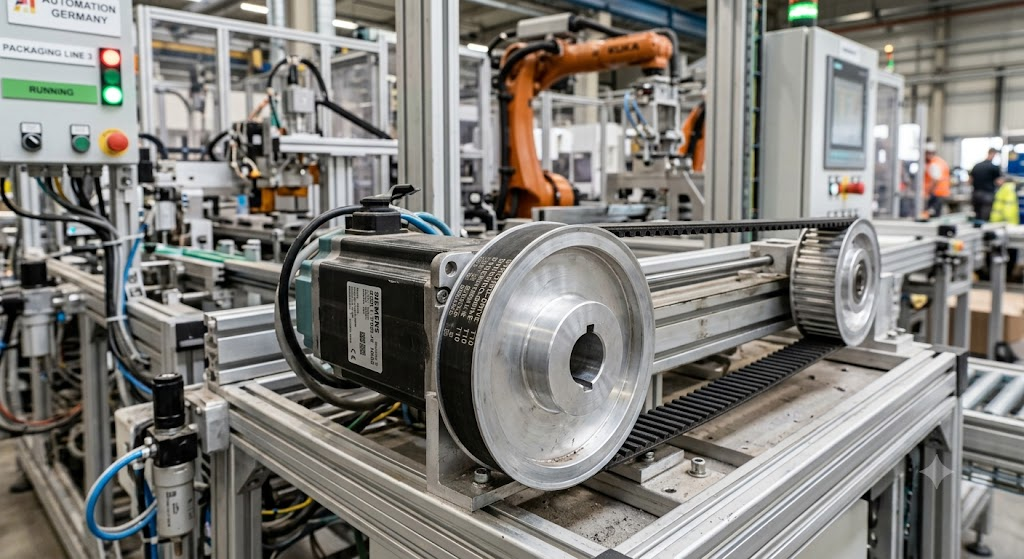
Where Long-Term Timing Belt Supply Usually Breaks Down
Most long-term belt contracts do not fail because a belt is badly made. They fail because the buyer and the supplier never agreed on what is being verified, what is being purchased, and who answers when a batch is questioned. Three failure points recur.
- Scope drift on certification. A badge is shown, but its scope line, issuing body and validity window are never checked. When the badge lapses mid-contract, the buyer has no renewal calendar.
- Purchase terms agreed verbally. Profile, width, length, material, tolerance basis and delivery expectation are settled in chat and later reconstructed from memory.
- After-sales without a baseline. A claim is raised, but no dimensional record, sample or inspection criterion exists to compare against.
For a timing belt and pulley commodity, the fix is procedural rather than commercial: agree the verification set first, agree the terms second, then place the order.
Industry Background: What the Standards Landscape Expects
Synchronous drives are specified through a layered standards system, and a long-term supplier should be able to state which layer each item sits in. ISO 13050:2022 specifies characteristics for metric-pitch curvilinear synchronous belts and pulleys. ISO 5296 covers synchronous belts with pitch codes MXL, XXL, XL, L, H, XH and XXH in metric and inch dimensions. ISO 5294 is the complementary pulley standard. DIN 7721 addresses T-profile endless synchronous belt dimensions, and ISO 1813 sets electrical conductivity requirements and a test method for antistatic synchronous belts.
Two further layers matter for supplier qualification. ISO 9001 defines quality management system requirements, and IATF 16949 defines quality management system requirements for automotive production and relevant service parts organisations. Neither certificate by itself evidences product-level capability — that still has to be proven with test reports and sample approval.
Customs and market access add a separate dimension. HS subheading 4010.35 covers endless synchronous belts of vulcanised rubber with an outside circumference exceeding 60 cm but not exceeding 150 cm; 4010.39 is the residual subheading. On chemical compliance, Regulation (EC) No 1907/2006 (REACH) applies to rubber and polyurethane articles placed on the EU market, Directive 2011/65/EU (RoHS) applies only where the belt forms part of or is supplied with electrical and electronic equipment, and 21 CFR 177.2600 applies to rubber articles intended for repeated food contact in the United States.
On the demand side, rubber-based belt segments retain market leadership on the basis of proven durability and cost balance, while polyurethane constructions continue to take on high-precision and high-speed duties. That split is the practical reason a long-term agreement usually needs more than one belt family on the approved list.
Scope Transparency: What the Two Assessment Certificates Cover
The single most useful question a buyer can ask is not whether a supplier is certified, but what the certificate actually assessed. Dongguan Zhende holds two distinct documents, and the distinction is deliberate.
Alibaba.com Verified Supplier certification 494177048_P is a Production Assessment. Production Trading Assessment certification 493993448_P+T covers the production assessment together with the trading activity. Both are issued under SGS/TUV, both are supported by a Supplier Assessment Report, and both carry the same validity window: from 2026-07-10 to 2027-07-09.
That window is the operative detail for long-term planning. A supply agreement running beyond 2027-07-09 should include a renewal checkpoint rather than assuming continuity, and the assessment report should be requested alongside the certificate number so the buyer can read what was inspected rather than relying on the badge alone. Buyers sourcing from a supplier that both manufactures and distributes should confirm that the trading scope is covered, which is what the P+T designation indicates.
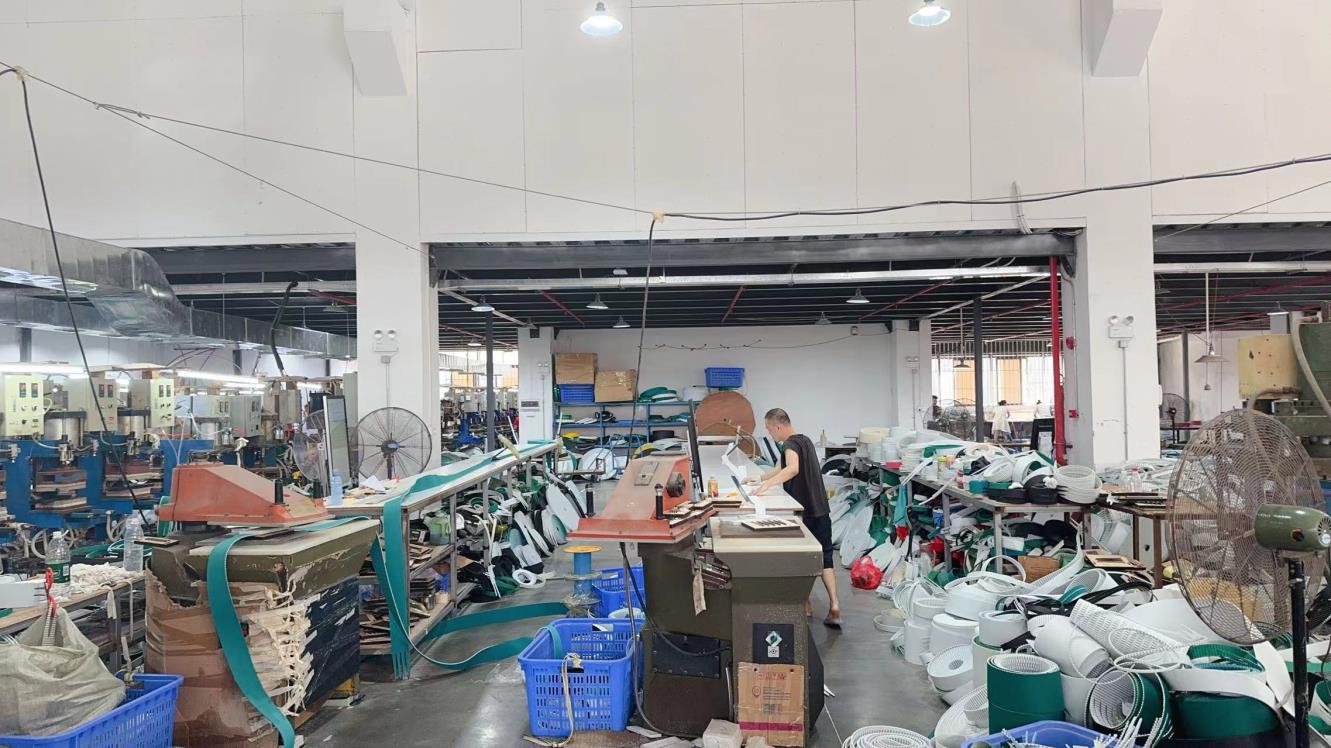
Product Scope Behind a Long-Term Agreement
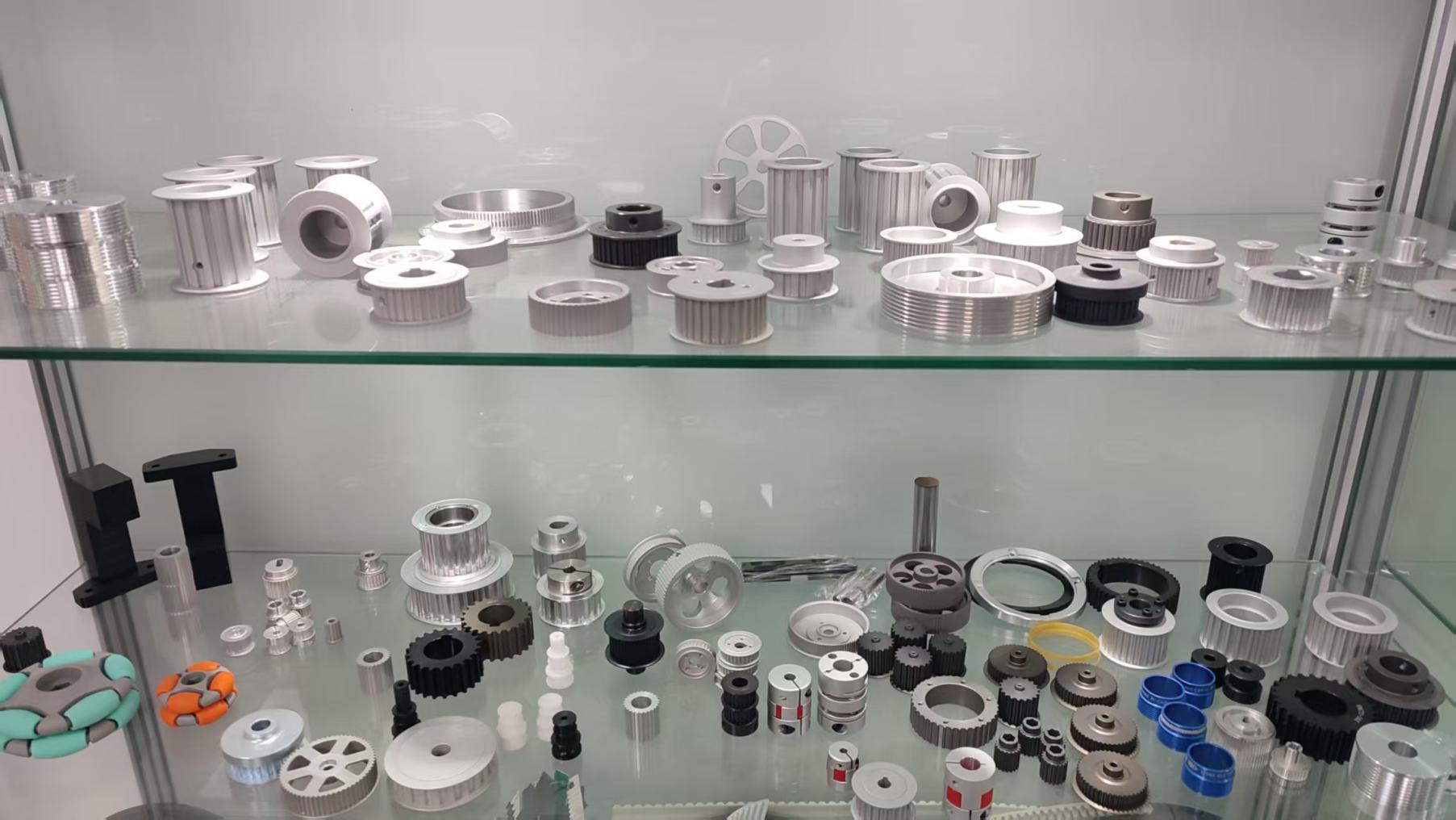
A certification assesses a supplier and its trading environment; it does not certify each part number. Product-level confidence therefore has to come from the profile matrix, the drawings and the inspection record. Zhende manufactures timing belts and timing pulleys as its main product lines, supported by a 4,500 m² facility, 40 employees, a 6-engineer R&D team and an annual output of 120,000 pcs, with 75% of output exported to the EU and USA. The company was founded in 2019.
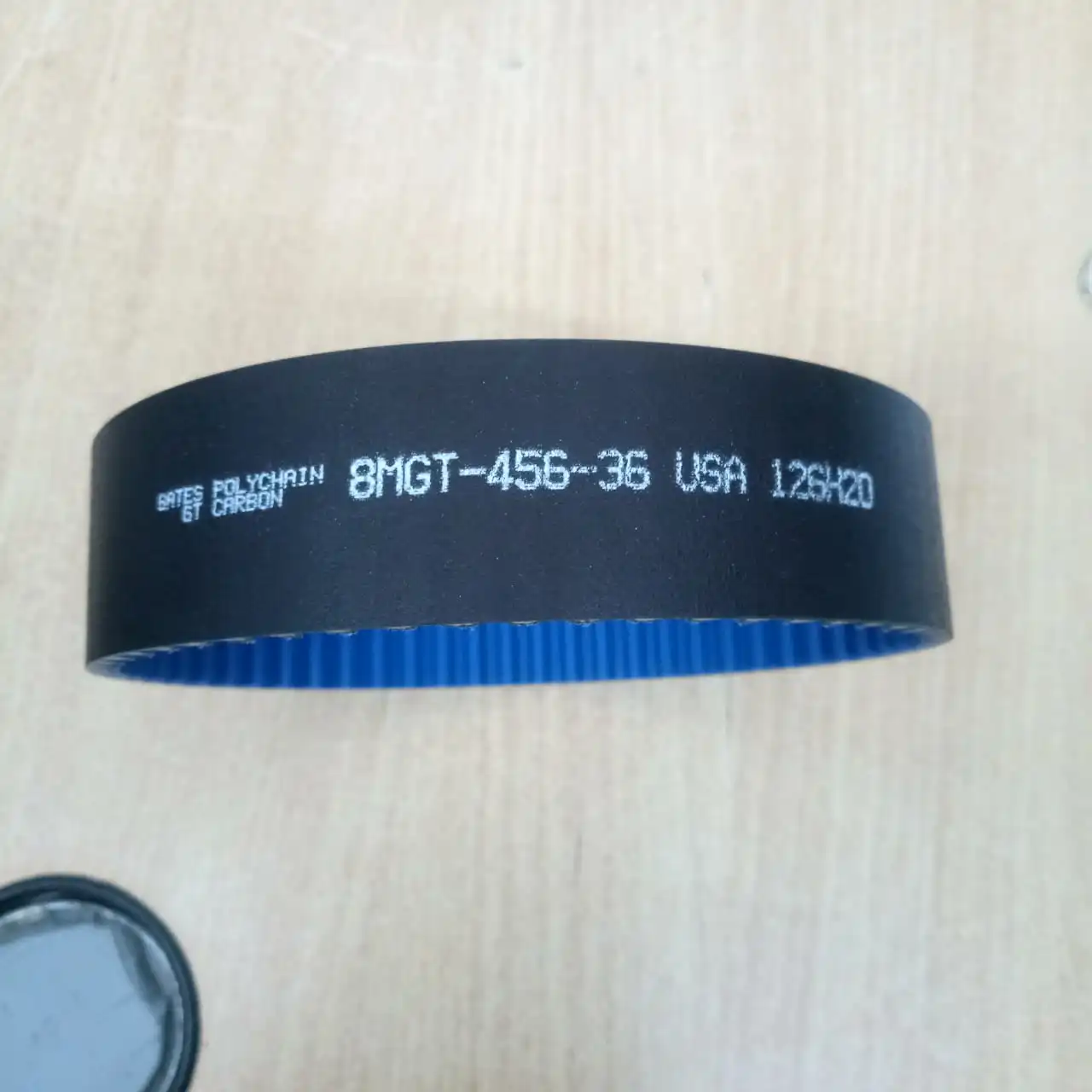
On the belt side the range covers AT10, AT5 and T5 polyurethane timing belts, HTD 5M, HTD 8M and HTD 14M rubber timing belts, S8M rubber timing belts, and 8MGT POLYCHIAN polyurethane belts with carbon fibre cord. On the pulley side it covers T series, Imperial and HTD timing pulleys, with HTD pitches spanning 3M, 5M, 8M and 14M and Imperial pitches spanning MXL, XL, L, H, XH and XXH.
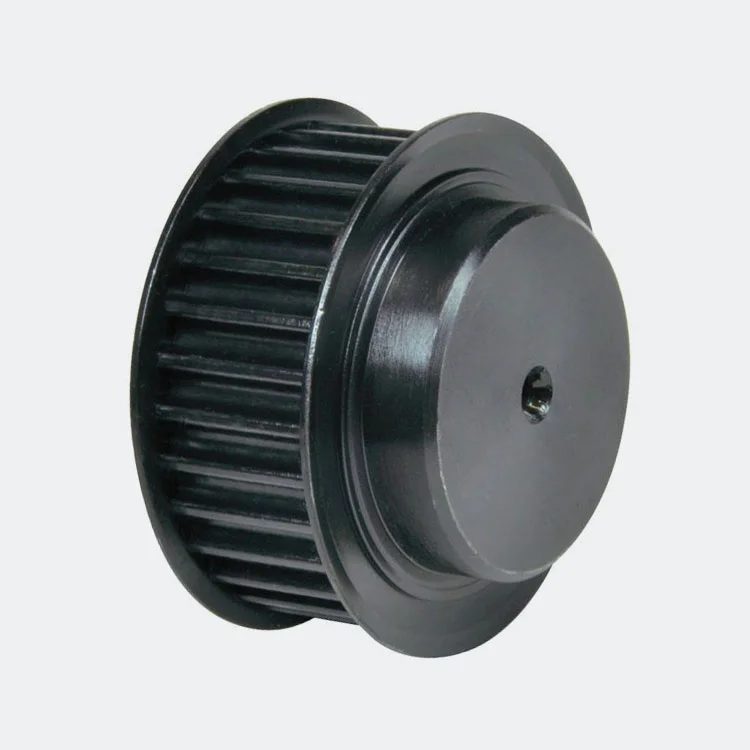
Step-by-Step: Setting Up a Long-Term Supply Agreement
The following sequence works for any timing belt supplier, and it maps cleanly onto the certification and product facts above.
- Build a profile and material matrix. List every belt and pulley on the machine programme by profile, pitch, width, length and material. Do not accept a family-level quotation for a multi-profile programme.
- Verify the certification scope and expiry. Record the certificate number, the scope line, the issuing body and the validity window. For Zhende, that means 494177048_P and 493993448_P+T under SGS/TUV, valid 2026-07-10 to 2027-07-09.
- Read the Supplier Assessment Report. Match the assessed activity to your own commodity — belts, pulleys, or both — rather than accepting the badge as a blanket statement.
- Validate samples against the drawing. Measure thickness, width and length tolerance on belts; measure radial runout and bore tolerance on pulleys.
- Fix purchase terms in writing. Lock the item list, tolerance basis, packing, documentation, price validity and delivery expectation before the first purchase order.
- Agree acceptance criteria and inspection records. State which dimensions are checked, at what frequency, and which record accompanies each shipment.
- Calendar the review. Diarise the certification renewal date and the contract review date together, so scope continuity is confirmed before it lapses.
Use Cases: Matching Belt Families to Machine Duty
Belt selection inside a long-term agreement should follow duty, not preference. The profiles carried by Zhende map onto recognisable machine situations.
High-speed servo axes. The 8MGT POLYCHIAN belt uses an 8.0 mm pitch, a polyurethane body, carbon fibre cord and nylon tooth facing at 92 Shore A, with a maximum belt speed up to 80 m/s, transmission efficiency up to 98%, and an operating temperature range of -54°C to +85°C. Its minimum pulley diameter is 36.6 mm at 22 teeth.
High-load linear and power transmission. The AT10 polyurethane belt runs a 10.0 mm pitch with a 4.5 mm overall thickness, steel cord and 92 Shore A hardness, supporting up to 70 kW and a maximum allowable tensile strength of 1700 N per 10 mm belt width, with a minimum pulley diameter of 50.0 mm.
Heavy-duty drives. The HTD 14M rubber belt uses a 14.0 mm pitch and 10.0 mm overall thickness with a neoprene body and fibreglass cord, reaching an ultimate tensile strength of 8308 N per 10 mm belt width against an allowable strength of 1816 N per 10 mm, with a minimum pulley diameter of 124.78 mm at 28 teeth.
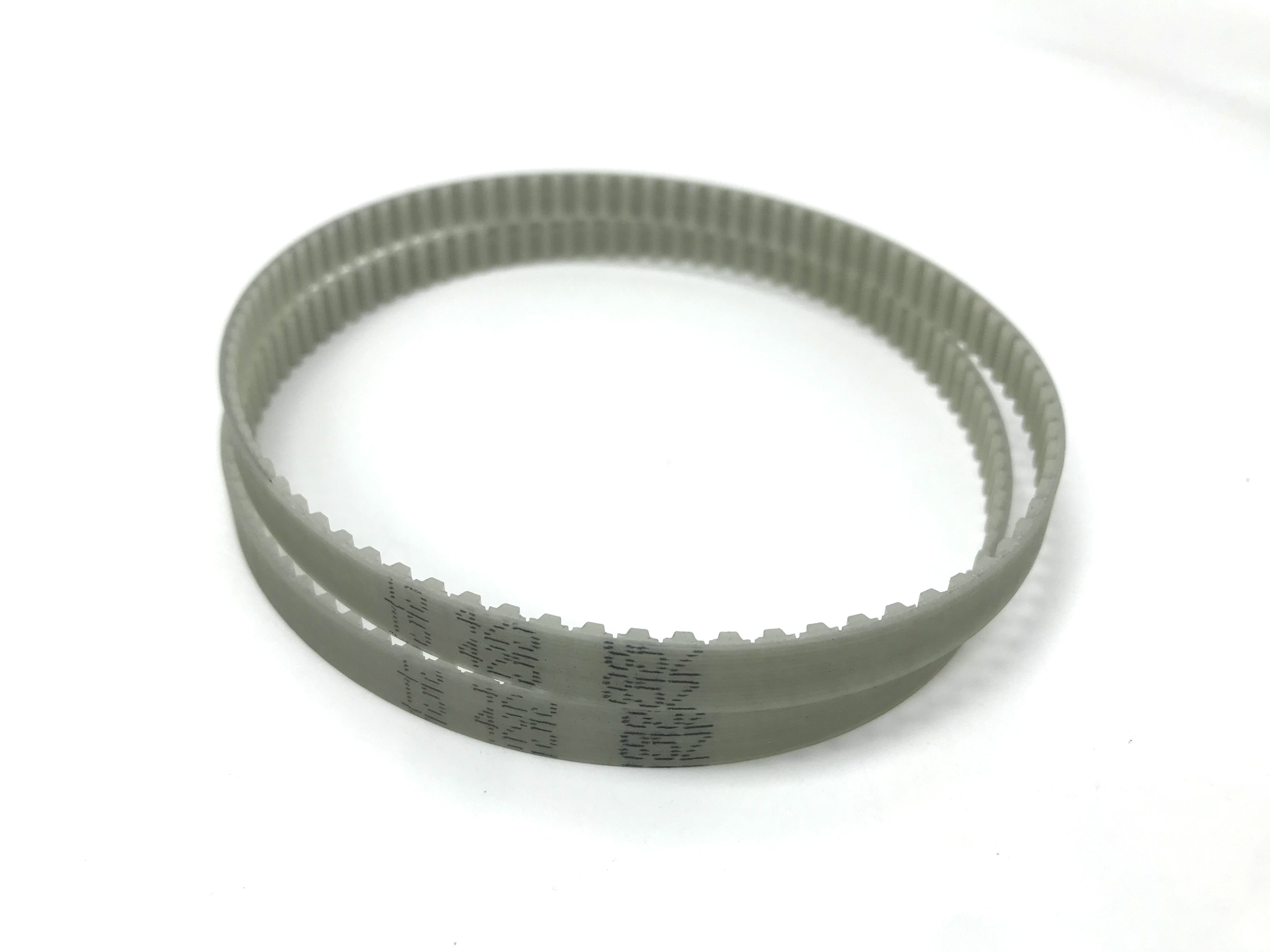
Light precision and labelling equipment. T5 and AT5 polyurethane belts carry smaller loads with tighter packaging: T5 is rated to 5 kW with a 393 N per 10 mm allowable tensile strength and a minimum pulley diameter of 30.0 mm, while AT5 is rated to 15 kW at 700 N per 10 mm with a minimum pulley diameter of 25.0 mm.
Packaging and general automation. HTD 8M and S8M rubber belts are the workhorses here. HTD 8M runs an 8.0 mm pitch at 5.6 mm thickness with 780 N per 10 mm allowable and 3120 N per 10 mm ultimate strength; S8M runs the same 8.0 mm pitch at 5.3 mm thickness with 650 N per 10 mm allowable and 2600 N per 10 mm ultimate strength. Pulley retrofits on imperial machinery are covered by the Imperial pulley range from MXL to XXH.
Comparison Table: Belt Families at a Glance
All values below are manufacturer-published specifications for the Zhende product range and should be re-confirmed against the drawing for any specific order.
| Belt family | Pitch | Body / cord | Min. pulley Ø | Allowable tensile | Typical fit |
|---|---|---|---|---|---|
| AT10 PU | 10.0 mm | PU / steel cord | 50.0 mm | 1700 N / 10 mm | High-load linear, up to 70 kW |
| AT5 PU | 5.0 mm | PU / steel cord | 25.0 mm | 700 N / 10 mm | Medium duty, up to 15 kW |
| T5 PU | 5.0 mm | PU / steel cord | 30.0 mm | 393 N / 10 mm | Light precision, up to 5 kW |
| 8MGT POLYCHIAN | 8.0 mm | PU / carbon fibre | 36.6 mm (22 T) | Not published | High speed, up to 80 m/s |
| HTD 5M rubber | 5.0 mm | Neoprene CR / fibreglass | 25 mm (16 T) | 650 N / 10 mm | Light duty automation |
| HTD 8M rubber | 8.0 mm | Neoprene CR / fibreglass | 40 mm (16 T) | 780 N / 10 mm | Packaging, general automation |
| HTD 14M rubber | 14.0 mm | Neoprene CR / fibreglass | 124.78 mm (28 T) | 1816 N / 10 mm | Heavy-duty drives |
| S8M rubber | 8.0 mm | Neoprene CR / fibreglass | 56.0 mm | 650 N / 10 mm | Medium to heavy duty |
Pulley families at a glance
| Family | Pitches | Teeth | Bore | Accuracy | Materials |
|---|---|---|---|---|---|
| Imperial | MXL, XL, L, H, XH, XXH | 10–120 | 3–100 mm | Radial runout ≤0.03 mm; H7 bore | Aluminium, carbon steel, stainless steel, cast iron |
| HTD | 3M, 5M, 8M, 14M | 12–120 | 5–100 mm | Concentricity ≤0.03 mm | Aluminium, carbon steel, stainless steel, cast iron |
Both pulley families are rated to a maximum operating speed up to 8,000 rpm and an operating temperature range of -30°C to +120°C depending on material, with tooth accuracy referenced to ISO 13050 or DIN standards. Aluminium hardness sits at HB 75–95 and steel at HRC 20–35, with optional heat treatment available.
Purchase Terms: What to Fix in Writing Before the First PO
Purchase terms on a timing belt contract should be itemised per line, not summarised per family. The following items carry the most commercial weight.
- Item definition. Profile, pitch, width, length, material, cord type and pulley tooth count, quoted per line item.
- Tolerance basis. State the acceptance tolerance explicitly — for example ±0.5 mm width and length, ±0.2 mm thickness on AT10 and AT5, ±0.15 mm thickness on T5, and ±1.0 mm width on HTD 14M.
- Quantity basis. Standard-profile stock items and drawing-based custom items follow different cost and scheduling logic and should be quoted separately.
- Delivery expectation. Regular models can be shipped within 3 days from stock. Drawing-based machining of custom gears and racks carries a 7-day lead time. Custom belt constructions are confirmed per order rather than by a standing figure.
- Price validity and Incoterm. Fix both, so a long-term schedule is not repriced mid-cycle without notice.
- Documentation pack. Agree which inspection record, packing list and certificate copy accompanies each shipment.
- Revision control. Any drawing change should trigger a documented re-approval rather than a silent substitution.
A useful discipline is to treat purchase terms and sample approval as one package. Terms agreed before a sample is measured tend to be rewritten after it is — which costs a full cycle on a multi-profile programme.
After-Sales Support: What Confidence Should Be Built On
After-sales support in this category is mostly documentary. A claim can only be resolved quickly if a dimensional baseline exists, so the practical question is what the supplier records and who reads it. At Zhende, multi-layer quality inspection runs through every production procedure, and finished pulleys pass 100% dimensional inspection before shipment. Both the Imperial and HTD pulley ranges carry that inspection commitment.
Technical docking is handled by a 6-engineer R&D team, which matters when a replacement belt has to match an existing pulley rather than a catalogue line. As an authorised agent for HIWIN, THK, NSK, SKF and AirTAC, the company also supports one-stop procurement of adjacent transmission components, which reduces the number of separate technical contacts a maintenance or project buyer has to manage.
Frequently Asked Questions
Which certifications should I verify before signing a long-term timing belt supply agreement?
Record four things: the certificate number, the scope line, the issuing body and the validity window. Dongguan Zhende holds Alibaba.com Verified Supplier certification 494177048_P (Production Assessment) and Production Trading Assessment certification 493993448_P+T, both issued under SGS/TUV with a Supplier Assessment Report, valid from 2026-07-10 to 2027-07-09. Confirm that the trading scope is included where you buy both manufactured and distributed items, and diarise the expiry date so renewal is tracked inside the contract period.
Can one supplier cover both standard profiles and custom sizes over several years?
That depends on the profile matrix matching your bill of materials. Zhende supplies AT10, AT5 and T5 polyurethane timing belts, HTD 5M, HTD 8M and HTD 14M rubber timing belts, S8M rubber timing belts, and 8MGT POLYCHIAN polyurethane belts with carbon fibre cord, alongside T series, Imperial and HTD timing pulleys. The company operates a 4,500 m² facility with 40 employees, a 6-engineer R&D team and an annual output of 120,000 pcs, and accepts drawing-based machining for customised parts.
How should pricing and order quantity be structured for a long-term contract?
Quote per item, not per family. Pitch, width, length, material, cord type and quantity each change the cost basis, so a family-level price is not a usable purchasing figure. Ask for an itemised quotation that states the price validity period and the Incoterm, and treat marketplace display prices as directional only, since specification and quantity are generally not established behind them. Standard stock items and drawing-based custom items should be quoted on separate lines.
What should a pre-production sample prove?
A sample should be measured against the drawing, not judged by appearance. On belts, check thickness, width and length tolerance — ±0.2 mm thickness on AT10 and AT5, ±0.15 mm on T5, and ±0.5 mm width and length across those profiles. On pulleys, check radial runout at ≤0.03 mm, finished bore tolerance at H7, and concentricity at ≤0.03 mm on the HTD range. Finished pulleys pass 100% dimensional inspection before shipment, so the inspection record should accompany the sample.
How are delivery and after-sales support handled after the first order?
Regular models can be shipped within 3 days from stock, while drawing-based machining of custom gears and racks carries a 7-day lead time; custom belt constructions are confirmed per order. After-sales confidence should rest on records rather than on assurances: multi-layer quality inspection runs through every production procedure, finished pulleys pass 100% dimensional inspection before shipment, and a 6-engineer team handles technical docking. To move from evaluation to a concrete offer, request a sample matched to your drawing together with an itemised quotation, or download the product catalogue at the Zhende catalogue.
Conclusion
A long-term timing belt partnership is a verification exercise before it is a commercial one. Read the certification scope rather than the badge — 494177048_P for production and 493993448_P+T for production and trading, under SGS/TUV, valid 2026-07-10 to 2027-07-09 — then confirm that the profile matrix, the tolerance basis and the inspection records match the machines you actually run. Purchase terms, sample approval and after-sales all become simpler once that baseline exists.
Dongguan Zhende Machinery Equipment Co., LTD operates from Building 1, No. 332 Fumin Middle Road, Dalang Town, Dongguan City, Guangdong Province, China, and can be reached at zdindustrialbelts.com or by email at liang@zd-stool.com for sample requests, quotations and catalogue access.
Have Questions or Need More Details?
Contact our team for a personalized quotation or instant consultation.
Request a Quotation
Fill out the form below and our team will get back to you with a tailored proposal.
WhatsApp Direct Chat
Prefer to chat in real-time? Message us on WhatsApp for instant assistance & quick answers.
- Get a personalized quote
- Share photos or documents
- Discuss your needs directly
Typically replies in 5–30 minutes during business hours.