
Alibaba Verified Supplier vs SGS/TÜV Production Assessment: Timing Belt Certification Comparison
Two documents can both read “verified” and still answer completely different questions. An Alibaba.com Verified Supplier record is a platform-level entry: it names the assessment type, the certificate number, the standard field, the stated scope and the validity window. An SGS/TÜV production assessment is the site-level audit that sits behind such a record. Neither one is a product certificate for a specific timing belt shipment.
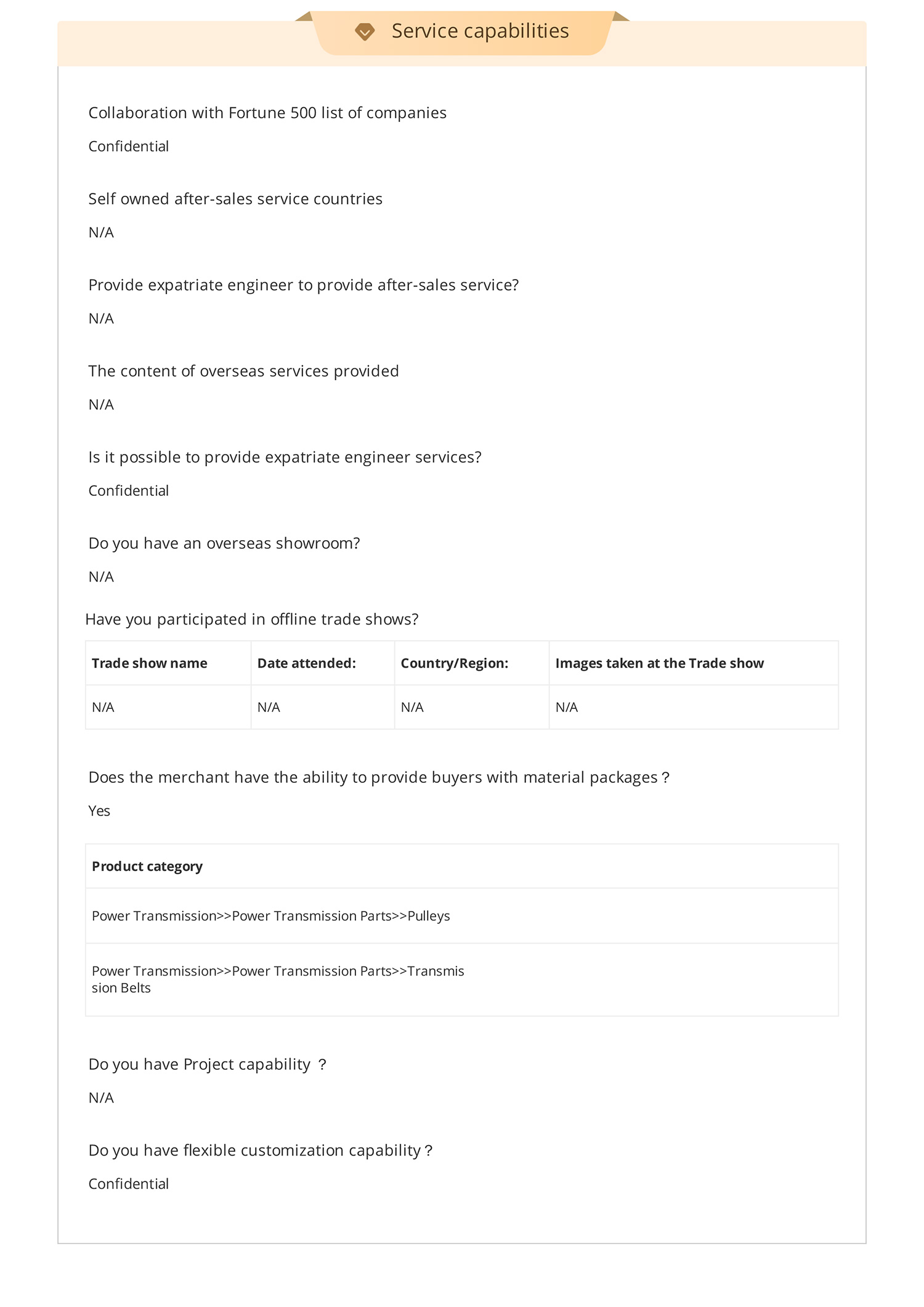
For Dongguan Zhende Machinery Equipment Co., LTD — a Dongguan-based manufacturer and one-stop supplier of timing belts, timing pulleys and FA automation transmission parts — the evidence set holds three linked records: certificate 493993448_P+T recorded as a Production Trading Assessment (issued 2026-07-10, valid to 2027-07-09), certificate 494177048_P recorded as a Production Assessment (same issue and expiry dates), and a TÜV Rheinland Factory Audit Report carrying number 493993448_P+T with scope “TIMING BELT TIMING PULLEY” (issued 2026-07-09, valid to 2027-07-09).
The practical rule for buyers is simple: use the platform record for supplier-file screening, use the SGS/TÜV production assessment for site and scope questions, and use a product test report plus an approved sample for belt conformity. Collapsing all three into the word “certified” is how buyers end up holding a certificate number that does not cover the part they are ordering.
Problem Definition: Three Ways “Verified” Gets Misread
The confusion is not caused by bad documents. It is caused by treating three separate evidence layers as one. In timing belt sourcing, the misreads repeat in the same pattern.
Misread 1: A platform badge is read as product certification
A supplier verification record confirms that an assessment was completed for a supplier profile within a stated scope. It does not confirm that a delivered belt matches ISO 13050, ISO 5296 or DIN 7721 dimensions, and it does not confirm material batch conformity. Those are product-level questions, answered by drawings, test reports and sample approval.
Misread 2: The certificate number is read without the assessment type
The two numbers in this evidence set are not interchangeable. 493993448_P+T is recorded as a Production Trading Assessment — production and trading activity assessed together. 494177048_P is recorded as a Production Assessment — production activity only. A buyer who quotes the number without the type is quoting half a fact.
Misread 3: Scope and expiry are skipped
Both Alibaba records state the scope field as “Timing Belt”. The TÜV Rheinland report states “TIMING BELT TIMING PULLEY”. Those lines differ, and that difference matters when the purchase order includes pulleys. Validity differs too: the platform records show 2026-07-10 to 2027-07-09, while the TÜV report shows an issue date of 2026-07-09 and the same expiry. A document that is in date at quotation can be out of date at shipment if the order runs long.
Decision rule: before a certificate number enters a purchase order, write down four fields beside it — assessment type, stated scope, issuing route, expiry date. If any of the four is missing, the number is being used as decoration rather than evidence.
Industry Background: Where Supplier Assessment Sits Among the Standards
Timing belt compliance is layered, and the layers are frequently confused because suppliers present them in one PDF pack. Four layers exist in practice.
Layer 1 — dimensional product standards. ISO 13050:2022 specifies characteristics for metric-pitch curvilinear synchronous endless belts and pulleys, covering profile families such as MXL, XXL, XL, L, H, XH, XXH, T2,5, T5, T10, T20, AT2,5, AT5, AT10 and AT20. ISO 5296 covers synchronous belts with pitch codes MXL, XXL, XL, L, H, XH and XXH in metric and inch dimensions. ISO 5294 is the complementary standard for synchronous belt drive pulleys. DIN 7721 is the German standard series for dimensions of endless synchronous belts in the T-profile range. ISO 1813 specifies electrical conductivity requirements and a test method for antistatic V-belts and synchronous belts.
Layer 2 — market-access regulation. Regulation (EC) No 1907/2006 (REACH) governs chemical compliance of articles placed on the EU market, including rubber and polyurethane belt compounds. Directive 2011/65/EU (RoHS) restricts hazardous substances in electrical and electronic equipment, and applies to a belt only where the belt forms part of, or is supplied with, such equipment. In the United States, 21 CFR 177.2600 sets requirements for rubber articles intended for repeated food contact — a route that applies to rubber, not to polyurethane belts, which follow a different compliance path.
Layer 3 — quality management systems. ISO 9001 specifies requirements for a quality management system. IATF 16949 sets quality management system requirements for automotive production and relevant service parts organizations, and is maintained by the International Automotive Task Force rather than a national standards body. Both are supplier-level credentials, verified with the issuing certification body.
Layer 4 — supplier and site assessment. This is where the Alibaba.com Verified Supplier record and the SGS/TÜV production assessment belong. They describe whether a supplier entity and its production (and, where applicable, trading) activity were assessed against a named assessment standard. They do not replace Layers 1 to 3, and no amount of assessment paperwork converts into a dimensional conformity statement for a specific belt.
That layering explains a recurring buyer experience: a supplier is genuinely assessed, genuinely in date, and still cannot support a drawing that names a standard the assessor never tested against.
Detailed Solution: What Each Record Actually Covers
Record 1 — 493993448_P+T, Production Trading Assessment
Recorded on the Alibaba.com Verified Supplier framework with the standard field “SGS/TUV”, certificate number 493993448_P+T, assessment type “Production Trading Assessment”, scope “Timing Belt”, market field “International”, issue date 2026-07-10 and expiry 2027-07-09. The “+T” element is the point: production and trading activity are assessed together, which is relevant for a supplier that both manufactures and consolidates purchased transmission parts.
Record 2 — 494177048_P, Production Assessment
Same framework, same standard field, same scope “Timing Belt”, same market field and the same 2026-07-10 to 2027-07-09 validity window, but the type is “Production Assessment”. The report pages filed with this record are headed “Supplier Assessment Report – Partner Factory of Dongguan Zhende Machine Equipment Co., Ltd.” Read that literally: a production-only assessment delivered against a partner factory is a different footprint from a single-site factory audit, and buyers should confirm which site produces their part before they rely on the report as a site-specific statement.
Record 3 — TÜV Rheinland Factory Audit Report, 493993448_P+T
The audit report itself carries number 493993448_P+T, the authority field “TUV”, the standard field “Production & Trading Factory Assessment Standard”, scope “TIMING BELT TIMING PULLEY”, markets EU, US, Middle East and Southeast Asia, issue date 2026-07-09 and expiry 2027-07-09. Three differences from the platform records are worth noting: the issue date is one day earlier, the scope explicitly includes timing pulleys, and the market field is enumerated rather than generic.
What “scope: Timing Belt” covers in this evidence set
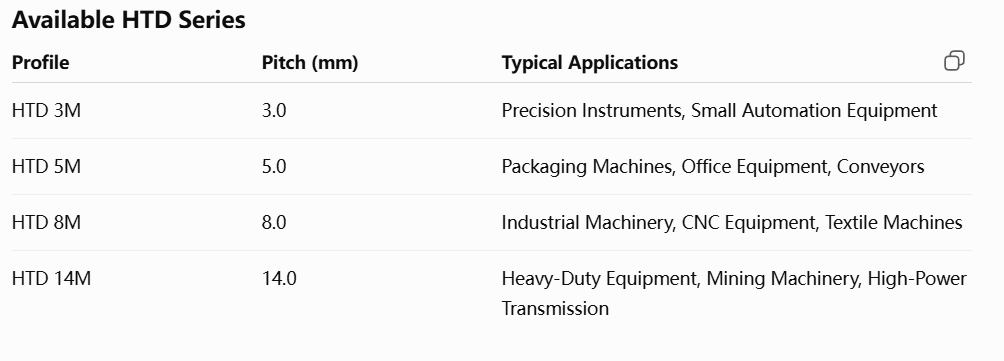
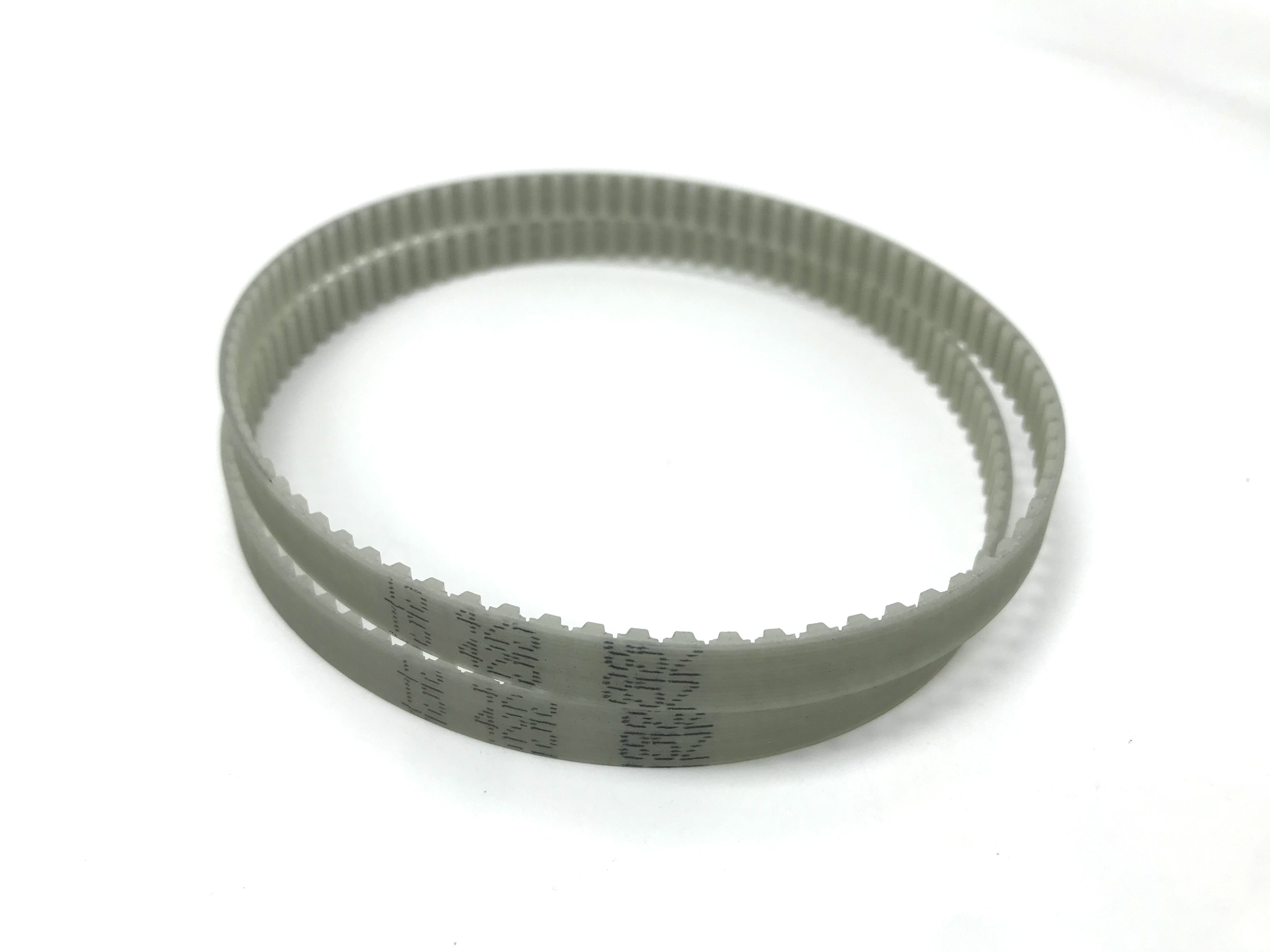
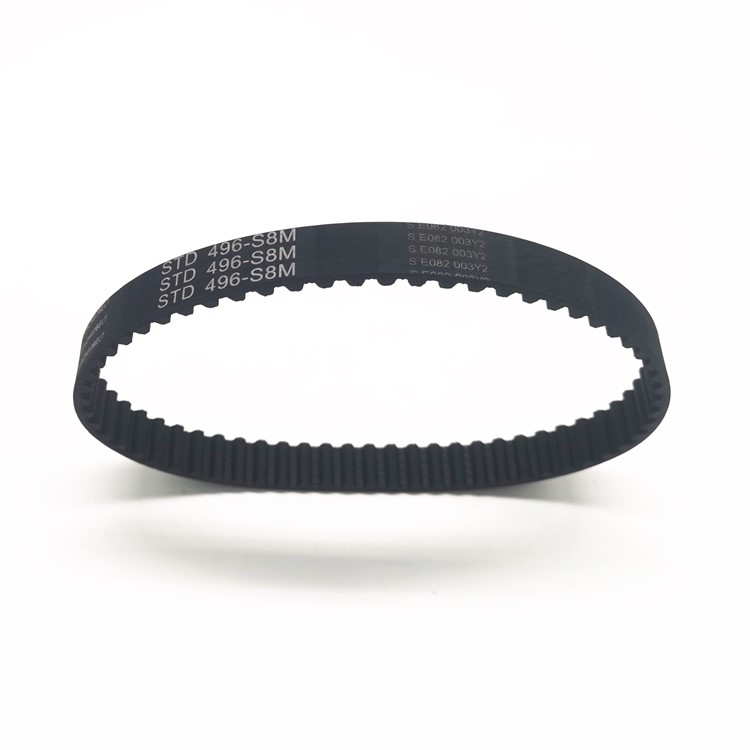
The certified product scope referenced by these records spans AT10 PU timing belts, T5 PU timing belts, S8M rubber timing belts, HTD 5M, HTD 8M and HTD 14M rubber timing belts, 8MGT POLYCHIAN timing belts, and timing pulleys. The table below pairs each family with the figures that actually exist in the evidence set — nothing has been added for profiles where the corpus states no dimensional data.
| Product family | Profile / model | Body material and tension member | Verified figures stated in the evidence set |
|---|---|---|---|
| AT PU timing belt | AT10 (inside the certified scope) | Polyurethane | Dimensional data for AT10 is not part of this evidence set |
| T5 PU timing belt | T5 | Polyurethane, steel cord | Pitch 5.0 mm; overall thickness 2.2 mm; 92 Shore A; max allowable tensile strength 393 N per 10 mm width; up to 5 kW; minimum pulley diameter 30.0 mm; tolerance width ±0.5 mm, length ±0.5 mm, thickness ±0.15 mm |
| T10 PU timing belt | T10 | Polyurethane, steel cord | Pitch 10.0 mm; thickness 4.5 mm; 92 Shore A; 780 N per 10 mm width; up to 30 kW; minimum pulley diameter 60.0 mm |
| S8M rubber timing belt | S8M (STS/STPD) | Neoprene (CR), fiberglass cord | Pitch 8.0 mm; thickness 5.3 mm; 92 Shore A; 650 N per 10 mm allowable, 2600 N per 10 mm ultimate tensile strength; minimum pulley diameter 56.0 mm |
| HTD 5M rubber timing belt | HTD 5M | Neoprene (CR), fiberglass cord | Pitch 5.0 mm; thickness 3.6 mm; 650 N per 10 mm allowable, 2600 N per 10 mm ultimate; minimum pulley 25 mm / 16 teeth |
| HTD 8M rubber timing belt | HTD 8M | Neoprene (CR), fiberglass cord | Pitch 8.0 mm; thickness 5.6 mm; 780 N per 10 mm allowable, 3120 N per 10 mm ultimate; minimum pulley 40 mm / 16 teeth |
| HTD 14M rubber timing belt | HTD 14M | Not stated for the belt in this evidence set | Belt dimensions not stated; HTD pulley range is stated as 3M, 5M, 8M and 14M |
| 8MGT POLYCHIAN timing belt | 8MGT | Not stated in this evidence set | Not stated in this evidence set |
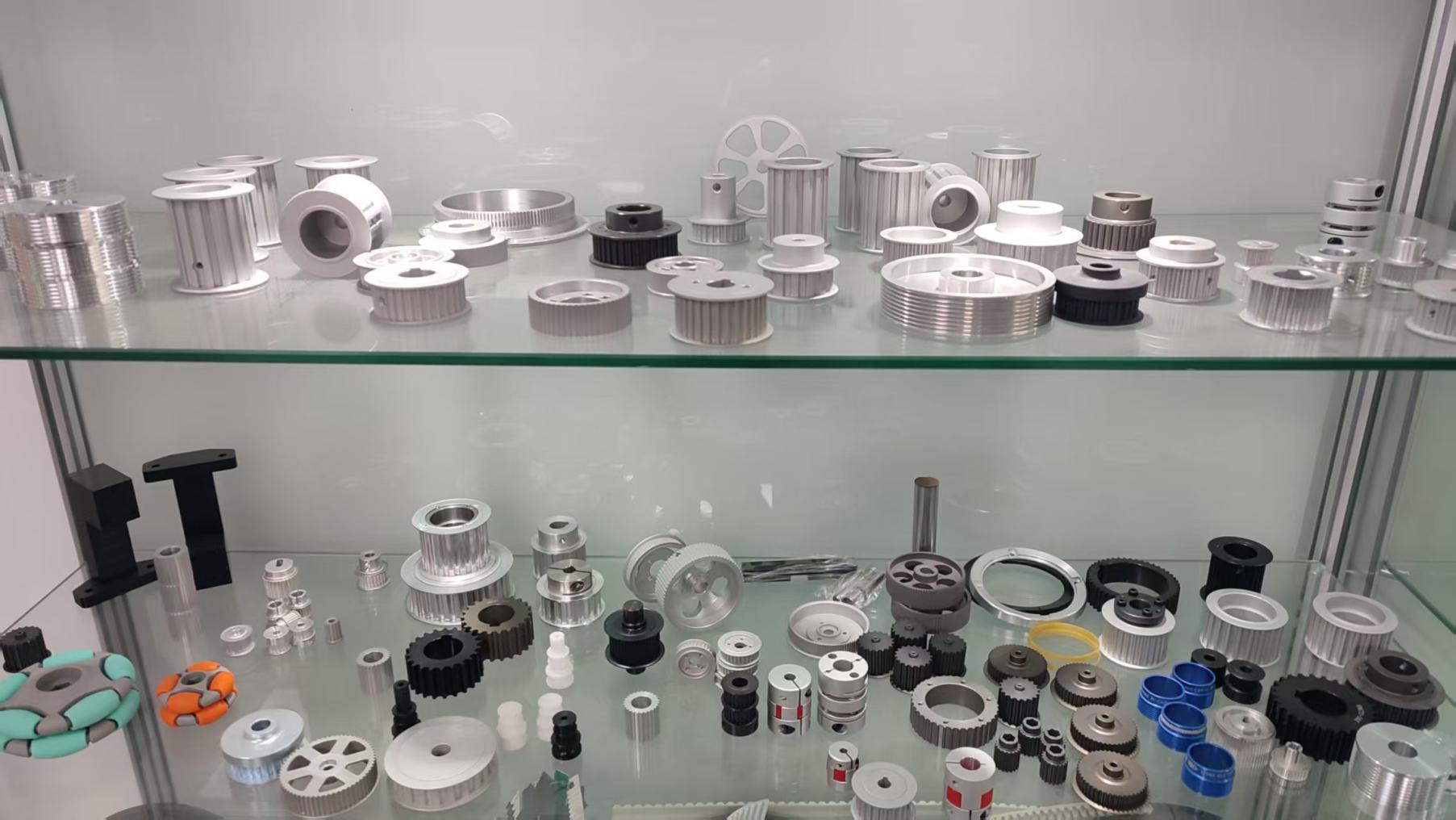
| Timing pulleys | T2.5 / T5 / T10 / T20; 3M / 5M / 8M / 14M; MXL / XL / L / H / XH / XXH | Aluminium alloy, carbon steel, stainless steel, cast iron | Tooth accuracy ISO 13050 / DIN; radial runout ≤0.03 mm; bore tolerance H7 (finished bore); 10–120 teeth; up to 8,000 rpm; −30°C to +120°C; 100% dimensional inspection before shipment |
A buyer can already see the boundary problem. The assessment scope says “Timing Belt”; the technical figures above come from product data, not from the assessment. The certificate confirms that a scope was assessed. The figures confirm what the part is designed to do. Neither substitutes for the other.
Side-by-side: Alibaba.com Verified Supplier vs SGS/TÜV Production Assessment
| Comparison point | Alibaba.com Verified Supplier record | SGS/TÜV Production Assessment (TÜV Rheinland Factory Audit Report) |
|---|---|---|
| What the document is | Platform-level supplier verification entry recording assessment type, certificate number, standard field, scope and validity | On-site factory audit report issued under the framework named in the evidence set as “Production & Trading Factory Assessment Standard” |
| Numbers in this evidence set | 493993448_P+T (Production Trading Assessment); 494177048_P (Production Assessment) | 493993448_P+T |
| Stated scope | Timing Belt | Timing Belt, Timing Pulley |
| Market field | International | EU, US, Middle East, Southeast Asia |
| Issue and expiry | 2026-07-10 to 2027-07-09 | 2026-07-09 to 2027-07-09 |
| What it supports | Supplier-file screening, marketplace listing credibility, first-pass qualification | Site and scope questions: which activity was assessed, which product lines sit inside the scope, which markets were named |
| What it does not establish | Conformity of a delivered belt to ISO 13050, ISO 5296, ISO 5294 or DIN 7721; material batch conformity; food-contact compliance | The same, plus nothing about a specific shipment, batch or production lot |
| Buyer action | Record the number, type and expiry in supplier master data | Request the report pages and confirm the assessed site against the site that will run the order |
The two certificate numbers compared
| Field | 493993448_P+T | 494177048_P |
|---|---|---|
| Assessment type | Production Trading Assessment | Production Assessment |
| Framework recorded | Alibaba.com Verified Supplier, standard field SGS/TUV | Alibaba.com Verified Supplier, standard field SGS/TUV |
| Stated scope | Timing Belt | Timing Belt |
| Issue date | 2026-07-10 | 2026-07-10 |
| Expiry date | 2027-07-09 | 2027-07-09 |
| Products linked in the evidence set | Timing pulleys (imperial, T series, HTD), AT PU timing belts, T PU timing belts, STD and HTD rubber timing belts, POLYCHIAN GT carbon timing belt | Same product set as 493993448_P+T |
| What a buyer should read into it | Production and trading activity assessed together — relevant when the supplier also consolidates bought-in parts | Production activity assessed only, delivered against a partner factory per the report heading |
Step-by-Step Breakdown: Matching Certified Scope to Product and Market
The sequence below turns certificate comparison into a purchasing decision, in the order a buyer actually needs it.
- Split the question before reading any document. Ask three separate things: is the supplier a real operating entity; is my part inside the assessed scope; does my part conform to the drawing and the named standard. Each answer needs a different document.
- Read the number together with the type. 493993448_P+T is a Production Trading Assessment; 494177048_P is a Production Assessment. If your supply model includes bought-in components consolidated by the supplier, the trading element is part of what you are relying on and should be named in your supplier file.
- Check the scope line against the actual part list. Both platform records state “Timing Belt”. The TÜV report states “TIMING BELT TIMING PULLEY”. If your order mixes AT10 PU belts with T5 timing pulleys, the pulley line is explicitly inside the TÜV scope and only indirectly inside the platform records — state it that way in your qualification note.
- Check validity twice — at quotation and at shipment. All three records expire on 2027-07-09. An order confirmed in mid-2027 against a document that expires in July needs a renewal statement in writing before the balance is shipped.
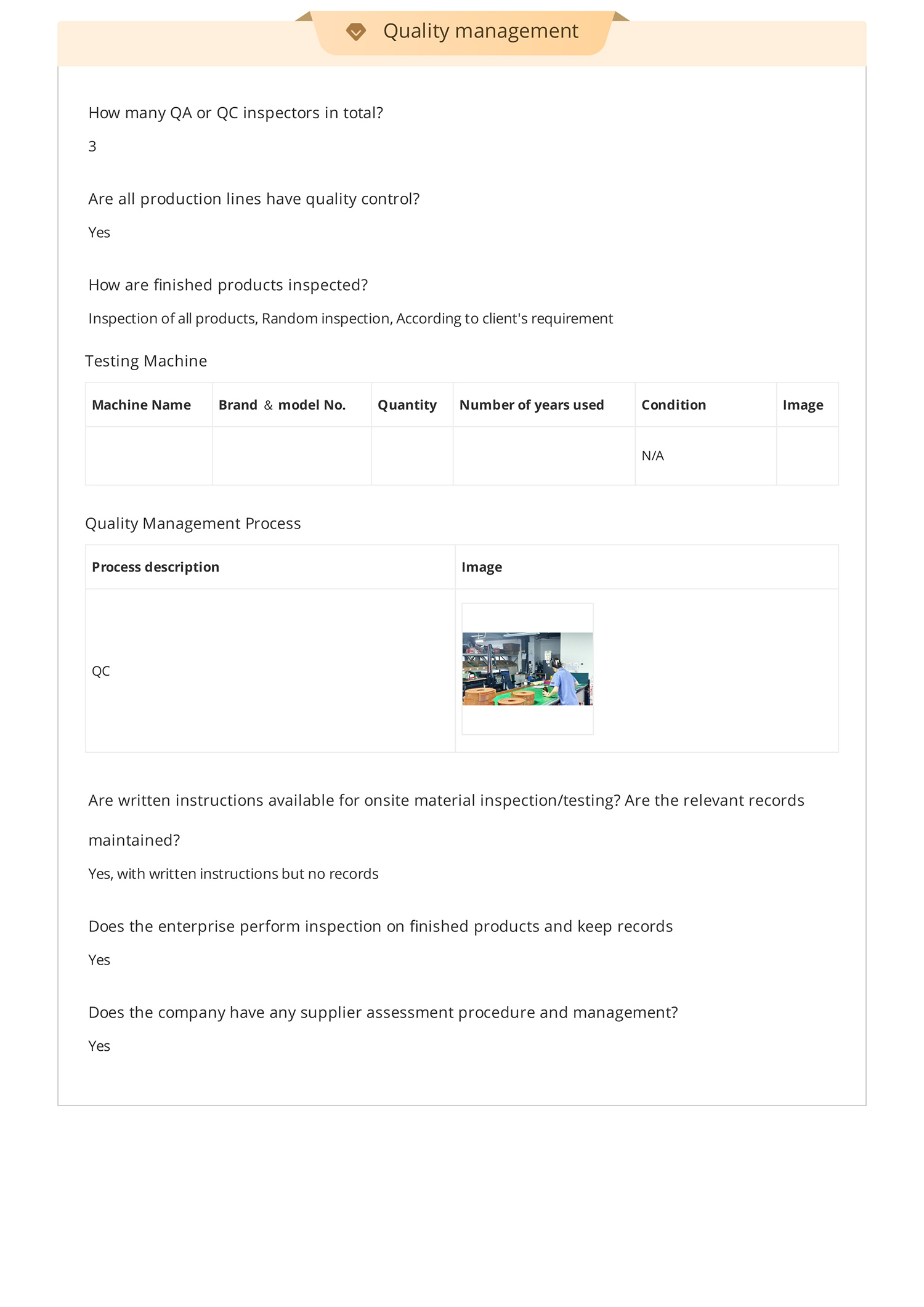
- Add the product layer the assessment cannot give you. Request dimensional and mechanical data for the exact profile: the figures in the scope table above, the tolerance set (width ±0.5 mm, length ±0.5 mm, thickness ±0.2 mm on the rubber profiles), and the inspection regime — 100% dimensional inspection, tooth profile inspection, tensile strength testing, with third-party SGS inspection available. Confirm which standard the drawing names, and confirm that the profile is governed by a published standard before writing the clause.
- Add the market-access layer per destination. For EU-bound shipments, REACH chemical compliance applies to the article; RoHS applies only where the belt is part of or supplied with electrical or electronic equipment. For US food-contact use, 21 CFR 177.2600 applies to rubber articles intended for repeated use — not to polyurethane belts. Ask for exactly the documents your destination and application require, and do not accept a generic pack as a substitute.
- Write the document set into the purchase order. List the certificate numbers with types and expiry dates, the governing standard, the inspection regime, the sample approval reference, and the renewal obligation. A badge cannot be audited later; a document checklist can.
Use Cases: How the Comparison Plays Out
Case 1 — EU distributor building a private-label timing belt line
A distributor needs a supplier file that survives a customer audit. The workable answer is a document stack, not a badge: the Alibaba records for supplier identification, the TÜV Rheinland report for assessed scope and named markets, REACH documentation for EU chemical compliance, and a stated quality management position. The distributor should keep the certificate numbers, types and expiry visible in its own supplier master data, because the same numbers will be requested again by its customers.
Case 2 — OEM machine builder specifying an HTD 8M drive
Here the certificate answers almost nothing on its own. The engineering decision rests on the drive data: pitch 8.0 mm, thickness 5.6 mm, 92 Shore A, 780 N per 10 mm allowable tensile strength and 3120 N per 10 mm ultimate, with a minimum pulley of 40 mm and 16 teeth. The assessment record then does one job: it shows that the supplier's timing belt production was reviewed against a named assessment standard within a defined window, which shortens the qualification conversation. It does not replace the sample test on the machine.
Case 3 — Maintenance buyer replacing belts on an existing line
For MRO replacement, the failure mode is profile substitution. A T5 PU belt (pitch 5.0 mm, 2.2 mm thick, minimum pulley 30.0 mm) and an S8M rubber belt (pitch 8.0 mm, 5.3 mm thick, minimum pulley 56.0 mm) are not interchangeable, and neither is validated by a certificate that only states “Timing Belt”. The buyer should match the profile first, then confirm the scope covers that profile family, then order against the drawing or the original part reference.
Case 4 — Food processing line asking for the wrong document
A rubber timing belt used in repeated food contact falls under 21 CFR 177.2600 in the US market; the same question for a polyurethane belt follows a different compliance route. Neither answer is inside the production assessment. Suppliers get asked for irrelevant certificates in this scenario more often than in any other, and buyers then read the gap as supplier weakness rather than as a scoping error on their own side.
FAQ
Does an Alibaba Verified Supplier record mean the timing belts are ISO-certified?
No. The records in this evidence set are supplier assessments: 493993448_P+T as a Production Trading Assessment and 494177048_P as a Production Assessment, each with the standard field SGS/TUV, scope “Timing Belt”, issued 2026-07-10 and expiring 2027-07-09. They are not certificates of conformity to ISO 13050, ISO 5296, ISO 5294 or DIN 7721. Ask separately for the product test report and confirmation of the standard your drawing names.
What is the difference between certificate 493993448_P+T and 494177048_P?
The “+T” record is a Production Trading Assessment, meaning production and trading activity were assessed together. 494177048_P is a Production Assessment covering production only, and its report pages are headed “Partner Factory”, so the assessed site should be confirmed against the site that will run your order. Both sit on the Alibaba.com Verified Supplier framework with the same 2026-07-10 to 2027-07-09 validity. The TÜV Rheinland Factory Audit Report carries number 493993448_P+T, issued 2026-07-09, scope “TIMING BELT TIMING PULLEY”.
Do these certificates set the price, MOQ or lead time?
No. Assessments record scope and validity; commercial terms are quoted separately and are not published in the assessment documents. For this supplier the stated terms are MOQ 4 pcs for belts, 10 pcs for standard pulleys and 50 pcs for customized pulleys, with a 7–20 day lead time. Ask for a written quotation by profile, material, width, length and pulley bore — a certificate number cannot be converted into a price.
How should a buyer validate a certified timing belt before a mass order?
Match the sample to the scope and to the drawing. Request the report pages, confirm the profile you are buying (for example T5 PU, S8M rubber or HTD 8M) sits inside the stated scope, and ask for the inspection evidence stated in the corpus: 100% dimensional inspection, tooth profile inspection, tensile strength testing and pre-shipment quality inspection, with third-party SGS inspection available. Approve the sample against the drawing before releasing volume.
How long is delivery, and when must the certificate still be valid?
Lead time is 7–20 days within the stated capacity range. Because all three records expire on 2027-07-09, any order shipped after that date needs a renewed report or a written statement of renewal status. To move forward, request a sample and a quotation for the exact profile and quantity, and ask for the current report pages with the number, type and expiry printed on them.
Conclusion: Use Each Document for the Question It Answers
The Alibaba.com Verified Supplier records and the SGS/TÜV production assessment are complementary, not competing. The platform records give a buyer a fast, checkable entry — 493993448_P+T as a Production Trading Assessment, 494177048_P as a Production Assessment, both scoped to “Timing Belt” and both valid from 2026-07-10 to 2027-07-09. The TÜV Rheinland Factory Audit Report gives the site-level view, with scope “TIMING BELT TIMING PULLEY”, the standard “Production & Trading Factory Assessment Standard”, named markets and a 2026-07-09 to 2027-07-09 validity window.
What none of them does is certify a belt. Conformity to ISO 13050, ISO 5296, ISO 5294 or DIN 7721, material batch behaviour, and market access under REACH, RoHS or 21 CFR 177.2600 are separate questions with separate documents. A buyer who states the profile, the drawing, the standard and the document set — and who checks the expiry date at shipment rather than only at quotation — gets a qualification file that holds up.
Dongguan Zhende Machinery Equipment Co., LTD was founded in 2019, operates a 4,500 m² facility with 40 employees and six engineers, and supplies timing belts and timing pulleys with roughly 75% of output exported to the EU and USA. Product scope covers AT10 PU, T5 PU, S8M rubber, HTD 5M/8M/14M, 8MGT POLYCHIAN timing belts and matching timing pulleys, with OEM/ODM customization, monthly capacity stated at 100,000 pcs for pulleys and 500,000 pcs for belts, and 7–20 day lead times.
Next step: match the certificate to the part, then to the sample
Request the timing belt sample, the quotation for your exact profile and quantity, or the current assessment report pages for 493993448_P+T and 494177048_P. Product catalog: download the Zhende timing belt and pulley catalog (PDF).
Dongguan Zhende Machinery Equipment Co., LTD · Building 1, No. 332 Fumin Middle Road, Dalang Town, Dongguan City, Guangdong Province, China · Email: liang@zd-stool.com · Tel / WhatsApp: +86 18002849592 · zdindustrialbelts.com
Have Questions or Need More Details?
Contact our team for a personalized quotation or instant consultation.
Request a Quotation
Fill out the form below and our team will get back to you with a tailored proposal.
WhatsApp Direct Chat
Prefer to chat in real-time? Message us on WhatsApp for instant assistance & quick answers.
- Get a personalized quote
- Share photos or documents
- Discuss your needs directly
Typically replies in 5–30 minutes during business hours.