
Timing Belt Compliance Guide: Certification Scope, SGS/TUV Standards, and Market Applicability
Direct answer: a timing belt supplier's certificate tells you who assessed the supplier, which document type was issued, which product scope was attached to it, and when the evidence expires. It does not tell you that a specific belt meets a dimensional standard, and it does not grant market approval in any country. For Dongguan Zhende Machinery Equipment Co., LTD, the supplied compliance evidence consists of two Alibaba.com Verified Supplier assessment records numbered 493993448_P+T and 494177048_P, a TÜV Rheinland Factory Audit Report, and an SGS RoHS test report. Each document answers a different question, and each is bounded by its own dates.
Most buyer-side errors with this kind of pack are scope errors, not fraud. A purchasing team receives a PDF bundle, sees the words "Verified Supplier" and "SGS/TUV", and files it as proof that a particular AT10 PU belt or HTD 8M belt conforms to a standard. That is a different claim, supported by different evidence. This guide decodes the record fields one at a time, maps the covered product list onto the scope statement, and shows how to cite the pack inside an RFQ without overstating what it proves.
The supplier in question is a Dongguan-based manufacturer and one-stop procurement supplier of timing belts, timing pulleys and FA automation transmission parts, founded in 2019, with a stated export share of 75% concentrated on EU and US markets. Its published product range is available at zdindustrialbelts.com. Nothing in the certificate set changes those commercial facts, and nothing in the commercial facts upgrades the certificate set.
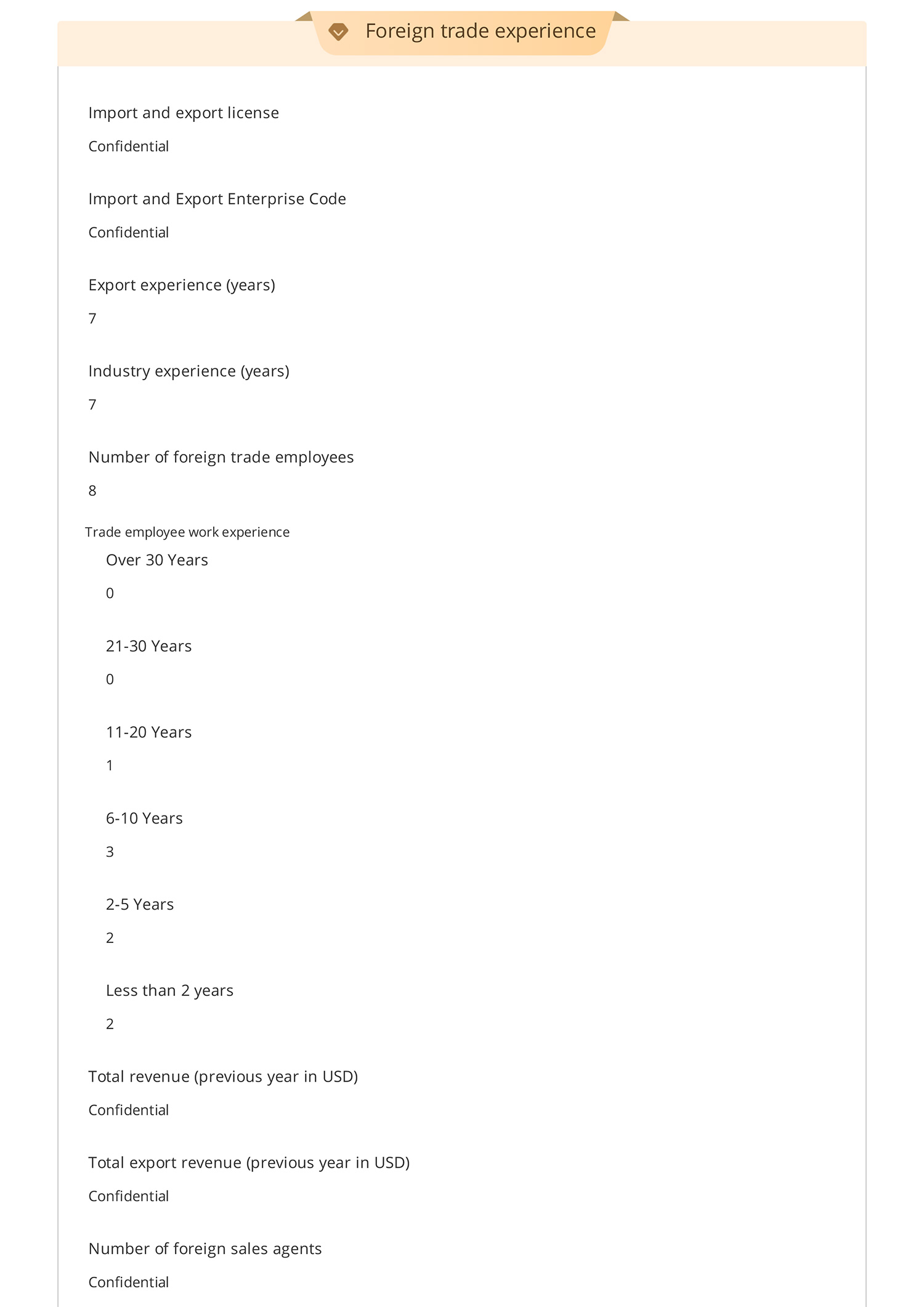
Assessment report page from the supplier verification pack. The scope line and the validity period are the two fields a buyer should read first.
Four documents, four different questions
A timing belt qualification folder almost never contains a single certificate. It contains a mixture of platform verification, factory audit and product testing, and each record is limited by its own scope line and expiry date. Reading them as one combined "certification" is the root of most downstream problems.
- Marketplace supplier verification. The two Alibaba.com Verified Supplier records are not identical documents. One is typed as a Production Trading Assessment with the number 493993448_P+T; the other is typed as a Production Assessment with the number 494177048_P. Both record SGS/TUV in the standard field, both state the market as International, both state the scope as "Timing Belt", and both run from 2026-07-10 to 2027-07-09.
- Factory audit. The TÜV Rheinland Factory Audit Report carries the number 493993448_P+T and is issued against the "Production & Trading Factory Assessment Standard". Its scope reads "TIMING BELT TIMING PULLEY" — wider than the Alibaba records — and it lists EU, US, Middle East and Southeast Asia as markets, dated 2026-07-09 with expiry 2027-07-09.
- Product test report. The SGS RoHS test report (CANEC24017410403, issued by SGS-CSTC Standards Technical Services Co., Ltd. Guangzhou Branch) is a substance test against EU RoHS Directive (EU) 2015/863, covering the full range of FA automation transmission parts, linear motion components, pneumatic parts and industrial supporting accessories. It is a product-level document, not a supplier-level one.
- Technical and dimensional standards. ISO 13050, ISO 5296, ISO 5294 and DIN 7721 define belt and pulley geometry, profile series and dimensions. None of them appears in the supplied certification records, and none of the records claims conformance to them.
Date check to perform now: the SGS RoHS report states an issue date of 2024-08-12 and an expiry date of 2026-08-14. That expiry has passed. If the RoHS report is needed for an EU or US customer file, request the current version rather than reusing the older PDF, and do not describe it as current evidence.
Why the evidence is layered: platform, audit body, standards body
The layers exist because they answer different buyer questions, and mixing them creates false confidence. A platform label answers "is this trading account a real, assessed business?" An inspection-body audit answers "was the production site examined against an assessment framework?" A test report answers "did a sample of this material pass this test method on this date?" A dimensional standard answers "what should the pitch, tooth geometry and tolerances be?"
The technical layer is governed by separate documents rather than one universal standard. ISO 13050 specifies metric-pitch curvilinear-profile synchronous belts and pulleys across the MXL, XXL, XL, L, H, XH, XXH, T2.5, T5, T10, T20, AT2.5, AT5, AT10 and AT20 series. ISO 5296 covers synchronous belts with the inch pitch codes MXL, XXL, XL, L, H, XH and XXH in metric and inch dimensions. ISO 5294 is the complementary pulley standard, and DIN 7721 is the German dimensional series associated with T-profile belts.
Two consequences follow for a certification file. First, a supplier assessment cannot substitute for a dimensional specification, because the assessment framework is not a geometry standard. Second, profile names used in catalogues do not automatically map to a published standard: HTD 3M, 5M, 8M and 14M and GT-series profiles are widely used commercial designations, but whether a given profile is defined in a published standard should be confirmed from the standard text rather than assumed from the catalogue label. A certificate pack will not resolve that question, and a well-written RFQ should ask it directly.
Field-by-field: the two Alibaba.com Verified Supplier records
Both records are issued to the same supplier and both name SGS/TUV as the assessing bodies. The differences are in the assessment type and in the coverage that implies, which is why they should be logged as two entries rather than one.
| Record field | Production Trading Assessment | Production Assessment |
|---|---|---|
| Label | Alibaba.com Verified Supplier | Alibaba.com Verified Supplier |
| Assessment type | Production Trading Assessment | Production Assessment |
| Certificate number | 493993448_P+T | 494177048_P |
| Recorded authority | Alibaba | Alibaba |
| Standard field | SGS/TUV | SGS/TUV |
| Scope | Timing Belt | Timing Belt |
| Market field | International | International |
| Issue date | 2026-07-10 | 2026-07-10 |
| Expiry date | 2027-07-09 | 2027-07-09 |
Three reading rules apply to this table. The assessment type is the field that distinguishes a trading-oriented assessment from a production-oriented one, so cite the type alongside the number instead of citing only "Verified Supplier". The scope field says "Timing Belt" and nothing more, which is narrower than the pulley coverage in the TÜV report. The market field says International, which is a platform descriptor rather than a list of jurisdictions in which the product has been approved.
Field-by-field: the TÜV Rheinland factory audit report
The factory audit report is the only document in the pack whose scope explicitly includes pulleys. It records TÜV as the authority, the "Production & Trading Factory Assessment Standard" as the assessment standard, "TIMING BELT TIMING PULLEY" as the scope, and EU, US, Middle East and Southeast Asia as markets. Its certificate number, 493993448_P+T, matches the Alibaba Production Trading Assessment, and its issue date of 2026-07-09 falls one day before the 2026-07-10 issue date on the Alibaba records. Both documents share the same 2027-07-09 expiry.
The shared identifier is a useful cross-check point: it lets a buyer confirm that the audit and the platform record refer to the same assessment event rather than two unrelated ones. It is not, by itself, proof that the two PDFs contain identical content. Compare the issuing body, the scope line and the date on the copy you actually hold, and record any difference instead of smoothing it over.
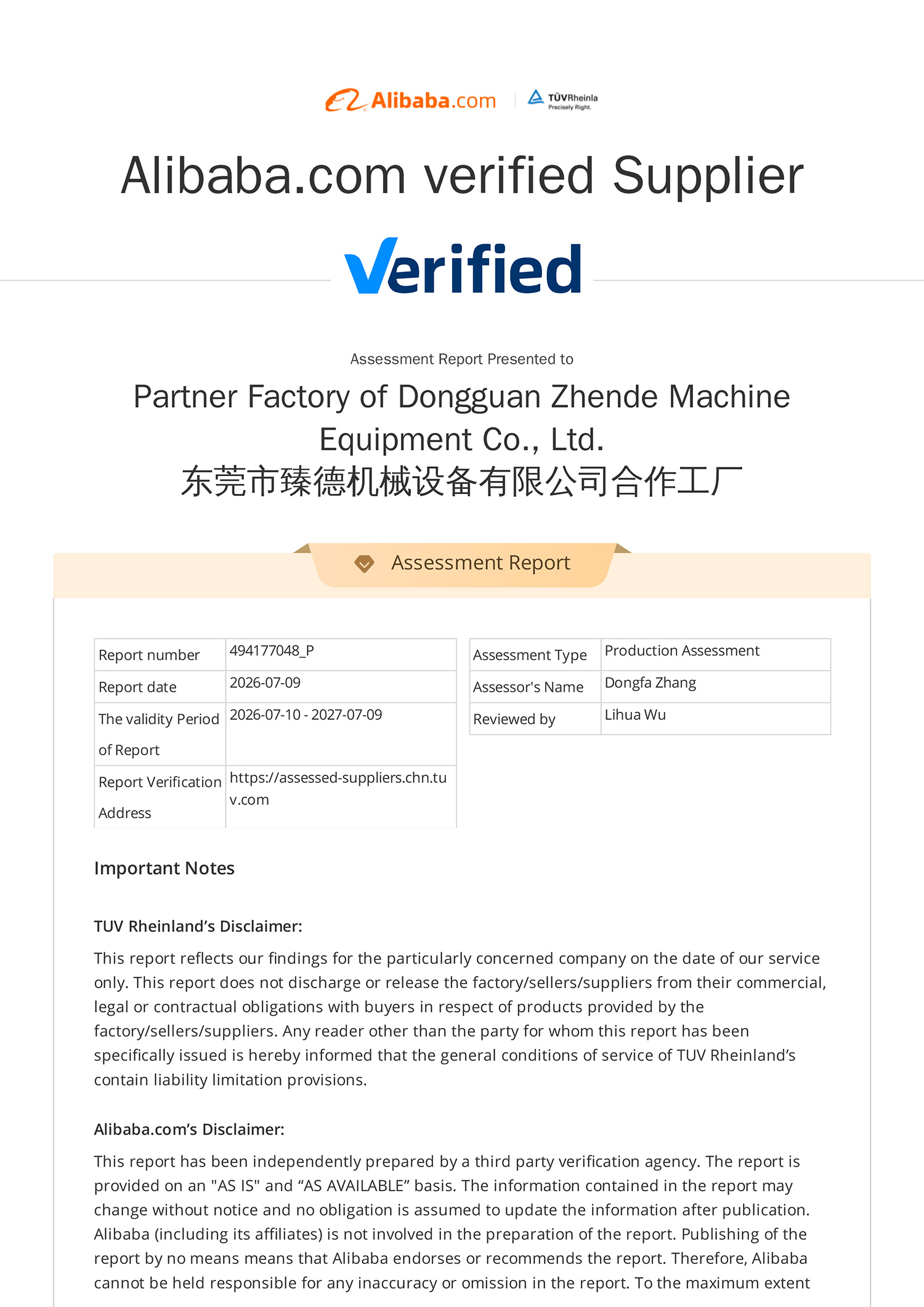
Production assessment material. Where a report covers a partner factory as well as the trading entity, the site named on the page governs which factory was examined.
"SGS/TUV" in the standard column: a body reference, not a standard number
This is the single most misread field in the pack. SGS and TÜV Rheinland are inspection, testing and certification organisations. They are not dimensional standards, and there is no such thing as a "SGS standard" for tooth geometry. When the record lists SGS/TUV in the standard field, it is naming the bodies involved in the assessment, not the technical rule the product was measured against.
The practical consequence is a wording rule for your own documents. Do not write "certified to SGS standard" or "TÜV-certified belt" in an RFQ, a supplier scorecard or a customer declaration, because neither phrase describes anything verifiable. Write the document identity instead, for example: "Alibaba.com Verified Supplier Production Trading Assessment No. 493993448_P+T, scope Timing Belt, valid 2026-07-10 to 2027-07-09, SGS/TUV named as assessing bodies." That sentence can be checked by a third party in under a minute; the marketing phrasing cannot.
The same discipline applies to the TÜV report. Its standard field reads "Production & Trading Factory Assessment Standard", which is an audit framework for factory and trading operations. It describes how the site was assessed, not what the belt's pitch tolerance is. If your engineering team needs a tolerance statement, the answer lives in a product datasheet or a drawing referencing ISO 13050, ISO 5296, ISO 5294 or DIN 7721 — not in the audit report.
Mapping the covered product list to the scope statement
The assessment records are attached to specific product entries, and that attachment is what "scope" means in practice. The families recorded against this pack span PU and rubber belts and three pulley systems, so the mapping below shows how each one should and should not be read.
| Product family | Covered examples | How to read it against the scope |
|---|---|---|
| PU timing belt — AT profile | AT10 PU timing belt | Falls inside the "Timing Belt" scope line. Pitch, thickness, hardness and tolerance values come from the product datasheet, not from the assessment. |
| PU timing belt — T profile | T5 PU timing belt | Same scope line. The assessment does not confirm tooth-load capacity or belt life. |
| Rubber timing belt — HTD | HTD 5M, HTD 8M, HTD 14M timing belts | Inside the belt scope. HTD is a catalogue designation; which published standard governs the geometry is a separate question to put to the supplier. |
| Rubber timing belt — STD | S8M rubber timing belt | Inside the belt scope; the S8M pitch and thickness are product-level data. |
| Carbon-reinforced belt | 8MGT POLYCHIAN GT carbon timing belt | Inside the belt scope as a belt family; reinforcement construction is not addressed by any supplied certificate. |
| Generic belt families | Rubber timing belt; PU timing belt | The scope line covers timing belts as a category, so open-ended, joined and endless constructions depend on the part actually ordered. |
| Timing pulleys | T-series timing pulleys, Imperial timing pulleys, HTD timing pulleys | Only the TÜV report scope names pulleys. The two Alibaba records say "Timing Belt" only — a genuine difference to record in the qualification file. |
Note what the pulley row implies. If a buyer's order combines HTD 8M belts with HTD pulleys, the Alibaba records alone do not cover the pulley half of that order, while the TÜV report does. Citing only one of the three documents therefore understates or overstates coverage depending on which one is chosen. The correct practice is to cite the document whose scope line matches the item, item by item.
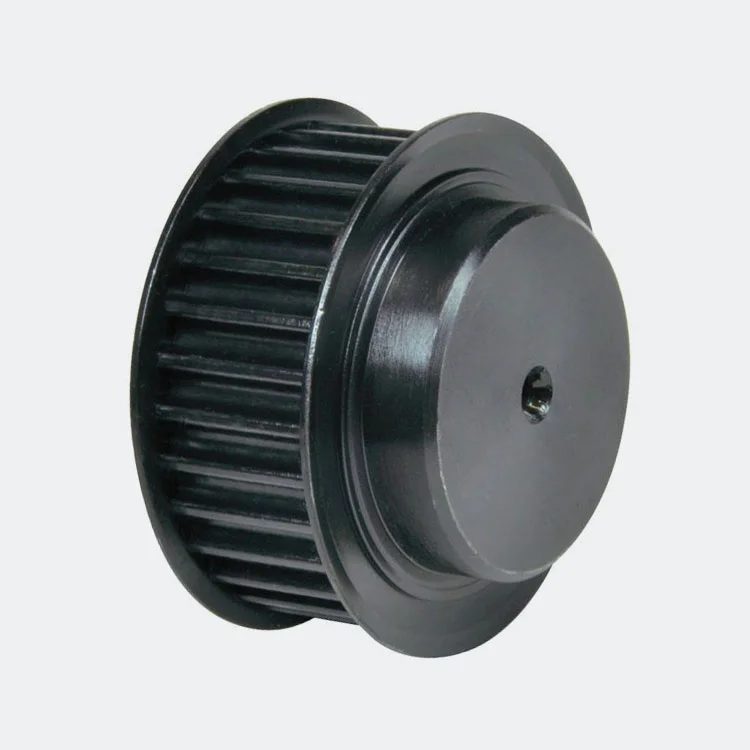
T5 timing pulley. Pulley families sit inside the factory audit scope line, not inside the narrower belt-only scope of the marketplace records.
Validity dates: 2026-07-10 to 2027-07-09 and the review date
The validity period is short enough to matter commercially. An RFQ issued in late 2026 sits comfortably inside the window; the same pack reused in 2028 does not. Two dates should be written into the qualification file at the moment of receipt: the expiry date itself, and a review date set before it, so the file is refreshed rather than discovered to be stale during an audit.
- Record the exact strings: issue 2026-07-10, expiry 2027-07-09 for both Alibaba records; issue 2026-07-09, expiry 2027-07-09 for the TÜV report.
- Do not average or normalise the two issue dates. The one-day offset is a document fact, and a reviewer comparing your file to the PDFs will notice if it is missing.
- Treat expiry as a hard boundary in customer declarations. A statement that a supplier "holds current third-party assessment" becomes inaccurate the day after expiry, even if the underlying factory has not changed.
- Keep the expired RoHS report in the archive but outside the active evidence set until a current version is issued.
International market applicability: what the record claims
The market field says International, and the TÜV report lists EU, US, Middle East and Southeast Asia. These describe the markets the assessment was prepared for. They are not approvals, registrations or certificates issued by any national authority, and no country-specific product approval is claimed anywhere in the pack.
Where a buyer needs regulatory evidence, it comes from the regulation, not from the assessment. Under EU rules, REACH (Regulation (EC) No 1907/2006) governs the chemical compliance of rubber and polyurethane articles placed on the EU market. RoHS (Directive 2011/65/EU) applies only where the belt forms part of, or is supplied with, electrical or electronic equipment — a conditional test that must be assessed per end product, not applied to every belt. In the United States, 21 CFR 177.2600 covers rubber articles intended for repeated food contact; it does not address polyurethane belts, which follow a different route.
Customs classification is a separate matter again. Under the HS nomenclature, endless synchronous belts of vulcanised rubber are classified by outside circumference band — for example subheading 4010.35 for belts exceeding 60 cm but not exceeding 150 cm, with 4010.39 as the residual subheading. Classification determines duty treatment; it says nothing about quality, and published trade statistics at that level cannot separate HTD, T5 or AT10 constructions.
Wording to avoid: "EU-approved timing belt", "TÜV-approved for export", "SGS-certified for America". None of those statements is supported by the supplied records. The accurate statement is that the supplier holds third-party assessment evidence for timing belts and pulleys valid from 2026-07-10 to 2027-07-09, and that application-specific compliance such as REACH, RoHS or food-contact rules must be confirmed separately for the destination market and end use.
Step-by-step: putting the evidence into an RFQ file
- List the documents, not the adjectives. Open a table with four columns: document type, number, scope line, validity. Enter all three records — 493993448_P+T (Production Trading Assessment), 494177048_P (Production Assessment) and the TÜV Rheinland factory audit report — plus the SGS RoHS report with its lapsed expiry flagged.
- Match scope to part number. Go through the BOM line by line and mark which document covers it. Belts are covered by all three assessment documents; pulleys only by the TÜV report. Note this in the file rather than in a covering email that will be lost.
- Separate supplier evidence from product evidence. Supplier assessment answers capability and site questions. Product evidence — dimensional report, hardness, tensile data — answers engineering questions and must be requested separately for each family you buy.
- Name the governing standard in the specification. Where geometry matters, quote the standard explicitly: ISO 13050 for the metric curvilinear series, ISO 5296 for inch trapezoidal belts, ISO 5294 for pulleys, DIN 7721 for T-profile belts. Ask the supplier to confirm which standard applies to the exact profile ordered, including HTD and GT-series designations.
- Fix the date discipline. Add the 2027-07-09 expiry and a review reminder to the file. If a customer declaration is signed, it should reference the validity window explicitly so it cannot silently outlive the evidence.
- State the limits in writing. Record that the pack does not constitute country-specific approval, and list any market-specific documents still outstanding — for example a current RoHS report, REACH information for the compound, or food-contact documentation where the application requires it.
Where this evidence genuinely helps
OEM vendor qualification. An OEM onboarding file needs a documented, verifiable reason why a supplier entered the approved list. The three assessment documents satisfy the supplier-level portion of that requirement, and their numeric identifiers make the file auditable. The product-level portion still has to be built from samples and inspection reports.
Distributor and reseller onboarding. A distributor checking a Chinese supplier for the first time can use the pack to establish that a third-party assessment exists for timing belts and pulleys, on a defined date, for named markets. That is a screening signal, not a warranty, and it should be paired with commercial terms, inspection rights and a first-article approval step.
Replacement of a branded belt on an existing machine. Buyers often hold documentation for a GATES, BANDO, CONTINENTAL or optibelt belt and assume a new supplier's certificate transfers to the replacement part. It does not. Assessment evidence is tied to the supplier and the scope line on the certificate; the dimensional requirements of the replacement must be re-established from the drawing, the pulley, and the applicable standard family. V-belt pulleys such as cast iron V pulleys and V-belt profiles sit in a different standards family altogether (ISO 4183 and ISO 4184) and should never be folded into the same line of a timing-belt qualification file.
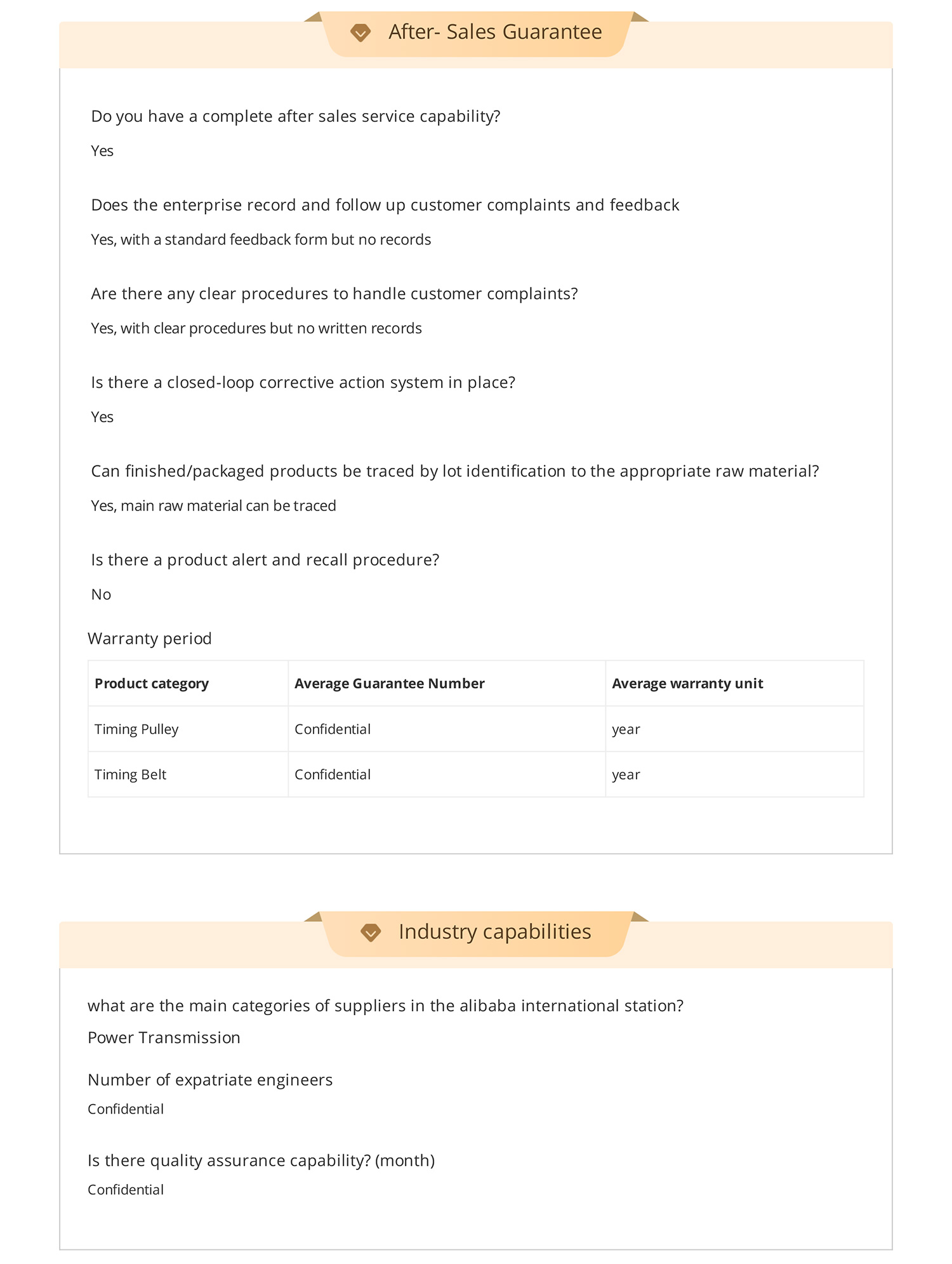
Additional report page. When quoting a certification in an RFQ, cite the specific page and field rather than the document title alone.
Document comparison: what each one supports
| Document | Issued or recorded by | Supports | Does not establish |
|---|---|---|---|
| Alibaba.com Verified Supplier — Production Trading Assessment, 493993448_P+T | Alibaba, with SGS/TUV named as assessing bodies | Supplier-account verification and production and trading assessment for the scope "Timing Belt", 2026-07-10 to 2027-07-09 | Dimensional conformity, belt performance, or any country-specific approval |
| Alibaba.com Verified Supplier — Production Assessment, 494177048_P | Alibaba, with SGS/TUV named as assessing bodies | Production-oriented assessment for the scope "Timing Belt", same validity window | Pulley coverage, product test data, market registration |
| TÜV Rheinland Factory Audit Report | TÜV Rheinland | Factory assessment against the Production & Trading Factory Assessment Standard for "TIMING BELT TIMING PULLEY", listed markets EU, US, Middle East, Southeast Asia, expiry 2027-07-09 | Belt dimensional accuracy, substance compliance, national approvals |
| SGS RoHS test report, CANEC24017410403 | SGS-CSTC Standards Technical Services Co., Ltd. Guangzhou Branch | Substance testing against EU RoHS Directive (EU) 2015/863 for the tested scope, issued 2024-08-12 | Current validity — the stated expiry of 2026-08-14 has passed — plus supplier capability and mechanical performance |
| ISO 13050, ISO 5296, ISO 5294, DIN 7721 | Standards bodies | Dimensional and geometric specification of belts and pulleys | Who manufactured the part, or whether a delivered lot conforms — conformity still has to be demonstrated |
Common misreadings to correct before you file the pack
- Treating two records as one. 493993448_P+T and 494177048_P are separate assessment types with separate numbers. Merging them in a summary table destroys the audit trail.
- Assuming the belt certificate covers pulleys. The Alibaba scope line reads "Timing Belt". Pulley coverage appears only in the TÜV report.
- Reading "International" as a licence. It is a market descriptor for the assessment, not evidence of approval in any jurisdiction.
- Using "SGS/TUV" as a standard name. It names assessing bodies; the technical standard must be cited separately and specifically.
- Reusing an expired report. The RoHS report's 2026-08-14 expiry has passed and it should not be presented as current.
- Extending one certificate to brand-name belts. Assessment evidence attaches to the assessed supplier and its stated scope, never to third-party branded product lines.
Frequently asked questions
Which Chinese timing belt manufacturers are ISO-certified?
ISO 9001 is a quality management system standard, and it is awarded to an organisation rather than to a belt. A supplier website statement is not verification: the certificate should be checked with the issuing certification body, including the scope, the site address and the expiry date. In the pack reviewed here, the supplied evidence is three supplier assessments and one SGS RoHS test report — an Alibaba.com Production Trading Assessment (493993448_P+T), an Alibaba.com Production Assessment (494177048_P), a TÜV Rheinland factory audit report and an SGS RoHS report. None of those four documents is an ISO 9001 certificate, so the accurate statement is that third-party supplier assessment evidence exists for the stated scope and period, and that ISO 9001 status should be requested and verified separately if your qualification criteria require it.
What exactly do certificate numbers 493993448_P+T and 494177048_P cover?
Both numbers belong to Alibaba.com Verified Supplier records with the scope "Timing Belt" and the market field "International", valid from 2026-07-10 to 2027-07-09. The first is typed as a Production Trading Assessment and is the same number carried by the TÜV Rheinland factory audit report, whose scope is wider — "TIMING BELT TIMING PULLEY" — and whose issue date is 2026-07-09. The second is typed as a Production Assessment and carries no pulley wording. Neither record names a dimensional standard, and neither constitutes a product approval.
Does this certificate allow the belts to be sold in the EU or the US?
No. The records list markets for which the assessment was prepared but contain no national approval, registration or declaration of conformity, and no country-specific approval is claimed. EU market access instead depends on relevant regulation: REACH for the chemical compliance of rubber and polyurethane articles, RoHS only where the belt forms part of or is supplied with electrical or electronic equipment, and 21 CFR 177.2600 in the United States where a rubber belt is intended for repeated food contact. Each of those is assessed per product and per end use, and supporting documents must be requested for the destination market.
Which belts and pulleys fall inside the assessed scope?
The belt scope covers the PU and rubber families recorded against the assessment, including the AT10 PU timing belt, the T5 PU timing belt, the HTD 5M, HTD 8M and HTD 14M belts, the S8M rubber timing belt, the 8MGT POLYCHIAN GT carbon timing belt, and the general rubber and PU timing belt lines. Pulleys are covered only by the TÜV report, which names T-series, Imperial and HTD timing pulleys within "TIMING BELT TIMING PULLEY". Reading the scope line against the actual order line is the check that matters, because a belt-only citation does not carry the pulley half of a combined order.
What should a buyer request beyond the certificate pack?
Four things. First, a dimensional inspection report for the specific profile and pitch, referenced to the applicable standard such as ISO 13050, ISO 5296, ISO 5294 or DIN 7721, or to the drawing if a custom size is involved. Second, material and performance data for the chosen compound — PU or rubber — including hardness and tensile values, since none of the supplied certificates addresses them. Third, a current version of the RoHS report, because the supplied copy expires on 2026-08-14. Fourth, a sample for first-article approval. Sampling is a normal step for this category, and the supplier's stated minimum order quantity for standard belt models is four pieces with a stated lead time of seven to twenty days, which makes pre-production sample testing practical rather than prohibitively expensive.
When does the evidence need to be renewed?
All three assessment documents expire on 2027-07-09, so any qualification file relying on them should carry a review date before that. The RoHS report is already outside its stated validity, which ended on 2026-08-14, and should be replaced rather than cited. Practically, the renewal check should be attached to the supplier's annual review cycle so that a customer declaration never references a window that has already closed.
Conclusion
A timing belt certification pack is a set of dated, scoped documents, and its value in an RFQ depends entirely on how precisely it is cited. For Dongguan Zhende Machinery Equipment Co., LTD, the defensible statement is narrow and checkable: third-party supplier assessment exists for timing belts through Alibaba.com records 493993448_P+T and 494177048_P, factory assessment covering timing belts and timing pulleys exists through a TÜV Rheinland report, and all three run from 2026-07-10 to 2027-07-09, with SGS and TÜV named as the assessing bodies rather than as technical standards. Everything beyond that — dimensional conformity, material performance, and any country-specific market access — has to be established by the product documents, the sample and the regulation applicable to the destination market.
Read the scope line before the label, read the date before the signature, and write the document number wherever you would otherwise write an adjective. That is the whole method, and it holds whether the pack contains three documents or thirty.
Factory audit documentation. Cite the issuing body, number, scope line and dates together — never the audit label on its own.
Next step for your qualification file. If you are building an RFQ or vendor qualification pack for PU or rubber timing belts and matching pulleys, request the current document set — including the updated RoHS report — together with dimensional data for the exact profile you intend to order. Samples for first-article approval can be arranged before a production order.
Product range and technical contact: Dongguan Zhende Machinery Equipment Co., LTD. Full catalogue and specification brochure: download the PDF brochure.
Have Questions or Need More Details?
Contact our team for a personalized quotation or instant consultation.
Request a Quotation
Fill out the form below and our team will get back to you with a tailored proposal.
WhatsApp Direct Chat
Prefer to chat in real-time? Message us on WhatsApp for instant assistance & quick answers.
- Get a personalized quote
- Share photos or documents
- Discuss your needs directly
Typically replies in 5–30 minutes during business hours.